





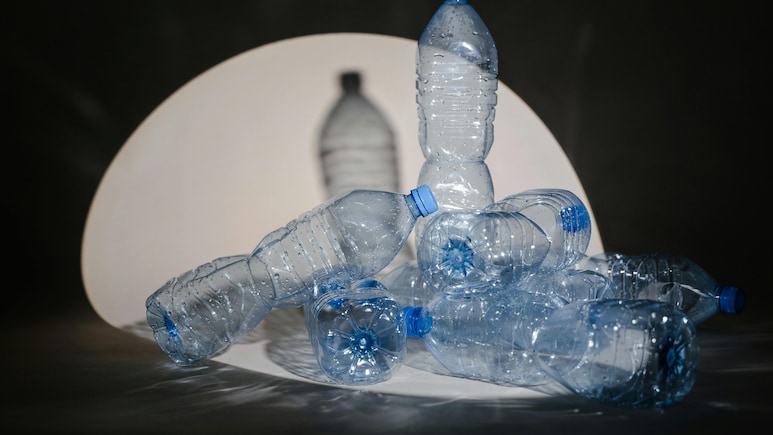
Plastic bottles are so common that most of us don't even think twice before picking one up. At the gym, at airports, during travel, or on a busy workday, packaged drinking water feels like the easiest and safest option. Hydration is good, so water in any form must be good too, right? Not always. Over the last few years, experts have been raising concerns about what plastic containers may be adding to our bodies, along with water. Nutritionist Nmami Agarwal has shared a video on Instagram that put this issue into sharp focus, especially for women dealing with PCOS.
In the video, she explains that FSSAI has declared packaged drinking water as a high-risk category. According to the information she has shared, one litre of bottled water can contain up to 2,40,000 nanoparticles of plastic. These particles are so tiny that they easily enter the body without us realising it.
Nmami then speaks about BPA (Bisphenol A), a chemical commonly found in plastic bottles, food container linings and canned foods. She explains that BPA does not behave like a neutral substance in the body. Instead, it mimics estrogen. As she puts it, BPA works like a “fake estrogen”, almost like a duplicate key entering the system. When this fake estrogen competes with the real hormone for the same receptors, the body gets confused. The hormonal balance, already delicate, starts going off track.
For people with PCOS, this becomes an even bigger issue. Nmami explains that in PCOS, hormones are already imbalanced. When BPA enters the picture, it can worsen this imbalance. One major outcome is estrogen dominance, where estrogen starts overpowering other hormones. This can lead to worsening of cysts and trigger common PCOS symptoms. Acne, hair fall and weight gain are some of the visible signs she mentions.
The nutritionist also highlights that BPA exposure increases inflammation and oxidative stress in the body. This further fuels PCOS symptoms. On top of that, BPA can amplify insulin resistance, making weight gain more likely and weight loss harder. According to Nmami, research also links BPA exposure to infertility and irregular periods, adding another layer of concern.
Nmami Agarwal urges people to pause and think before choosing plastic bottles. What looks like a small, harmless habit can have long-term consequences, especially for hormonal health. In her caption, she writes that nano plastics and BPA do not just sit quietly in water. They actively interfere with estrogen signals and confuse hormones.
The nutritionist's message is simple and practical. You may not be able to control every toxin around you, but you can choose what your water touches. Switching to steel or glass bottles may seem like a small change, but it can offer real hormonal relief over time.
Disclaimer: This content including advice provides generic information only. It is in no way a substitute for a qualified medical opinion. Always consult a specialist or your doctor for more information. NDTV does not claim responsibility for this information.
Track Latest News Live on NDTV.com and get news updates from India and around the world

