
The Viksit Bharat Shiksha Adhishthan Bill, 2025, has been introduced in Parliament by Union Education Minister Dharmendra Pradhan, proposing a sweeping overhaul of India's higher education regulatory system. The new Bill changes how funds are transferred from the Centre to universities, considers inputs from states and their universities, and ensures no interruption in multidisciplinary programmes.
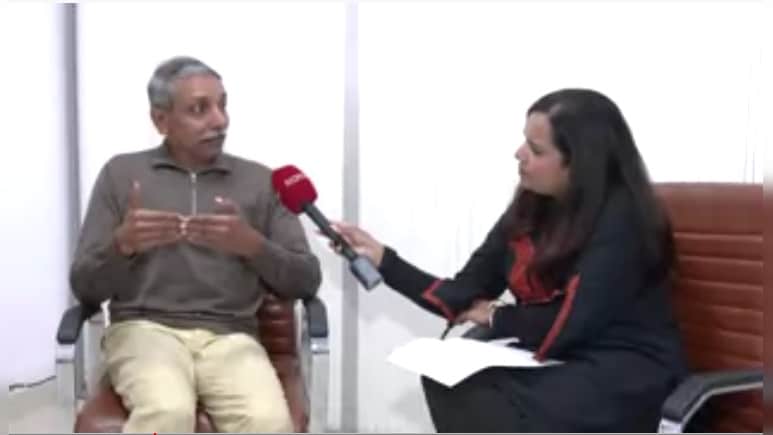
If passed, the Bill will replace existing regulators - the University Grants Commission (UGC), All India Council for Technical Education (AICTE) and the National Council for Teacher Education (NCTE) - with a single apex body. To understand the implications of this proposed shift, NDTV spoke to former UGC Chairman Professor M. Jagadesh Kumar.
When asked why the name of the Bill is in Hindi, whereas it was earlier titled the Higher Education Commission of India, Prof. Kumar said the word "Vikas" has linguistic roots across Indian languages, including South Indian languages such as Telugu.
"Our country is culturally rich in languages, but there is a common thread that binds us," he said.
He added that the National Education Policy (NEP) 2020 emphasises education rooted in Indian ethos. "It projects our Indianness, and I am proud of it," he said.
Funding and institutional autonomy
Asked how institutional autonomy will be safeguarded with grants likely to be directly disbursed by the Centre, Prof. Kumar clarified that for Institutions of National Importance (INIs), the Ministry of Education has always been the primary funding authority.
"For all INIs, the Ministry of Education gives funding in both the old and new systems. Earlier, the Ministry transferred funds to the UGC, and then the UGC transferred them to central universities. Now, that middle layer is removed, and funds will flow directly from the Centre to universities. The system for direct disbursement will be set up properly. For state universities, state governments will continue to provide funding," he said.
State representation and oversight
On apprehensions about increased centralisation, Prof. Kumar stressed that the proposed structure includes representation from states and Union Territories, as well as from state universities and INIs.
"The structure will have representation from states and UTs, state universities and INIs. The new system is a round-table, cooperative and collaborative framework rather than a top-down approach. Inputs from state governments and universities will be considered. Membership of states and universities will be on a rotational basis, so every year this will rotate to new states. Any state that has something special or unique to offer will be taken into consideration," he said.
A single umbrella regulator
Explaining the rationale behind the Bill, Prof. Kumar said the proposed framework is the outcome of years of deliberations within the higher education ecosystem.
"The introduction of the Viksit Bharat Shiksha Adhishthan Bill is a logical trajectory of the discussions that have taken place over the last five or six years," he said.
According to him, the Viksit Bharat Shiksha Adhishthan (VBSA) will function as an apex umbrella body with three distinct verticals - a regulatory council, an accreditation council and a standards council.
"This was not an overnight decision. The idea is to move towards a simplified, transparent, inclusive and responsive regulatory system," Prof. Kumar added.
'Light but tight' regulation
The government has described the new framework as "light but tight". Elaborating on this, Prof. Kumar said "light" refers to simplified processes and greater autonomy for institutions, while "tight" ensures effective oversight.
"Institutions will have more autonomy, but an apex body will ensure regulations are followed," he said.
He explained that under the new structure, an honorary chairman and three regulatory bodies will operate under a single umbrella, reducing duplication and bureaucratic overlap that currently exists across multiple regulators.
Academic freedom and curriculum design
On the question of academic freedom, Prof. Kumar said institutions will have full autonomy in areas such as multidisciplinary programmes and curriculum innovation.
"There will be no day-to-day interference or micromanagement," he said, adding that institutions will have enough administrative freedom to innovate.
He also underlined the importance of avoiding conflicts of interest. "Globally, it is recommended that the funding arm be kept separate from the regulatory body so that funding remains objective and free from subjectivity," he said.
Transition challenges ahead
On the challenges he foresees in making the amalgamation, Prof. Kumar acknowledged that a transition phase would be required.
"There will be a transition period of three to six months, during which institutions will be hand-held through awareness programmes and workshops," he said.
He also highlighted the role of technology in the new system, noting that a single-window digital regulatory portal will be created for all submissions. A student grievance redressal and feedback mechanism will also be part of the framework.
"Students are our main stakeholders and the future," he said.
What lies ahead
A 31-member Joint Parliamentary Committee will now hold extensive deliberations on the Viksit Bharat Shiksha Adhishthan Bill, 2025, with discussions expected to continue till the end of February before the Bill is finalised.
