

)
Water fasting has become one of those trends that keeps popping up on social media and wellness platforms. The idea sounds simple: stop eating, drink only water, and watch the weight drop. Quick results, no complicated diet plans. But what's really happening inside your body when you do this? Before you consider trying it, it's important to understand that water fasting isn't just "extreme dieting". It's a significant metabolic shift that can affect nearly every system in your body. As per a review, water fasting may reduce the risk of chronic diseases and promote autophagy, which is a natural process that helps recycle and renew your cells.
What Exactly Is Water Fasting?
Water fasting means consuming nothing but water for a set period, typically ranging from 24 hours to several days. No food, no juices, no tea or coffee. Just water. While some people claim benefits like rapid weight loss, detoxification, and improved metabolism, the science tells a more nuanced story.
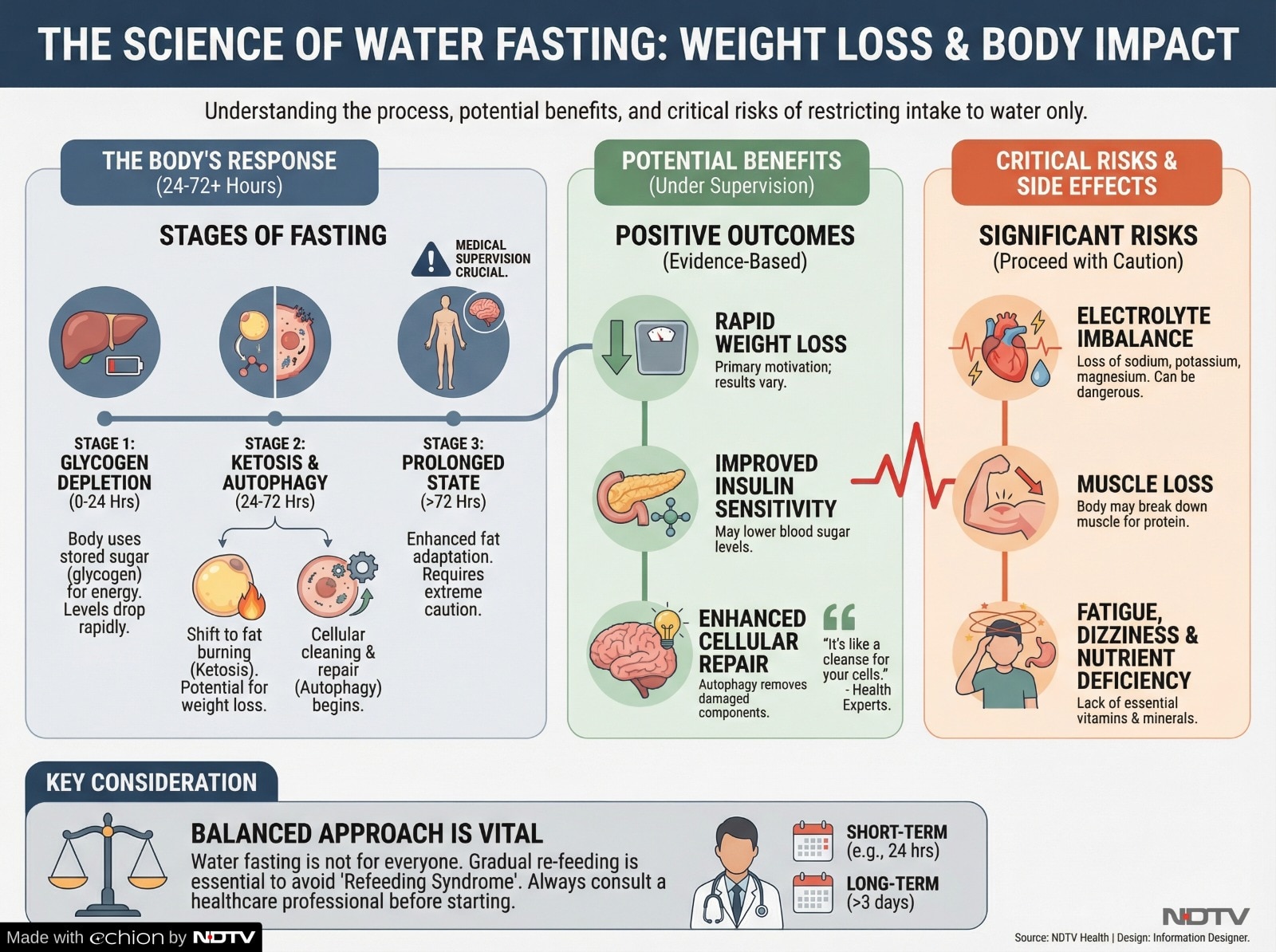
The First 24 Hours: Glycogen Depletion
In the initial stage, your body uses up its stored glycogen, which is essentially glucose stored in the liver and muscles. This is your body's go-to energy source. As glycogen depletes, you may start feeling hungry, irritable, or low on energy. Some people also experience headaches or difficulty concentrating.
Also read: Just 30 Minutes Of Exercise Can Reduce Your Risk Of These 8 Chronic Diseases
Day 2 to 3: Enter Ketosis
Once glycogen stores run out, your body switches to burning fat for energy. This process is called ketosis. At this stage, your liver starts producing ketones, which act as an alternative fuel. This is when rapid weight loss often begins, but here's the catch: a large part of this early weight loss is water and muscle, not just fat. You might also notice bad breath, fatigue, and dizziness as your body adapts.
Beyond 3 Days: Muscle Loss and Slowing Metabolism
If the fast continues, your body becomes more conservative with energy. Your metabolism starts to slow down to preserve resources. At the same time, your body may begin breaking down muscle tissue for essential proteins. This is not ideal, especially if your goal is healthy, sustainable weight loss. You could also experience weakness, low blood pressure, and reduced physical and mental performance.
What About "Detox"?
One of the biggest claims around water fasting is detoxification. But here's the reality: your body already has a highly efficient detox system. Your liver, kidneys, and digestive system continuously work to remove toxins. There's no strong scientific evidence that water fasting enhances this process in a meaningful way.
The Risks You Shouldn't Ignore
Water fasting isn't risk-free, especially if done without medical supervision. Some potential risks include, nutrient deficiencies. Electrolyte imbalance. Dehydration, yes, even when drinking water. Dizziness and fainting and hormonal disruptions. For people with underlying conditions like diabetes, it can be particularly dangerous.
Also read: What Happens To Your Body When You Fast Once Weekly? Doctor Answers
Does It Really Help With Weight Loss?
Yes, you will likely lose weight. But most of it isn't sustainable. Once you resume eating, your body tends to regain the lost weight quickly, sometimes even more than before. This is partly because your metabolism has slowed down and your body is trying to restore balance.
You need to be clear, if your goal is weight loss, consistency beats extremes every time. Balanced nutrition, regular physical activity, proper sleep, and hydration are far more effective and sustainable. Short-term fixes like water fasting may look appealing, but they often come with long-term downsides. Water fasting might promise quick results, but it puts your body under significant stress. What seems like a shortcut can end up doing more harm than good. Instead of asking how fast you can lose weight, it may be worth asking how you can do it in a way that your body can maintain and support over time. Because real health isn't about extremes, it's about balance.
Disclaimer: This content including advice provides generic information only. It is in no way a substitute for a qualified medical opinion. Always consult a specialist or your own doctor for more information. NDTV does not claim responsibility for this information