

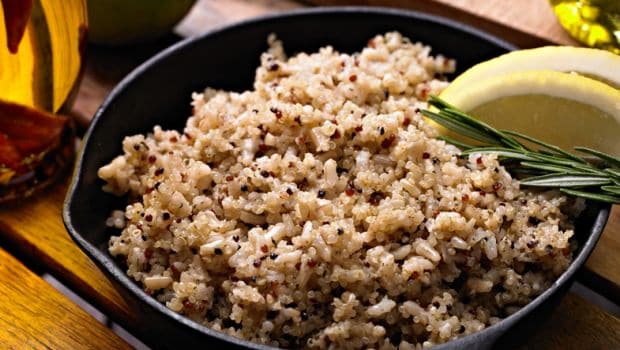
Fibre plays an important role in maintaining your digestive health and supporting heart health. It also helps regulate your blood sugar levels by slowing down how quickly your body digests carbohydrates and absorbs glucose. Yet, many people are unaware of how much fibre their everyday foods actually contain.
Doctor Pal Manickam explains the difference between high and low fibre foods. In a video shared on Instagram, he offers valuable insights into which dietary choices can help meet daily fibre needs.
High Fibre Food Sources
1. Brown Rice
Brown rice is a whole grain that retains its fibre-rich outer bran layer and germ, which are stripped away during the processing of white rice. It is primarily a source of insoluble fibre.
2. Ragi Dosa
Ragi dosa is a traditional South Indian crepe made from finger millet. The grain is celebrated for its exceptional nutritional profile and high concentration of both soluble and insoluble fibre.
3. Guava
This is a tropical fruit that stands out as one of the most fibre-dense options available. Most of this fibre is concentrated in the edible skin and the crunchy seeds.
4. Rajma
Red kidney beans are a powerhouse of complex carbohydrates, plant-based protein and dietary fibre. It contains a high amount of soluble fibre and resistant starch, which pass undigested into the large intestine to serve as fuel for beneficial gut bacteria.
Low Fibre Food Sources
1. Naan
Naan is a traditional flatbread typically made from maida. During the milling process, the fibre-rich bran and nutrient-dense germ are stripped away. This lack of structural fibre means naan breaks down very quickly in the digestive tract, offering minimal bulk to the stool.
2. Plain Dosa
Plain dosa is a crispy crepe made from a fermented batter of polished white rice and skinned black gram. Because both the rice and lentils are heavily processed to remove their outer, fibre-rich skins before grinding, the resulting batter is very low in dietary fibre.
3. Chicken
Chicken is an animal protein and naturally contains absolutely zero dietary fibre. Fibre is a structural carbohydrate found exclusively in the cell walls of plants, meaning all meats, poultry, and seafood are completely devoid of it.
4. Fruit Juice
Fruit juice is a low-fibre liquid because the mechanical juicing process extracts the liquid sugars and water while straining out the solid pulp and skin. Even if the juice contains a small amount of sediment, the essential structural fibres like pectin and cellulose are largely discarded.
Refer to the guide before making your plate for the next meal.
Disclaimer: This content including advice provides generic information only. It is in no way a substitute for a qualified medical opinion. Always consult a specialist or your own doctor for more information. NDTV does not claim responsibility for this information.