





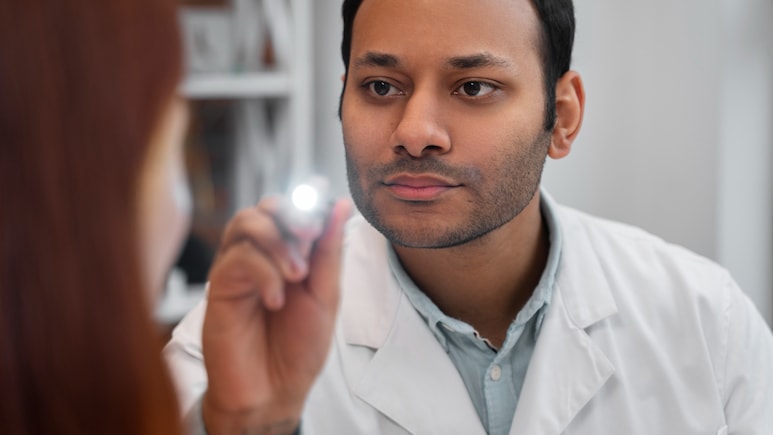
Unsupervised use of steroids is emerging as a major trigger for secondary glaucoma, say doctors. Steroids are powerful substances that mimic natural hormones. Corticosteroids help treat inflammatory conditions like asthma and arthritis by suppressing immune activity, and anabolic-androgenic steroids (AAS) help in muscle growth and are medically used for hormone deficiencies or muscle-wasting diseases. AAS is important in medicine, however, they are often abused by athletes, leading to legal restrictions and health risks. Glaucoma, on the other hand, is a group of eye diseases that is caused due to pressure build up inside your eyeball. This increased pressure can damage delicate, critical parts at the back of your eye. Cleveland Clinic says that most of these diseases are progressive, which means they get worse with time. Glaucoma can cause permanent vision loss and blindness.
Doctors across India are now raising concern over the widespread and unsupervised use of steroids. They say that these medications can significantly raise eye pressure when used for prolonged periods, often without patients realising the long-term damage being caused to the optic nerve.
Dr J.S. Titiyal, Regional Head, Dr Agarwals Eye Hospital, New Delhi, said, "Steroid-induced glaucoma is increasingly being seen in routine clinical practice, especially among patients who have used steroid medications or eye drops without medical supervision. What makes this dangerous is that patients feel symptom-free initially, while eye pressure continues to rise silently, causing permanent damage."
Glaucoma affects around 75-80 million individuals globally, which is a number that is expected to rise beyond 110 million by 2040. India is already home to an estimated 12-13 million people living with glaucoma, accounting for nearly one-sixth of the global burden. Despite being the leading cause of irreversible blindness worldwide, glaucoma remains vastly underdiagnosed in India.
Doctors say that one of the major concerns is that 85-90% of glaucoma cases in the country remain undiagnosed. The disease progresses silently, and by the time symptoms become evident, irreversible optic nerve damage has often already occurred. Late diagnosis results in avoidable vision loss, reduced quality of life, and significant socioeconomic impact.
Doctors say that they have witnessed a notable rise in diagnosed glaucoma cases over the past two or three years. This is largely driven by an ageing population, a higher prevalence of diabetes and myopia, advancements in diagnostic technologies, and improved public awareness. However, experts caution that a growing proportion of cases are linked to secondary glaucoma caused by prolonged or unsupervised steroid use; an avoidable risk factor if identified and addressed early through timely screening and medical guidance.
Glaucoma is most commonly diagnosed in individuals above 40 years of age, with incidence peaking between 50 and 70 years. That said, clinicians are increasingly detecting juvenile and early-onset glaucoma, particularly among individuals with a family history of the disease or secondary triggers. Primary open-angle glaucoma continues to be the most prevalent form, followed by primary angle-closure disease, while steroid-induced glaucoma and pseudoexfoliation glaucoma are also frequently observed in clinical practice.
Dr J.S. Titiyal added, " Many patients tend to ignore early warning signs such as frequent changes in glasses, eye strain, headaches, difficulty seeing in low light, or halos around lights. Since central vision is often preserved in the early stages, it creates a false sense of reassurance-ultimately delaying timely diagnosis and treatment."
Doctors also caution against common myths, including the belief that good vision means healthy eyes, that glaucoma affects only older adults, or that normal eye pressure rules out the disease. Individuals with diabetes, hypertension, thyroid disorders, high myopia, long-term steroid use, or a history of eye injury including injuries sustained during childhood are at a higher risk and should undergo annual eye screening.
Experts stress that routine eye examinations are crucial. Individuals over 40 years should undergo comprehensive screening every one to two years, while high-risk groups require yearly evaluations. Vision tests alone are insufficient without assessment of eye pressure and optic nerve health.
Disclaimer: This content including advice provides generic information only. It is in no way a substitute for a qualified medical opinion. Always consult a specialist or your own doctor for more information. NDTV does not claim responsibility for this information.
Track Latest News Live on NDTV.com and get news updates from India and around the world

