

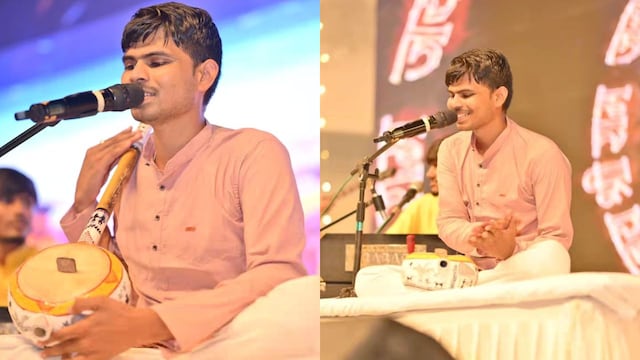
Folk singer Suneel Lodhi, known for his devotional song Maine Tere Hi Bharose Hanuman from Hanuman Ansh, has begun treatment for his eyesight. His treatment has brought new hope to the visually impaired singer and his family. The 25-year-old recently shared pictures and videos from his visit to an eye hospital in Sagar, Madhya Pradesh. He also made an emotional appeal to his followers to pray for him. He said that the start of his treatment had given him new hope and expressed his wish to see the world with his own eyes again.
According to reports, the treatment was started after the intervention of Madhya Pradesh Chief Minister Dr Mohan Yadav. Lodhi underwent a general health check-up and a detailed eye examination at Bundelkhand Medical College in Sagar. However, the exact medical condition responsible for his visual impairment and his prognosis have not been shared publicly. This raises an important question: when a person has lost eyesight, is it possible to bring it back? This depends on why the person lost vision, which part of the eye is affected and how much damage has occurred. Read on to know more.
Can Lost Eyesight Be Restored?
The answer is yes, in some cases. But eyesight cannot always be restored completely. Vision depends on several structures working together, including the cornea, lens, retina, optic nerve and brain. Problems affecting some of these structures can be treated successfully, while damage to others may be permanent. Conditions such as cataract, some corneal disorders and certain retinal problems may respond well to treatment, while damage to the optic nerve can be much harder to reverse.
Here are some conditions where vision may be restored or significantly improved:
1. Cataract
A cataract occurs when the normally clear lens of the eye becomes cloudy, leading to blurred or hazy vision. It is one of the best examples of potentially reversible vision loss. Cataract surgery removes the cloudy natural lens and replaces it with an artificial lens. The National Eye Institute says that nine out of 10 people undergoing cataract surgery can see better afterwards.
2. Corneal Damage Or Disease
The cornea is the clear outer layer at the front of the eye and helps focus light. Certain corneal conditions can cause vision problems but may be treated with medicines, laser procedures or surgery. In severe cases where the cornea cannot be repaired, a corneal transplant or, in selected cases, an artificial cornea may help improve vision.
3. Retinal Detachment
A detached retina can cause sudden vision loss, flashes, new floaters or a curtain-like shadow across the field of vision. It is an emergency, but early treatment with laser procedures, freezing treatment or surgery can help save vision. The chances of preserving or restoring useful vision are better.
4. Retinal Conditions
Certain retinal problems, including some forms of diabetic retinopathy or retinal tears, can be treated with injections, laser procedures or surgery. The result depends on the disease, how advanced it is and whether there has been permanent damage already. In such cases, early diagnosis is very important.
5. Childhood Vision Loss
Vision problems beginning in childhood can have many causes and these include congenital cataract, glaucoma, eye injuries and problems involving the optic nerve. Some can be treated, especially when detected early. However, conditions involving permanent damage to the retina, optic nerve or visual pathways may not be completely reversible.
When Eyesight May Not Come Back
Not all forms of blindness can be reversed. Glaucoma, for example, damages the optic nerve, which carries visual information from the eye to the brain. Treatment can lower the risk of further damage, but vision already lost because of optic nerve damage cannot be restored.
Similarly, severe damage to the retina or optic nerve, certain inherited eye disorders and some forms of brain-related vision loss may result in permanent vision loss. This is why doctors need to identify the exact cause before predicting whether someone's eyesight can return.
Disclaimer: This content including advice provides generic information only. It is in no way a substitute for a qualified medical opinion. Always consult a specialist or your own doctor for more information. NDTV does not claim responsibility for this information.