

)
Doctors in Sri Lanka have removed a massive bladder stone weighing 3.1 kilograms and measuring about 17 centimetres from a 55-year-old man. The doctors operated on the patient at the Trincomalee District General Hospital. The stone has been described as being roughly the size of an ostrich egg and as heavy as a newborn baby. The doctors believe it could be the largest bladder stone ever surgically removed and documented, although the claim still needs official verification.
The patient had been admitted to the hospital while receiving treatment after suffering a stroke. During his stay, doctors noticed that he was having difficulty urinating. Further examinations revealed the unusually large stone inside his urinary bladder. Urologist Dr Pragaladhan Balakrishnan led the operation, which was carried out by a team of specialists. Speaking to BBC Sinhala, Dr Balakrishnan said, "According to available records, it is the largest bladder stone ever documented and removed through surgery."
He also added that the patient was in "very good health".
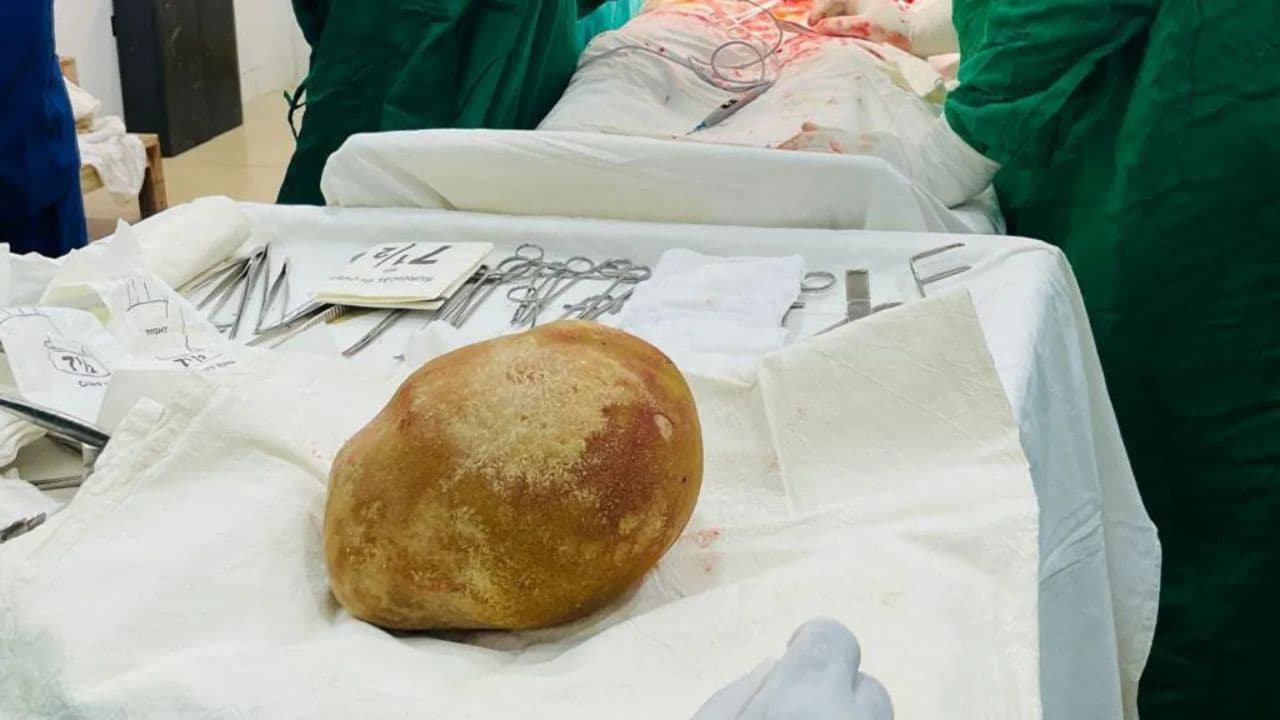
Photo Credit: Trincomalee General Hospital
What Is A Bladder Stone?
A bladder stone is a hard mass that forms when minerals in concentrated urine crystallise inside the bladder. In usual cases, urine leaves the bladder completely. However, if the bladder does not empty properly, minerals can remain behind and gradually stick together.
Bladder stones can be small enough to pass through the urinary tract without treatment. However, larger stones can cause pain, irritation and difficulty passing urine. Stones measuring more than 4 centimetres are generally described as giant bladder stones. The stone removed in this case was around 17 centimetres, and was therefore exceptionally large.
Why Do Bladder Stones Form?
Several problems can prevent the bladder from emptying completely and increase the risk of stones. These include an enlarged prostate, urinary blockages, repeated urinary infections and problems with the nerves that control the bladder. Long-term use of urinary catheters can also lead to bladder stone formation. When urine remains in the bladder for long periods, it becomes easier for minerals to crystallise and gradually form a solid mass.
What Are The Symptoms?
Small bladder stones may sometimes cause no obvious symptoms. As a stone grows, however, a person may develop:
- Pain or burning while urinating
- Difficulty starting or maintaining urine flow
- A weak or interrupted urine stream
- A frequent or urgent need to urinate
- Blood in the urine
- Pain in the lower abdomen
- Difficulty passing urine
Why Is Early Treatment Important?
This case highlights why urinary symptoms should be checked rather than ignored. Bladder stones do not usually become this large when detected and treated early. Identifying the underlying reason for incomplete bladder emptying can also help prevent stones from returning.
According to the doctors involved, the 3.1-kg stone may be the largest bladder stone ever removed through surgery and documented. However, the record has not yet been officially confirmed. Guinness World Records previously listed a bladder stone removed in Brazil in 2003 as the largest recorded. That stone weighed 1.9 kilograms and measured 17.9 centimetres.
Disclaimer: This content including advice provides generic information only. It is in no way a substitute for a qualified medical opinion. Always consult a specialist or your own doctor for more information. NDTV does not claim responsibility for this information.