

)
In a country where doctors are stretched to their absolute limits to cater to a massive population, technology is no longer a luxury; it is a necessity. It has become an immediate necessity for the healthcare system. For a long time, conversations about artificial intelligence (AI) in medicine have stayed confined to high-level tech conferences. These discussions often sound more like science fiction than a practical solution for a crowded outpatient department (OPD). While news headlines talk about advanced algorithms diagnosing complex diseases, the average physician on the ground remains buried under endless paperwork and long patient queues.
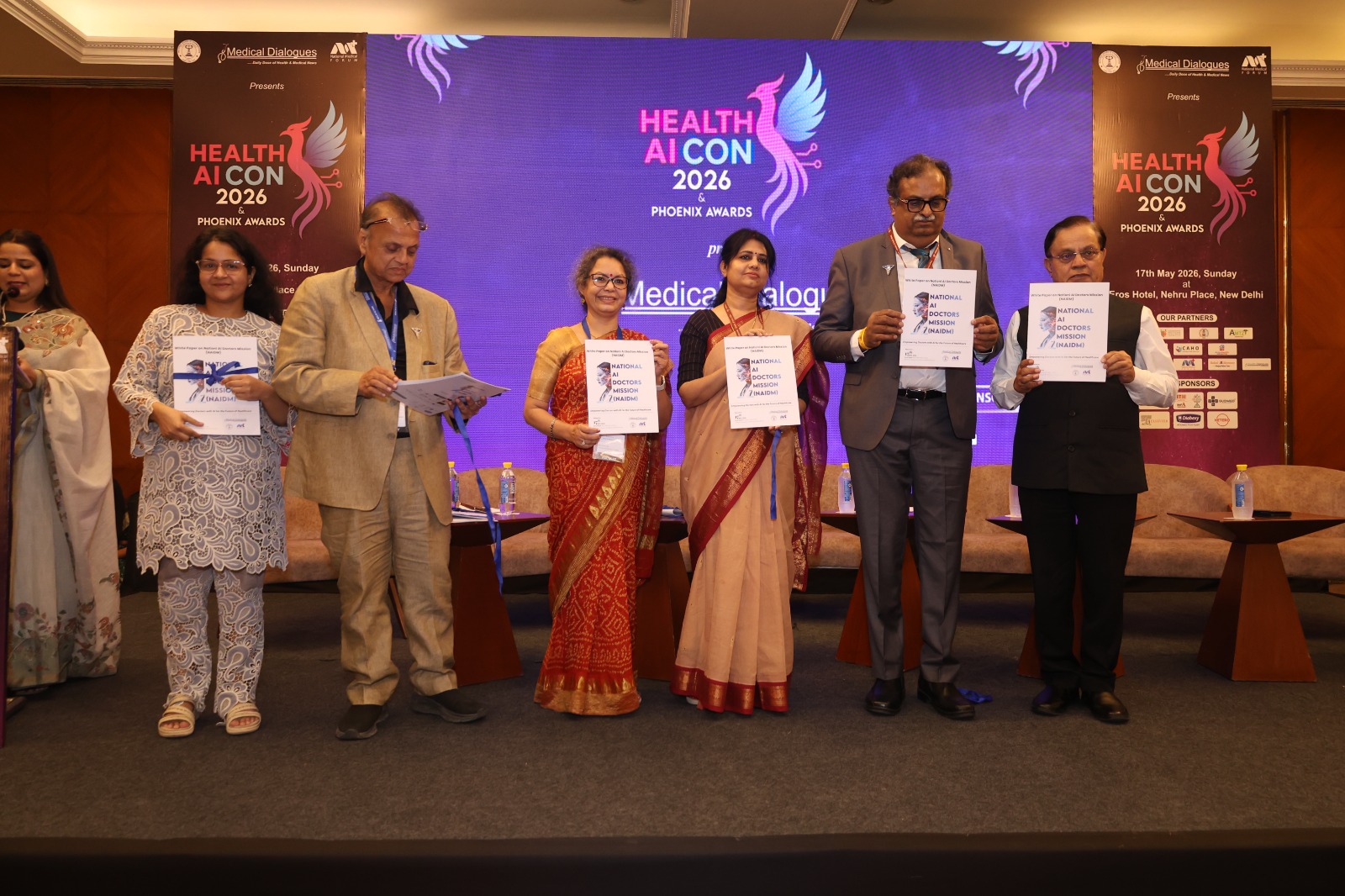
The launch of the National AI Doctors Mission (NAIDM) aims to change this disconnect entirely. Organised by Medical Dialogues in collaboration with the National Medical Forum, this collaborative initiative is designed to bring AI out of abstract theory and into everyday clinical care.
Dr Abhijat Sheth, who is president of the National Board of Examinations in Medical Sciences, said medical education must adapt to the growing role of AI in clinical practice.
"If we continue to train doctors only within the traditional framework, we risk creating a gap between what is taught and what is practised. AI is already a part of the clinical environment now," he said.
"Our education system must accept and reflect that reality. And certainly, that gives us more responsibility to work on regulatory issues related to AI," he added.
As technology reshapes medicine, the critical question is no longer about what AI can do in a laboratory but how ready everyday doctors are to use it in real-world clinics.
Moving From Theory To Everyday Clinical Reality
The core philosophy behind the National AI Doctors Mission is to "make AI useful and usable for every doctor". Currently, there is a visible wave of scepticism among practising physicians. Some worry that automated systems might undermine clinical intuition, while others are anxious about a steep learning curve. Healthcare professionals often wonder how they are supposed to master complex software while managing hundreds of patients daily.
The initiative addresses these exact anxieties by avoiding intimidating technical jargon and focusing on basic, foundational literacy. The goal is not to turn medical professionals into computer programmers. Instead, the programme focuses on helping them understand basic AI applications so they can practically apply these tools to improve diagnostic accuracy, speed up patient care, and reduce heavy hospital administrative workloads.
Instead of limiting AI to high-level discussions, this movement brings the technology directly to the ground level, where doctors can actually use it to improve patient outcomes and efficiency. When implemented properly, AI does not replace the physician. Instead, it strips away repetitive, time-consuming bottlenecks, allowing healthcare workers to focus entirely on patient healing.
Also Read: Fitbit Users May Soon Get AI-Integrated, Customised Coaching Through Google Health
Clinician-Led Technology And Safety Guardrails
While speaking to PTI, the National Medical Commission chairperson, Dr Abhijat Sheth, said the real challenge lies in preparing doctors and healthcare systems to use the technology responsibly and effectively.
He further added, "The adoption of artificial intelligence (AI) in healthcare must evolve in an ethical, safe, and equitable manner, aligned with clinical realities.
"We are not just adopting AI; we are adopting it at scale across a diverse healthcare system, and that brings both opportunity and responsibility," he said during his keynote address.
For artificial intelligence to succeed in a diverse country like India, the technology must be shaped by the people who understand patient care, not just by the engineers who write the software. In medicine, errors carry heavy consequences, meaning technology must be introduced with extreme caution.
By bringing together leading institutions, including the National Board of Examinations in Medical Sciences (NBEMS) and the Indian Council of Medical Research (ICMR), alongside Health Parliament and the Andhra Pradesh MedTech Zone (AMTZ)—the mission ensures that the tools match real public health needs.
This institutional backing is crucial because it directly addresses clinical governance, medical ethics, and data privacy. Biased algorithms or compromised patient data cannot be risked in medical practice. Because of this, the mission prioritises structured training programmes, interactive workshops, and national discussions. By utilising controlled pilot projects and real-world use cases, the initiative aims to show exactly how AI can make a positive difference in everyday healthcare settings without disrupting patient safety.
Implications And Challenges In Implementation In India
The widespread adoption of AI across India's deeply fragmented healthcare sector carries massive implications, but it also faces significant implementation roadblocks. A major hurdle is the sheer lack of standardised digital infrastructure, particularly across rural public health centres and tier-3 cities. For AI models to function accurately and without algorithmic bias, they require clean, structured, and consistent electronic health records, something the Indian medical system is still struggling to unify.
Furthermore, data privacy remains a critical concern. Protecting sensitive patient data under tight ethical guardrails is a massive challenge in an era of frequent cyber threats. There is also a glaring digital divide; many rural healthcare workers lack basic tech literacy, making the rollout of advanced diagnostic software a steep uphill battle.
Bridging this literacy gap through continuous training is essential if technology is to become a true asset rather than an administrative burden. Finally, establishing clear legal accountability for AI-driven clinical errors presents a complex regulatory maze that Indian policymakers have yet to fully resolve.
Also Read: The New Face Of Healthcare: Can AI Help India's Overburdened Doctors And Patients Alike?
Future-Proofing The Healthcare System
The launch of this mission serves as a timely reminder that, as technology evolves, steps must be taken to ensure that "doctors are not left behind but are instead ready to use AI tools in real-world settings".
This is a vital step toward building a future-ready healthcare delivery system. By training medical professionals to view artificial intelligence not as an intimidating competitor but as a transparent, supportive clinical assistant, the Indian medical fraternity can safely adapt to the digital age and strengthen patient care across the country.
(With inputs from PTI)
Disclaimer: This content, including advice, provides generic information only. It is in no way a substitute for a qualified medical opinion. Always consult a specialist or your own doctor for more information. NDTV does not claim responsibility for this information.