






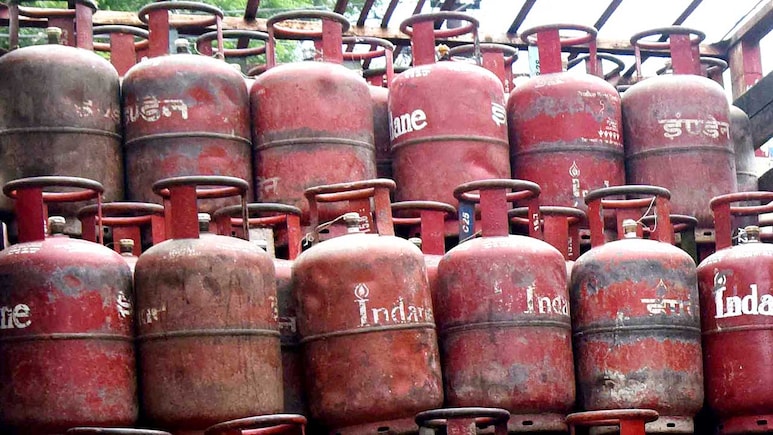
India may be approaching one of the biggest domestic energy transitions in its modern history. Over the next few years, the shift could happen very fast. Indian kitchens are moving away from LPG-based cooking toward electricity, especially induction systems. Electric cooking increasingly fits the economics, infrastructure realities, and lifestyles of modern India better.
For years, India invested heavily in expanding LPG access across the country. Government initiatives such as the Pradhan Mantri Ujjwala Yojana (2016) enabled more than 10.5 crore families to shift away from traditional cooking fuels like firewood, coal, and biomass. The impact of that transition on public health has been enormous, particularly for poorer households and rural women. Over the past decade, LPG coverage in India has expanded from nearly half the population to almost universal access, at least in terms of connectivity and availability.
But beneath this success lies a deeper structural vulnerability. The country remains heavily dependent on imported LPG, leaving households exposed to international oil prices, supply-chain disruptions, exchange-rate volatility, and geopolitical tensions across global energy markets. LPG accounts for over 50% of India's petroleum-product import expenditure and costs India around ₹1 lakh crore annually.
This is where electric cooking becomes strategically important.
Unlike LPG, electricity can increasingly be generated domestically through solar, hydro, coal, nuclear, and wind energy. India has known coal reserves that will last for more than 200 years. In effect, electric cooking allows India to gradually replace dependence on imported fuel with energy that can increasingly be produced within the country itself.
The Centre has begun actively pushing large-scale induction cooking adoption under the National Efficient Cooking Programme (NECP). Energy Efficiency Services Limited (EESL), the government-backed entity that previously led India's successful LED bulb transformation through bulk procurement, has signalled plans that could eventually scale into millions of units over the coming years. The broader objective appears clear, accelerate a shift away from LPG dependence while simultaneously expanding domestic manufacturing capacity for electric cooking appliances.
The significance of this should not be underestimated. India's LED revolution succeeded because the government did not merely advocate behavioural change it reduced costs through scale, procurement, and market creation. The same model now appears to be emerging for electric cooking.
The electricity landscape in India has changed dramatically over the past two decades. A country once associated with chronic power shortages has now built generation capacity exceeding 520 GW, with renewable energy emerging as one of the fastest-growing segments of the sector. Total renewable electricity share is now around 25–27% of India's electricity generation. This matters because electric cooking only becomes transformative when electricity itself becomes sufficiently abundant, stable, and affordable.
India possesses one major structural advantage that few countries can match at scale, Sunlight. Solar electricity is becoming cheaper every year, and daytime solar generation aligns increasingly well with household electricity demand patterns. As rooftop solar, batteries, and smart meters gradually expand, cooking itself could eventually become partially solar powered in many Indian homes.
At the household level, the economics are also beginning to shift. Induction cooktops have become cheaper over the past decade. Today, a basic induction stove cost less than a mid-range smartphone. E-commerce platforms and appliance manufacturers are aggressively expanding the market, particularly among urban consumers, students, migrant workers, nuclear families, and rental households. Millions of induction cooktops are already being sold annually across India.
And once households begin adapting to electric cooking, behavioural shifts follow surprisingly quickly.
Induction systems are significantly more energy-efficient than traditional LPG stoves. Conventional gas stoves typically convert only around 40–55 percent of energy into direct cooking heat, while induction systems can achieve efficiencies closer to 80–90 percent because energy is transferred directly into the cookware itself rather than being lost around the flame.
In practical terms, this means faster cooking, less wasted heat, lower kitchen temperatures during summer, and reduced indoor discomfort, particularly important in Indian cities where kitchens are often compact.
The implications are not limited to energy economics alone. There is also a public health dimension to this shift. As even LPG produces indoor combustion gases and heat. Electric cooking eliminates indoor combustion entirely. There is no open flame, no soot, no smoke, and substantially lower risk of burns, leaks, or explosions.
And here, an uncomfortable social truth must also be acknowledged. Cooking work in India still falls disproportionately on women. Any transition that reduces smoke exposure, heat stress, accident risk, and physical burden inside kitchens is not merely a technological upgrade. It is also a quality-of-life improvement for millions of Indian women.
Another reason why electric cooking is gaining acceptance, particularly in urban India is because it suits the rhythm of contemporary living. They are cleaner, walls accumulate less grease, utensils blacken less, temperature control is more precise, timers and automation reduce constant supervision and cooking spaces remain cooler and easier to maintain.
Large consumer shifts rarely happen because people are lectured into changing habits. They happen when the new system quietly becomes easier, cheaper, cleaner, and more compatible with everyday life than the old one ever was.
But there are some cultural barriers as well. Indian cooking is diverse, heat-intensive, and deeply habit-driven. Concerns around roti puffing, tadka, high-heat frying, and flame-based cooking authenticity are genuine for many households.
But history suggests such resistance is often temporary. Similar doubts once surrounded mixer-grinders, pressure cookers, microwave ovens, washing machines, and even LPG itself when it first began replacing traditional chulhas. Over time, however, practicality usually reshapes tradition far more effectively than policy campaigns do.
(The author is a Senior Advisor at the Ministry of Information and Broadcasting, Government of India. Views are personal.)
Disclaimer: These are the personal opinions of the author

