- About 0.57% of Indian adults suffer from generalized anxiety disorder according to psychiatry data
- Anxiety triggers stress hormones that cause muscle tension in neck, back, jaw, and shoulder areas
- Gut health is affected by anxiety through the gut-brain axis, altering digestion and immunity
According to the Indian Journal of Psychiatry, about 0.57% of the adult population suffers from generalised anxiety disorder. While it is classified as a common anxiety disorder, the mental health cost attached has far greater implications than people assume. Anxiety doesn't just affect the mind; it can show up physically as certain symptoms that can differ from the norm. When anxiety strikes the mind, it tends to overtake the brain and push it into a state of anxiousness. This causes stress that increases the stress hormone response, which gets stored in the muscles and the gut, causing physical symptoms.
Research published in the Frontiers of Neuroscience pinpoints that the mind and body are interconnected. Basically, this means that the mind and body are deeply interlinked, and psychological processes that occur in the mind directly result in physical well-being.
What Does "Stress Stored In The Body" Really Mean?
When an individual is anxious or is in the middle of an anxiety episode, their brain sends a psychosomatic response. The signals emitted from the brain then cause the body to react physically. Anxiety pushes the brain to switch to the fight-or-flight response as it is in a state of survival.
How Anxiety Affects Your Muscles
The secretion of stress hormones due to the presence of anxiety forces the muscles to contract, which results in the neck, shoulder blades, back, and jaw tensing up. When the stress is chronic, then it can result in persistent muscle tension that causes discomfort, pain, and even numbness if too severe.
Anxiety And Gut Health: What's The Connection?
Research published in the Nutrients journal details that anxiety affects the gut microbiota and vice versa. If your gut microbiota is unbalanced, then anxiety symptoms can be experienced due to the gut-brain axis. The disruptor in the gut due to anxiety is the resulting stress that affects digestive function.
It can even alter gut motility and microbiome quality, which affects immune response and gut function.
Common Gut Symptoms Caused By Anxiety
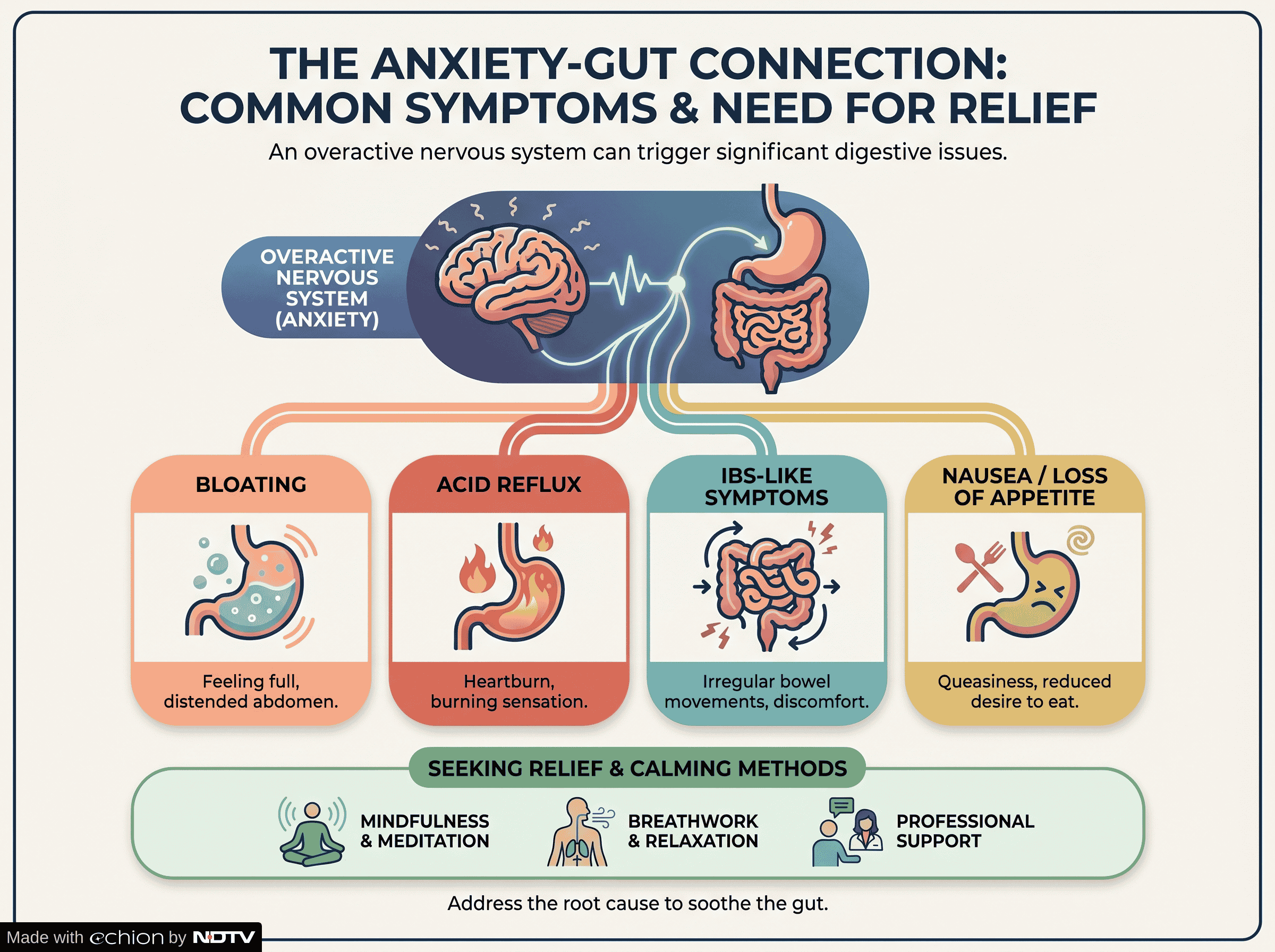
Anxiety can result in common gut symptoms that should trigger you to seek relief methods and use methods to calm your overactive nervous system. Here are the symptoms that can occur, which demand your attention:
- Bloating
- Acid reflux
- Irritable Bowel Syndrome-like symptoms
- Nausea or loss of appetite
Also Read: 7 Signs Of High-Functioning Anxiety You Might Be Ignoring At Work
Why The Body "Stores" Unexpressed Stress
If you don't express your stress in the right manner externally, then the suppressed emotions can cause physical symptoms. The resulting chronic stress can cause the vagus nerve to become overloaded and cause your nervous system to become dysregulated. This vicious cycle of constantly being on edge can lead to long-term psychosomatic issues.
Warning Signs Your Body Is Holding Stress
If you are experiencing the following signs, then they are a warning from your body that it is holding stress, and it needs to be managed. Here are the warning signs that demand your attention:
- Frequent headaches that can occur without a known biological cause.
- Tight muscles, even without exercise, can signal that stress is being stored by your body.
- Digestive issues without a clear cause, such as wrong food combinations, timing issues, or issues with the pace of eating.
- Fatigue or poor sleep is a warning sign that your body needs to process the stress being caused.
Also Read: Anxiety, Muscle Cramps, Migraines? Nutritionist Says It Might Be Magnesium Deficiency
Expert Explains Gut-Brain-Body Connection
Dr Rashmi Satpute, Consultant Psychiatrist, Manipal Hospital, Baner, explains, "Prolonged stress can disrupt digestive function and strain the body in ways that increase long-term health risks."
How To Release Stored Stress From The Body
If you find your body storing stress as it is exhibiting signs of storing stress levels, then you need to:
- Practise deep breathing and relaxation techniques that can calm the nervous system.
- Yoga and stretching exercises can reduce stress levels in the body and calm your mind.
- Therapy or emotional expression is necessary in a non-judgmental space to release pent-up emotions.
- Regular physical activity can give your mind and body an outlet to let out their pent-up emotions.
- Sleep and a balanced diet are necessary to keep your mind well-rested and your body well-nourished to function.
When To Seek Medical Help
Anxiety can turn into a physical health issue, and you need to seek medical attention if you happen to experience:
- Persistent pain without a clear biological cause.
- Chronic digestive problems can worsen with each anxiety episode.
- Anxiety is interfering with daily life and normal functioning.
Anxiety is not just a mental health issue, but it is also a physical health issue. You need to know how it can affect your body, especially your mind and gut. But if you recognise the early signs, then you can prevent chronic health issues.
\r\n
\r\n
Disclaimer: This content including advice provides generic information only. It is in no way a substitute for a qualified medical opinion. Always consult a specialist or your own doctor for more information. NDTV does not claim responsibility for this information.