

)
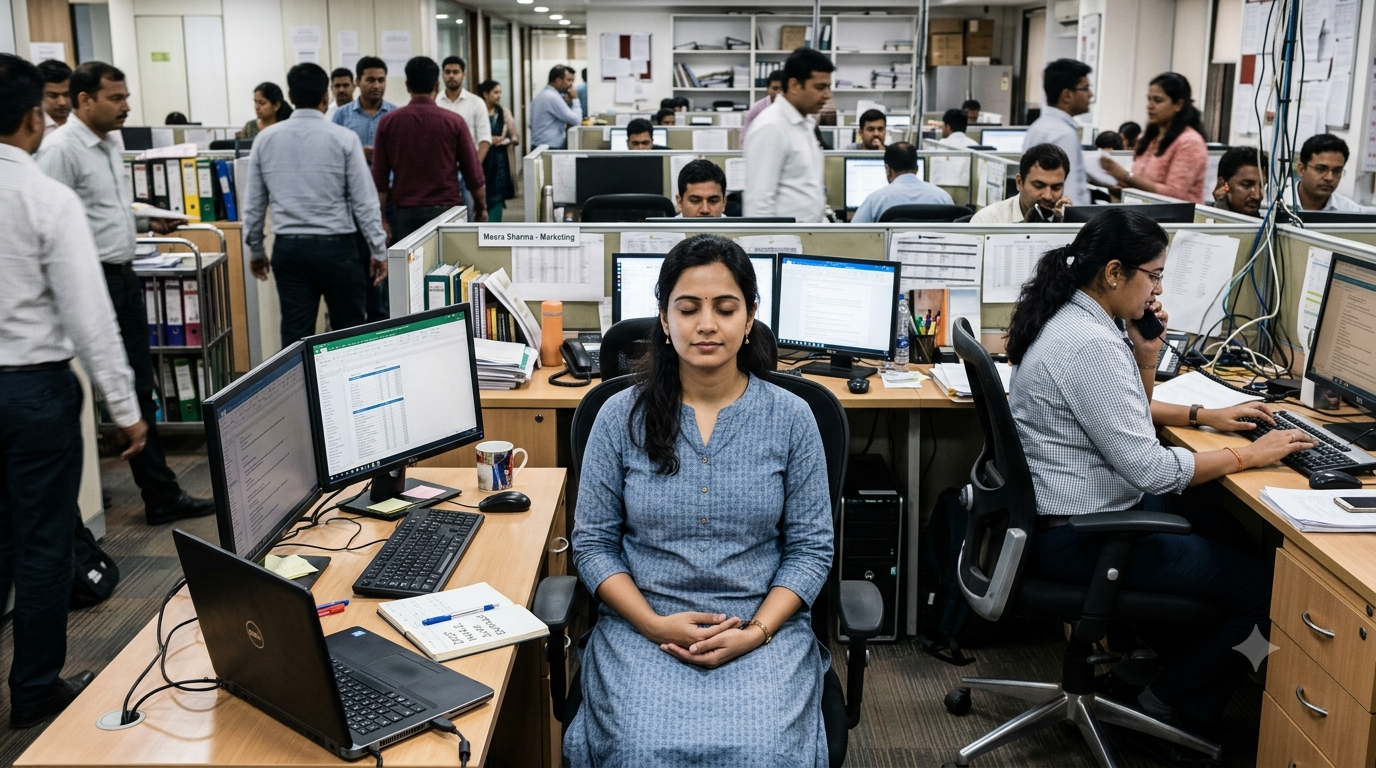
Panic and anxiety often arrive without warning. A racing heart, rapid breathing, trembling hands and spiralling thoughts can leave you feeling as though you're losing control. While professional treatment remains essential for persistent anxiety disorders, psychologists recommend several evidence-based coping strategies that can help manage acute moments of distress. One of the simplest, and increasingly popular, is the 5-4-3-2-1 grounding technique.
Grounding techniques are designed to shift attention away from anxious thoughts and reconnect you with your immediate surroundings. Rather than trying to stop anxiety altogether, they help interrupt the cycle of catastrophic thinking by engaging your senses. The 5-4-3-2-1 method has gained popularity because it requires no equipment, can be practised almost anywhere and takes only a few minutes.
Mental health professionals often recommend grounding exercises as part of broader treatment plans for anxiety disorders, panic attacks, post-traumatic stress disorder (PTSD) and periods of acute stress. Although it is not a substitute for therapy or medication when these are needed, the technique may help reduce the intensity of anxious feelings and improve emotional regulation in the moment.
Here's how the 5-4-3-2-1 grounding technique works, why it may be effective and when you should seek professional help.
What Is The 5-4-3-2-1 Grounding Technique?
The 5-4-3-2-1 grounding technique is a mindfulness exercise that encourages you to focus on your surroundings using your five senses. The aim is to redirect your attention away from racing thoughts and back to the present moment.
The exercise involves identifying:
- 5 things you can see
- 4 things you can touch
- 3 things you can hear
- 2 things you can smell
- 1 thing you can taste
If one sense is unavailable, for example, you cannot smell anything, you can instead think of two scents you enjoy or remember.
How Does It Help During Panic Or Anxiety?
When someone experiences anxiety or a panic attack, the brain often becomes preoccupied with perceived threats. The body's stress response activates the sympathetic nervous system, increasing heart rate, breathing and muscle tension.
Grounding exercises help interrupt this cycle by shifting cognitive focus from internal fears to external sensory information. According to the American Psychological Association (APA), mindfulness-based practices can improve emotional regulation and reduce stress by increasing present-moment awareness.
Similarly, the National Center for Complementary and Integrative Health (NCCIH) notes that mindfulness interventions may help reduce symptoms of anxiety, depression and psychological distress.
How To Practise The Technique
If you begin to feel overwhelmed:
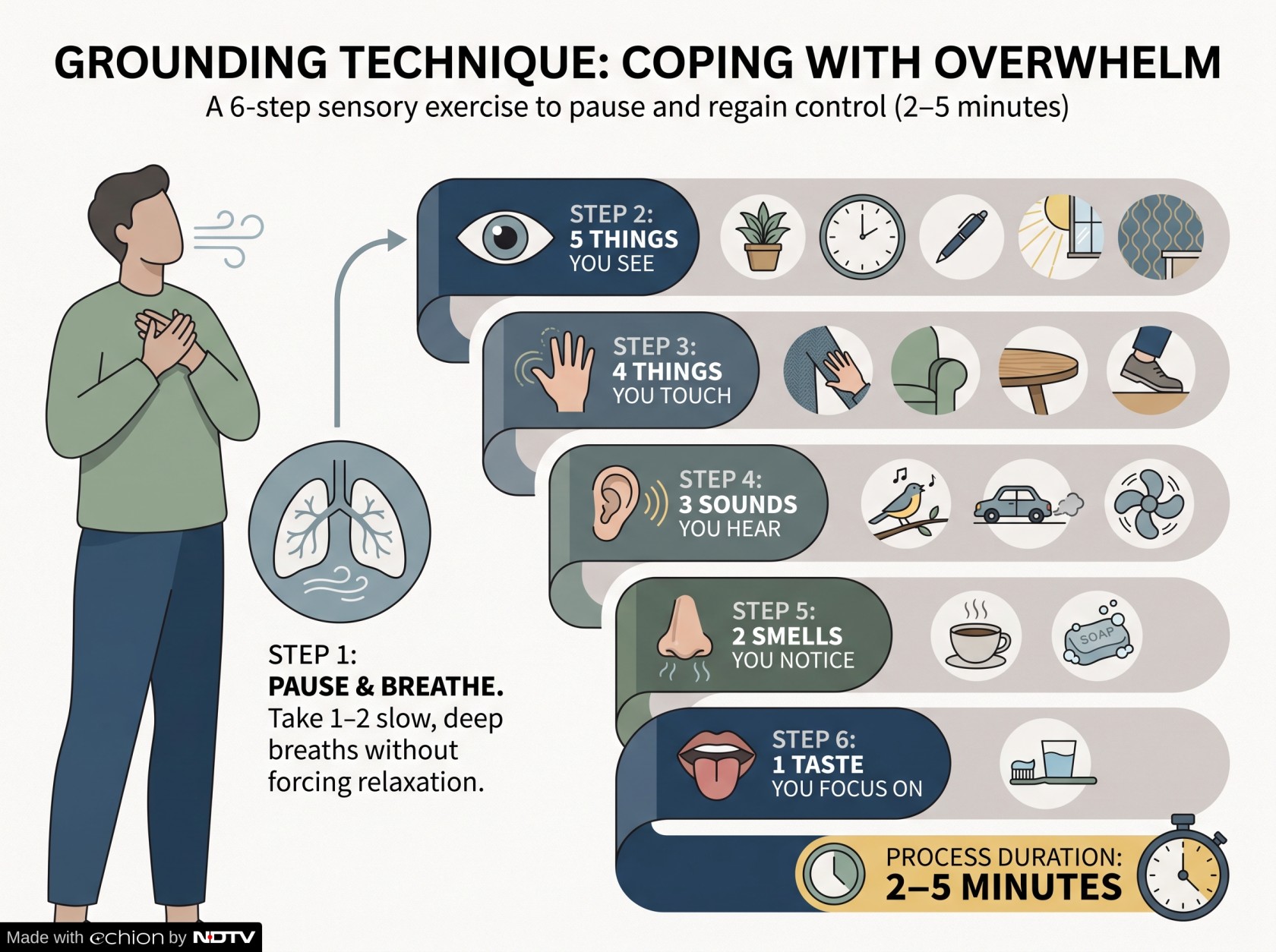
Step 1: Pause and breathe
Take one or two slow, deep breaths without trying to force yourself to relax.
Step 2: Name five things you can see
Look around carefully. It could be a plant, a clock, a pen, sunlight or even the pattern on your wall.
Step 3: Notice four things you can touch
Feel your clothing, chair, table, shoes or the floor beneath your feet.
Step 4: Identify three sounds
Listen for birds, traffic, a fan, distant conversations or your own breathing.
Step 5: Notice two smells
Coffee, soap, perfume, fresh air, or simply recall familiar scents if none are present.
Step 6: Focus on one taste
Perhaps toothpaste, water, tea or simply the taste inside your mouth.
The process usually takes two to five minutes.
What Does The Research Say?
Grounding techniques fall under the broader umbrella of mindfulness and cognitive behavioural coping strategies.
A systematic review published in Clinical Psychology Review found that mindfulness-based interventions can significantly reduce symptoms of anxiety across different populations. Research published in JAMA Internal Medicine also concluded that mindfulness meditation programmes provide moderate improvements in anxiety, depression and pain. The World Health Organization (WHO) highlights stress management and mindfulness among practical self-care approaches that can support mental wellbeing alongside professional care.
While studies specifically evaluating the 5-4-3-2-1 technique are limited, psychologists widely use sensory grounding as part of trauma-informed therapy and cognitive behavioural therapy (CBT) because it helps redirect attention during moments of acute distress.
When Can You Use It?
The technique may be helpful when:
- You feel a panic attack coming on
- Anxiety becomes overwhelming
- You are overthinking or catastrophising
- You feel emotionally flooded after upsetting news
- You're experiencing work-related stress
- Before a presentation or examination
- During travel anxiety
- After exposure to triggering situations
Many therapists also encourage practising grounding regularly, even when calm, so it becomes easier to use during stressful moments.
What It Cannot Do
Although effective for many people, the 5-4-3-2-1 technique is not a treatment for anxiety disorders.
It cannot replace:
- Cognitive behavioural therapy (CBT)
- Medication prescribed by a psychiatrist
- Trauma-focused therapy
- Professional mental healthcare
If panic attacks become frequent, interfere with daily life, or are accompanied by thoughts of self-harm, it is important to seek professional support.
Other Strategies That May Help
Mental health experts often recommend combining grounding with healthy lifestyle habits, including:
- Regular physical activity
- Adequate sleep
- Limiting excessive caffeine and alcohol
- Practising diaphragmatic breathing
- Meditation and relaxation exercises
- Staying socially connected
- Seeking therapy when symptoms persist
A combination of self-care and professional guidance generally provides the best long-term outcomes.
The 5-4-3-2-1 grounding technique is a simple yet practical tool that can help interrupt the cycle of panic and anxious thinking by reconnecting you with the present moment. By engaging your senses one step at a time, it encourages your mind to shift away from fear and towards your immediate environment. While it is not a cure for anxiety or a substitute for professional treatment, it can be a valuable coping strategy during moments of acute stress. If anxiety becomes frequent, severe or begins affecting your quality of life, consult a qualified mental health professional for a comprehensive assessment and personalised care.
Disclaimer: This content including advice provides generic information only. It is in no way a substitute for a qualified medical opinion. Always consult a specialist or your own doctor for more information. NDTV does not claim responsibility for this information.