

)
Sleep problems among children and adolescents are becoming increasingly common, prompting many families to seek quick solutions. One product that has surged in popularity is melatonin, a hormone that regulates the body's sleep-wake cycle and is widely marketed as a natural sleep aid. However, new research suggests that the growing use of melatonin in children may be outpacing the scientific evidence supporting its safety and effectiveness. A recent narrative review published in the World Journal of Pediatrics highlights the dramatic rise in melatonin use among children and teenagers worldwide. The researchers warn that while melatonin can provide benefits for certain clinical conditions, particularly neurodevelopmental disorders such as autism or attention deficit hyperactivity disorder (ADHD), its widespread use among otherwise healthy children raises concerns.
Experts emphasize that melatonin is not simply a harmless supplement but a biologically active hormone that influences multiple systems in the body, including immune function, metabolism and reproductive processes. Because long-term safety data in children remain limited, researchers are calling for greater caution, better regulation of over-the-counter melatonin products and stronger clinical guidance for parents and healthcare providers.
Why Melatonin Use Is Increasing Among Children
Sleep disturbances are increasingly reported in school-age children and teenagers, driven partly by lifestyle factors such as late-night screen use, irregular sleep schedules and academic pressures. Poor sleep in childhood can affect emotional regulation, cognitive development, behaviour and long-term health. In response, many parents are turning to melatonin because it is easily available, often sold over the counter and commonly marketed as a "natural" remedy for insomnia. Child-friendly formulations, such as gummies or chewable tablets, have further increased its popularity.
The review found that melatonin use has risen sharply in recent years, especially in countries where it is widely accessible without prescription. However, this rapid growth has created a gap between real-world use and the available scientific evidence evaluating its safety in children. Researchers say this mismatch highlights the need for clearer guidance on when melatonin should be used and how it should be prescribed in paediatric care.
Also Read: Long-Term Melatonin Use May Increase Heart Failure Risk: All Possible Side Effects Explained
Evidence Shows Benefits for Some Children
Although concerns exist, the research does confirm that melatonin can provide meaningful benefits for certain groups of children. Strong clinical evidence supports the short-term use of melatonin in children with neurodevelopmental disorders such as autism spectrum disorder and ADHD. In these cases, the hormone has been shown to help children fall asleep faster, increase total sleep duration and improve overall family quality of life.
Sleep difficulties are particularly common in children with these conditions because of disruptions in circadian rhythm regulation. By mimicking the natural hormone produced by the brain's pineal gland, melatonin may help restore more regular sleep patterns. However, researchers emphasize that most clinical trials have focused on short-term treatment, leaving important questions unanswered about long-term use.
Limited Evidence for Healthy Children
For children without underlying developmental conditions, the scientific evidence is far less clear. Many available studies involve small sample sizes, short treatment durations or older children and adolescents. As a result, researchers say there is insufficient data to draw firm conclusions about the safety or effectiveness of melatonin in younger children or for long-term use.
Scientists also remain uncertain about whether prolonged exposure to melatonin could influence puberty, hormonal development, immune responses or metabolic processes. Because melatonin interacts with several biological systems, some experts warn that treating it like a simple vitamin supplement could be misleading.
Also Read: Ashwagandha Gummies vs Melatonin Gummies: Which One Can Help Fix Your Sleep Cycle?
Concerns About Supplement Quality and Safety
Another major concern raised by the review is the inconsistency in melatonin supplement formulations available on the market. Independent testing of commercial melatonin products has shown that the amount of hormone contained in supplements can vary widely from the labelled dose. In some cases, products contained significantly higher levels of melatonin than indicated or even additional compounds such as serotonin.
These inconsistencies can make dosing unpredictable, particularly in children whose bodies may be more sensitive to hormonal changes.
There has also been a rise in accidental melatonin ingestion among young children. Paediatric poison control centres have reported increasing cases, often linked to gummy supplements that resemble candy and are not stored safely at home. Such findings suggest that real-world risks may be greater than those observed in controlled clinical trials.
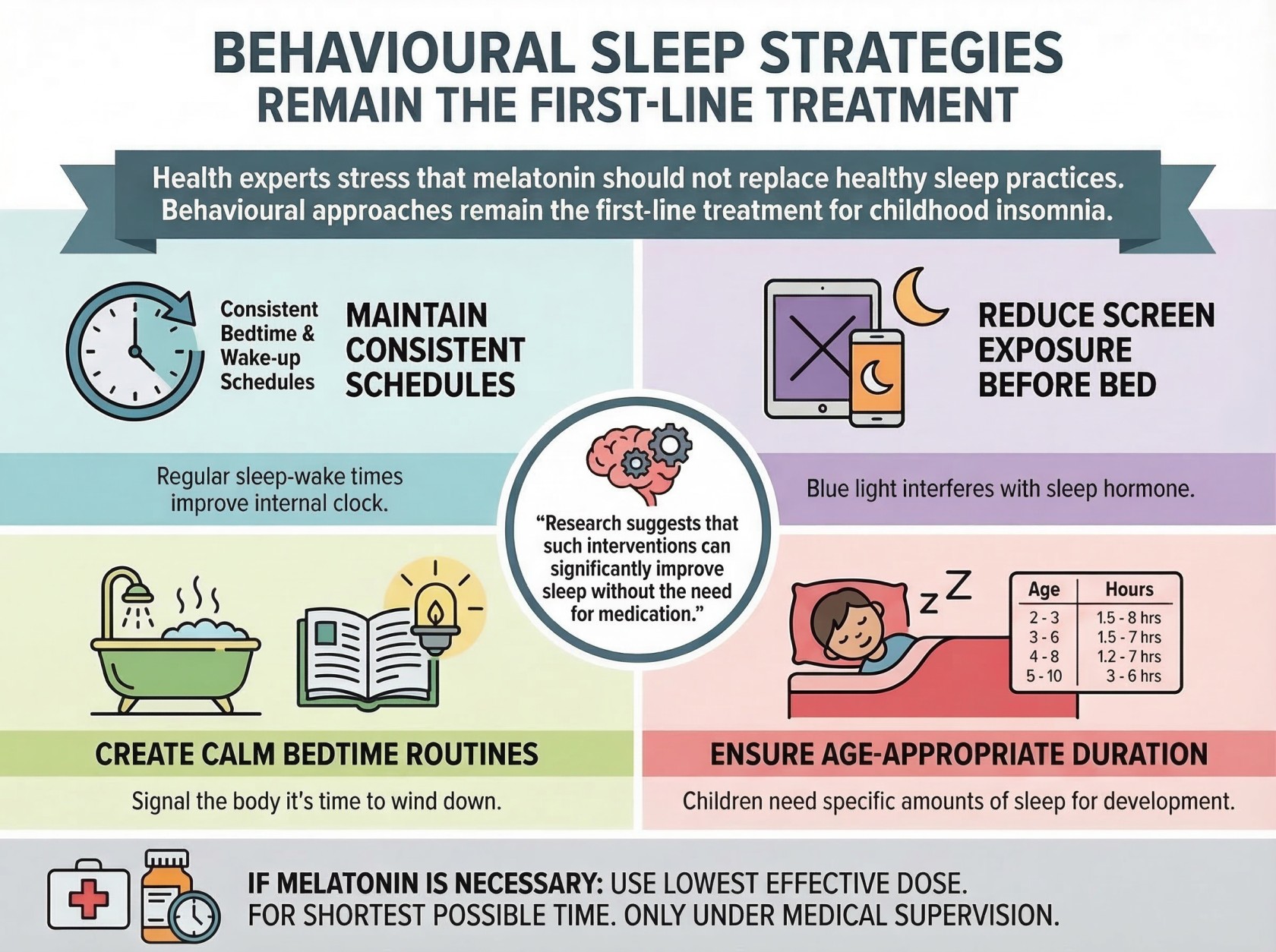
Behavioural Sleep Strategies Remain the First Line Treatment
Health experts stress that melatonin should not replace healthy sleep practices. Behavioural approaches remain the first-line treatment for childhood insomnia. These strategies include:
- Maintaining consistent bedtime and wake-up schedules
- Reducing screen exposure before bedtime
- Creating calm bedtime routines
- Ensuring age-appropriate sleep duration
Research suggests that such interventions can significantly improve sleep without the need for medication.
If melatonin is considered necessary, the review recommends using the lowest effective dose for the shortest possible time and only under medical supervision.
The new review highlights a growing global trend: millions of children are using melatonin supplements for sleep despite limited long-term evidence on safety. While the hormone may offer clear benefits for children with neurodevelopmental disorders, its widespread use among otherwise healthy children raises important concerns.
Experts say melatonin should be treated as a hormone therapy rather than a harmless supplement. Stronger regulation, clearer dosing guidelines and more long-term research will be essential to ensure that children receive safe and evidence-based treatment for sleep problems. Until then, healthcare professionals emphasize that healthy sleep habits, not supplements, should remain the cornerstone of paediatric sleep care.
Disclaimer: This content including advice provides generic information only. It is in no way a substitute for a qualified medical opinion. Always consult a specialist or your own doctor for more information. NDTV does not claim responsibility for this information.