

)
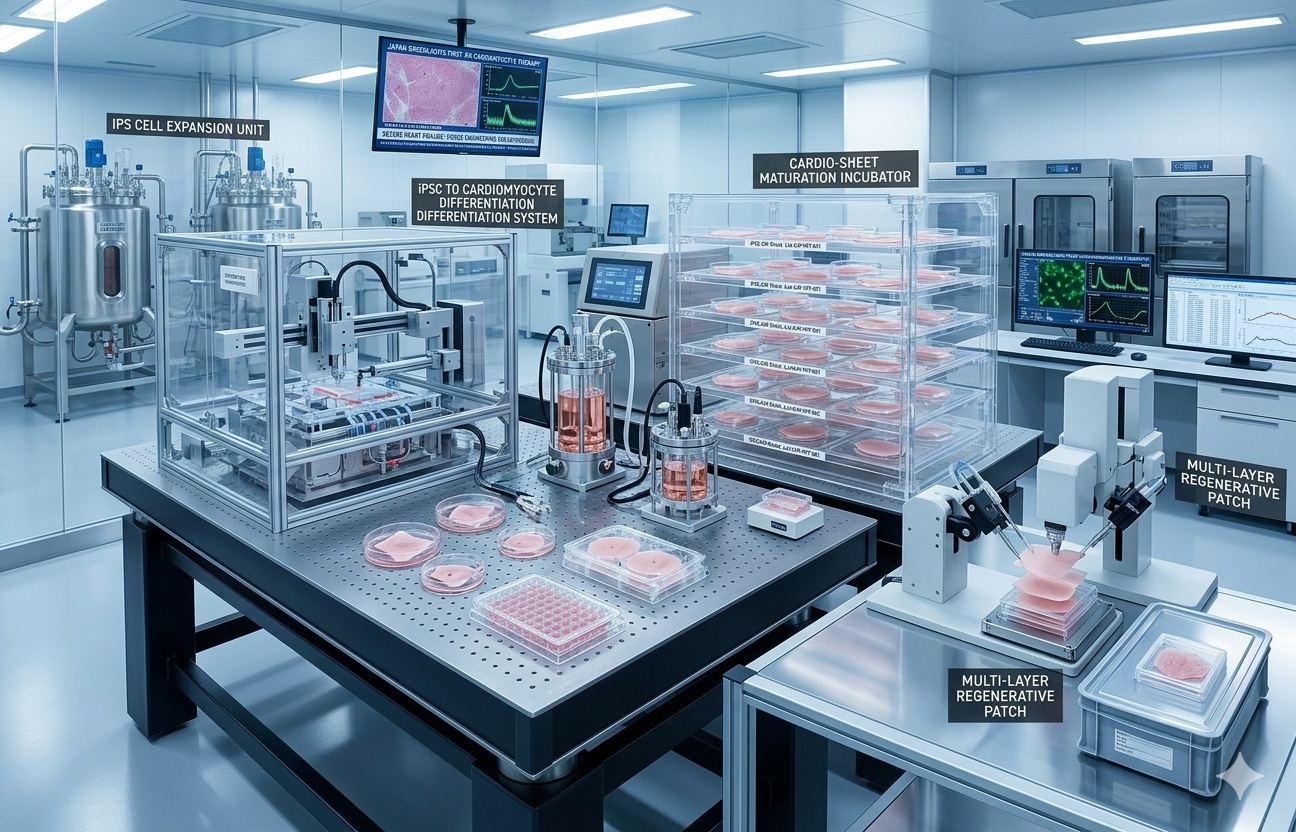
Japan's Ministry of Health, Labour and Welfare (MHLW) has become the first in the world to grant approval to the world's first innovative stem cell therapy for severe heart failure. The permission is conditional and based on a specific time duration for targeted regenerative medicine products for both severe heart failure and Parkinson's disease. Regenerative medicinal products focus on re-engineering parts of human or animal cells to restore the normal function of body tissues. The world's first pluripotent stem cell (iPSC)-based medicinal product, named ReHeart, has been developed by a company specializing in the creation of innovative medicinal products. This milestone is a major win for the global and Indian markets, as it is the first time that iPSC technology has been turned into commercial therapeutic products that were discovered in 2006.
Globally, heart disease affects 233 million people, out of which 19.41 million deaths were recorded, as per a recent joint report by the American Heart Association and Stroke Statistics Update. While in India, the number of cardiovascular diseases is 905 per 100,000 population (2021), and the deaths were at 2,873,266 as per the World Heart Federation. Not only are these figures alarming, but the need for global regenerative medicine could significantly minimise this global disease burden.
What Are iPSCs?
The stem cells could offer a chance of reversing the damage caused by severe heart failure. Severe heart failure is an end-stage heart condition wherein the heart is unable to pump the blood required throughout the body to meet its needs, leading to life-threatening symptoms and complications. The engineered stem cells that utilise iPSC technology and stem cell reprogramming are created from adult cells and can be transformed to adapt into any type of cell in the human body.
This specific technology has been developed by Nobel Prize-winning researcher Shinya Yamanaka, and Sir John B. Gurdon discovered that mature cells could be reprogrammed to become pluripotent (one cell is able to become multiple cells).
Details Of The Approved Therapy For Severe Heart Failure
When it comes to severe heart failure, the heart muscles become damaged. To repair the damage, regenerative medicinal products like Ri Heart focus on stem-cell-derived heart muscle patches.
The effectiveness of heart failure therapy, as per the state-of-the-art review published in the BMJ, stands at 40%, where advancements have led the charge of offering relief to heart disease patients. While new treatments have constantly been developing at a rapid pace due to the increasing heart disease incidence and prevalence, their efficacy rates reflect that there is a much longer road ahead to bridge the gap to complete eradication.
Clinical Trial Evidence
The new therapy is experimental in nature, and the conditional permission to use it has been granted. Based on small-scale trials where 7 to 8 patients and the effect of the treatment have shown promising results.
There was a significant improvement in symptoms and exercise tolerance that is necessary for heart disease patients.
Not only is iPSC stem cell treatment showing promise in heart disease symptoms and complications, but it is also being applied to treat ocular diseases, Hodgkin lymphoma, non-small cell lung cancer, and diabetes.
Risks and Challenges Involved
As is the case with every new therapy on the market, there are risks and challenges to its application that you need to be aware of before opting for these therapies. Here is what you need to know:
- When it comes to severe heart failure, heart disease progression is individualised and needs a similar kind of treatment protocol to see visible results.
- The genomic instability, specific tumour formation if present on the heart, and individual immune reactions are factors that can influence treatment outcomes.
- There needs to be constant monitoring to ensure the safety of stem cell therapy, as the body needs to accept the treatment in order for it to work effectively.
Also Read: Delhi CM Proposes Plan To Merge 3 Major Hospitals Into AIIMS-Style Super Medical Hub
Regulatory Framework For Innovative Therapies
There is a stringent regulatory framework in place, but it is based on conditions based on an approval system since 2014.
According to Front Pharmacology and the International Journal of Drug Regulatory Affairs, the regulatory guidelines have been established for regenerative medicine that ensure safety measures.
Global Implications Of Innovative Therapies
Every new medical treatment on the market that shows promise runs the risk of commercialisation, which means it can become inaccessible to those who really need it. Parkinson's and severe heart failure treatment could globally and in India help a population that remains struggling to cope with its increased chronic disease burden. The future of regenerative medicine rests in the development of innovative treatment options and making global stem cell therapy safer and more accessible.
Japan's medical breakthrough is a sign that it is becoming a leader in the regenerative medicine field. Larger trials with varied data pools are needed for accurate assessment of effectiveness and long-term safety data.
Disclaimer: This content, including advice, provides generic information only. It is in no way a substitute for a qualified medical opinion. Always consult a specialist or your own doctor for more information. NDTV does not claim responsibility for this information.