
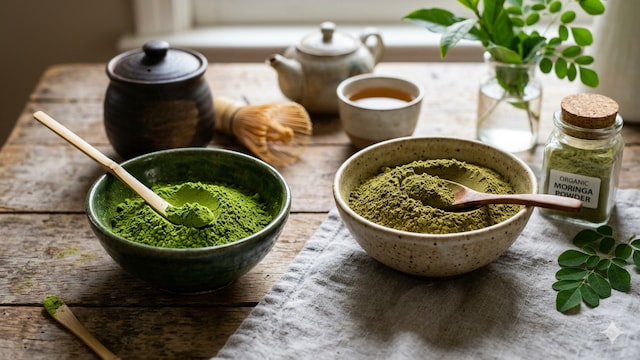
Fatty liver disease affects 1.3 billion people worldwide, which is why it poses a significant healthcare burden. The Lancet journal has flagged fatty liver disease as an epidemic, which has turned people to green powders like matcha and moringa to repair their livers. Liver repair is possible when fatty liver is in grade 1, and diet plays a major role in fatty liver disease progression. Research published in the Nutrients journal pinpoints that matcha contains catechins, which reduce fat accumulation in the liver due to metabolic dysfunction. Fatty liver is a spectrum disease that can progress to simple steatosis (fat accumulation), steatohepatitis (inflammation), fibrosis, cirrhosis, and even liver cancer. Research published in the Journal of Nutrition and Metabolism suggests that moringa powder is rich in flavonoids, quercetin, and phenolic acids. These compounds have antioxidant and anti-inflammatory properties.
What Is Fatty Liver And Why Diet Matters
Fatty liver is a disease that develops when fat accumulates in the liver, affecting its functioning. It is triggered by poor diet, obesity, and insulin resistance. And diet plays a key role in reversal and is crucial to ensure that fatty liver doesn't progress to something serious. Even children in India are developing fatty liver disease due to their dietary and lifestyle choices, but faulty genetic factors are also contributing to the disease burden.
Matcha For Fatty Liver - Does It Really Work?
Research published in the Nutrients journal signals that matcha in controlled doses needs to be consumed to slow down the pace of fat accumulation in the liver. Healthy liver tissue needs a mixture of compounds that nourish its functioning and make it smoother for it to perform its functions.
Matcha is preferred as a dietary intervention that can address fatty liver, as it contains the following:
- Catechins (EGCG), which reduce fat accumulation that penetrates healthy liver disease and affect its functioning.
- It functions as a powerful antioxidant and anti-inflammatory, and it may help with reducing liver fat and improve metabolism.
- It acts as a supportive measure for fat oxidation, which ensures its breakdown and metabolism.
- Furthermore, green tea contains compounds linked to better liver enzyme levels, and it may reduce oxidative stress in fatty liver.
Moringa For Fatty Liver - A Superfood Advantage?
Research published in the Food Research International details that moringa powder contains polyphenols, flavonoids, and vitamin C, making it a potent fatty liver remedy. But its effect takes time to show results, and certain people tend to be allergic to moringa or have an adverse reaction. But it is known for:
- Anti-inflammatory properties
- Liver detox support
- Help reduce fat accumulation, which is responsible for regulating liver function
Also Read: Why Is Fatty Liver Rising Among Non-Alcoholics Under 35? Doctor Answers
Matcha vs Moringa - Key Differences
The key differences between matcha and moringa powder are as follows:
- For antioxidants' presence, matcha contains a high amount of them in the form of catechins. While moringa is rich in polyphenols, making it a must-have healthy dietary option as part of dietary approaches that improve fatty liver.
- For metabolism, matcha has a strong effect, and moringa has a moderate effect on it.
- For liver detox, matcha has a moderate effect, and moringa has a strong effect.
- A caffeine dose is present in matcha but not in moringa.
Traditionally, matcha is consumed as a tea, and moringa is an herb whose extract can be consumed in pill or powder form.
Which One Is Better For Fatty Liver?
Fatty liver is a complex disease that requires consistent and persistent changes to diet. Matcha is better for fat burning and improving metabolism. But moringa is better for detox and inflammation control in the body.
To address fatty liver in patients, their body's condition, along with their ability to follow through on necessary dietary changes, are factors to keep in mind.
Both matcha and moringa are rich in antioxidants that can support liver health, but they are not standalone cures. A balanced diet and lifestyle changes remain critical for reversing fatty liver disease.
Also Read: Fatty Liver Grades Explained: What Your Diagnosis Means For Health
How To Use These Powders Safely
These green powders can be used safely when consumed in a controlled manner. Here is how you can do so:
- Limit intake to 1-2 teaspoons per day so that side effects from an excess dose can be avoided.
- Avoid added sugar blends, as they spike blood sugar levels.
- Consult a doctor if liver disease is severe and if you are already on medication.
Other Diet Tips To Repair Fatty Liver
Dietary tips that can repair a fatty liver can include:
- Reduce sugar and refined carb intake.
- Increase the intake of fibre and healthy fats.
- Stay physically active to boost your metabolism.
- Maintain a healthy weight to reduce fat storage.
No single food can "repair" fatty liver alone, and matcha and moringa both offer supportive benefits. Long-term liver health depends on overall diet and lifestyle habits.
Disclaimer: This content including advice provides generic information only. It is in no way a substitute for a qualified medical opinion. Always consult a specialist or your own doctor for more information. NDTV does not claim responsibility for this information.