

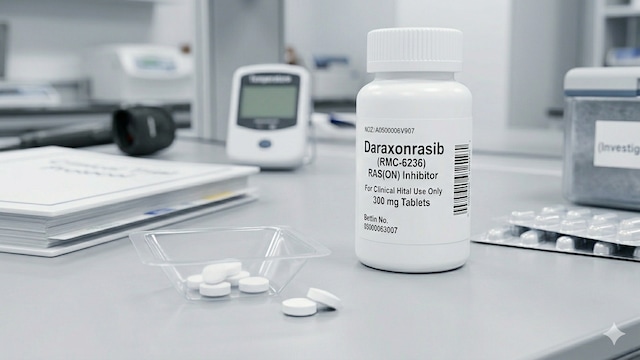
Researchers found that the pancreatic cancer drug daraxonrasib stopped tumours from growing in 90% of patients with advanced disease. In the early-stage trial, involving 61 people whose pancreatic cancer had already spread to other parts of the body, more than 60% saw their tumours shrink or disappear. In around 8% of patients, scans could no longer detect the cancer. The findings have been described by experts as one of the biggest advances in pancreatic cancer treatment in decades.
Patients were followed for an average of about 18 months, and 76.6% were still alive one year after starting treatment. However, doctors have stressed that daraxonrasib is not a cure yet, and it is still unclear how long the cancer can remain under control. Larger and longer studies are needed to understand whether the drug can improve long-term survival.
Why Is Pancreatic Cancer So Difficult To Treat?
Pancreatic cancer is considered one of the hardest cancers to treat because it is often diagnosed only after it has already spread. Once the disease reaches other organs, treatment becomes more difficult and the chances of long-term survival reduces.
The pancreas is located deep inside the abdomen, and early pancreatic cancer may cause few symptoms. By the time symptoms such as unexplained weight loss, jaundice, abdominal pain or changes in digestion appear, the cancer may already have reached advanced stages.
Another major challenge is the biology of pancreatic cancer. More than 90% of people with the most common form of the disease have changes in a gene called KRAS. These mutations help cancer cells continue growing and dividing. For decades, scientists struggled to develop medicines that could target this protein.
How Does Daraxonrasib Work?
Daraxonrasib is a targeted cancer drug designed to block abnormal RAS proteins, including KRAS, which can cause cancer growth. In simple terms, cancer cells with these mutations receive signals that tell them to keep growing. Daraxonrasib works by attaching to the altered protein and switching off these growth signals. This is important because KRAS has long been considered difficult to target with medicines. The development of drugs capable of blocking this pathway has therefore been seen as a major step forward in cancer research.
What Did The New Trial Find?
The latest findings came from a phase I/II trial involving 61 patients with newly diagnosed advanced pancreatic cancer. They received daraxonrasib along with chemotherapy. Researchers found that:
- Tumours stopped growing in 90% of patients
- More than 60% experienced tumour shrinkage or disappearance
- About 8%, or roughly one in 12 patients, had no detectable cancer on CT scans
- After one year, 76.6% of patients were alive
The researchers followed participants for an average of 18 months. Some patients continued to have no visible cancer during this period. However, researchers need longer follow-up to know whether these responses will last.
Does It Mean The Cancer Has Been Cured?
Not yet, and this is one of the most important points to understand about the results. A scan showing no detectable tumour does not necessarily mean that every cancer cell has been eliminated. Pancreatic cancer can return even after treatment appears to have worked.
Researchers therefore need to follow patients for several years to determine how long the cancer remains controlled and whether some patients achieve long-term remission. The current results are encouraging because they suggest that the disease can be controlled more effectively than before, but they do not prove that daraxonrasib can permanently eliminate pancreatic cancer.
What About Survival Benefits?
The latest 61-patient trial adds to earlier evidence supporting daraxonrasib. In a separate randomised trial involving about 500 patients with metastatic pancreatic cancer whose disease had stopped responding to earlier treatment, patients receiving daraxonrasib lived for a median of 13.2 months, compared with about 6.7 months among those receiving chemotherapy. This represented nearly twice the median survival time.
The US Food and Drug Administration approved daraxonrasib in August 2026 for certain patients with advanced pancreatic cancer, while European approval followed in November.
Could The Drug Help Treat Other Cancers?
Researchers are also interested in understanding whether daraxonrasib can be useful against other cancers. RAS and KRAS mutations are involved in several types of cancer, including some lung, bowel and ovarian cancers. Researchers are therefore studying whether drugs targeting these mutations can work beyond pancreatic cancer.
Disclaimer: This content including advice provides generic information only. It is in no way a substitute for a qualified medical opinion. Always consult a specialist or your own doctor for more information. NDTV does not claim responsibility for this information.