

)
Diabetes management requires constant blood sugar control to prevent complications associated with the condition, such as heart disease, nerve damage, kidney damage, vision problems, and foot issues. Additionally, managing blood sugar effectively improves quality of life. When blood glucose levels are stable, individuals often experience more energy, fewer mood swings, and better physical health. When it comes to monitoring blood sugar levels, individuals with diabetes generally have two primary options: traditional blood glucose monitoring and continuous glucose monitoring systems. These days, continuous glucose monitoring systems have gained attention and are used to monitor blood glucose throughout the day. If you are a diabetic and wondering which is good for you, here's a guide for you.
Blood Glucose Monitoring vs Continuous Glucose Monitoring
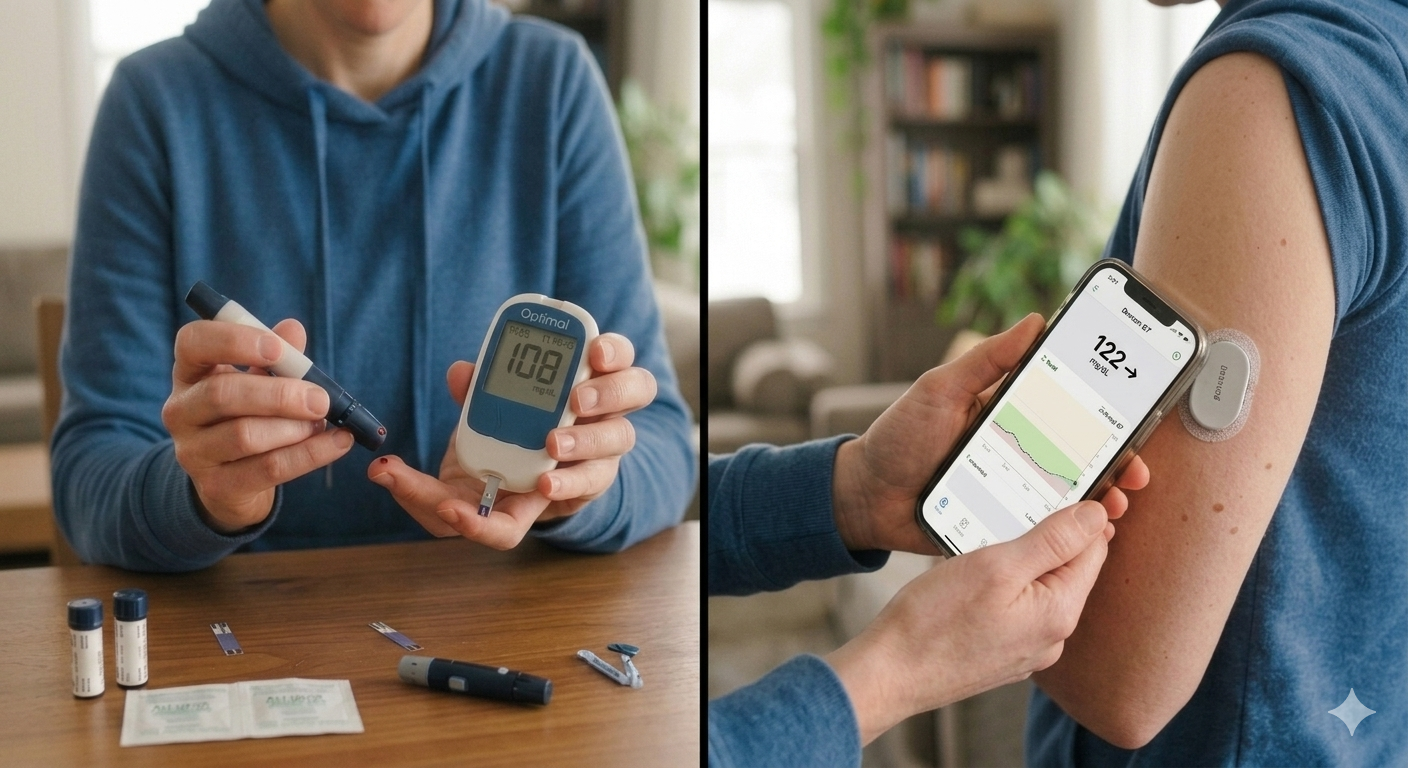
Traditional Blood Glucose Monitoring (BGM) provides a single snapshot of your blood sugar at one exact moment, whereas Continuous Glucose Monitoring (CGM) tracks your glucose levels 24/7 through a wearable sensor. Deciding between the two depends heavily on your type of diabetes, treatment plan, budget, and lifestyle needs.
1. Blood Glucose Monitoring (BGM)
This method involves using a glucometer to check blood sugar levels at specific times throughout the day. You prick your finger to place a drop of capillary blood onto a test strip. It tells you exactly what your blood sugar is at that second.
Pros
- More affordable and accessible for most people.
- Simplicity in use as the process is straightforward, and the results are obtained in seconds.
- Provides immediate feedback on blood sugar levels.
Cons
- Requires multiple finger pricks throughout the day, which can be inconvenient and uncomfortable.
- Offers only a snapshot of blood sugar at a specific point in time, which may not provide a comprehensive understanding of overall glucose patterns.
- May require more frequent testing to achieve optimal management, especially for those on insulin therapy.
2. Continuous Glucose Monitoring (CGM)
A tiny sensor filament sits just under your skin, measuring glucose in your interstitial fluid (the fluid between your cells) every 1 to 5 minutes, sending data continuously to your phone or a reader.
Pros
- Provides continuous tracking of glucose levels, allowing users to see trends and patterns over time.
- Alarms can alert users to high or low blood sugar levels, helping to prevent dangerous situations.
- Reduces the need for frequent finger pricks, as it offers regular updates on blood sugar levels.
Cons
- Generally more expensive than traditional blood glucose meters.
- Requires regular sensor replacements and may not always provide accurate readings, particularly in cases of rapid changes in blood sugar levels.
- Some users may experience discomfort from wearing the sensor or issues with skin irritation.
Which one is more accurate?
A Blood Glucose Monitor is more accurate than a Continuous Glucose Monitor at any single moment in time. BGMs measure glucose directly from your blood, whereas CGMs measure glucose from the surrounding fluid under your skin, which can lag behind blood glucose levels by about 10 to 15 minutes.
While CGM provides continuous tracking and valuable trends over time, it may not always reflect real-time glucose changes accurately, especially in situations where blood sugar levels are fluctuating rapidly.
However, looking at your health as a whole, CGMs are highly reliable for daily diabetes management because they capture 24/7 trends and continuous data that a single finger prick might miss.
Which one should you choose?
Choose Continuous Glucose Monitoring (CGM) if:
1. You have Type 1 Diabetes: CGMs provide constant updates on your blood sugar levels, which helps you adjust your insulin doses and avoid dangerous low blood sugar, especially at night.
2. You use insulin delivery methods: If you take insulin through a pump or multiple daily injections, a CGM can work with your system to help manage your insulin automatically.
3. You don't often feel low blood sugar symptoms: If you often don't notice when your blood sugar is dropping, a CGM can alert you with alarms to prevent serious issues.
4. You experience unexplained sugar spikes or drops: The continuous tracking provided by CGMs helps you and your doctor understand why your blood sugar levels might be fluctuating unpredictably.
Choose Blood Glucose Monitoring (BGM) if:
1. You manage Type 2 Diabetes without insulin: If you manage your Type 2 diabetes through diet, exercise, or medication and don't need insulin, a regular blood glucose monitor is generally enough.
2. You are looking for an option under budget: Blood glucose monitors are usually less expensive than CGMs, making them a more affordable choice.
Considerations for choosing a monitoring method:
- Budget: Check what you can afford, including the costs of devices and supplies.
- Lifestyle: Think about how you live your day-to-day life. If you want something easy and convenient, a CGM might be a better fit. If you're okay with occasional checks, a blood glucose monitor could work well.
- Health goals: Talk to your doctor about your health goals and see which monitoring method aligns best with them.
A quick reminder: Every CGM user still needs a BGM
Even if you choose to use a CGM, you still need a blood glucose monitor for backup. It's important for checking your numbers when you start using a new sensor, if your symptoms don't match what the CGM shows, or if you need to adjust the sensor's accuracy.
Ultimately, decide on the monitoring method that fits your lifestyle and preferences while also following your doctor's advice to manage your diabetes effectively and maintain your health. Always consult with your doctor about your options!
Disclaimer: This content including advice provides generic information only. It is in no way a substitute for a qualified medical opinion. Always consult a specialist or your own doctor for more information. NDTV does not claim responsibility for this information.