

)
Millions of people get their cholesterol levels tested every year to track their heart health. Most of these tests measure low-density lipoprotein (LDL) cholesterol, which is also known as the "bad cholesterol." Doctors have relied on LDL levels for decades to understand the risk of heart disease and decide whether a person needs medicines such as statins. While this test has helped prevent countless heart attacks and strokes, a new study says it may not be enough.
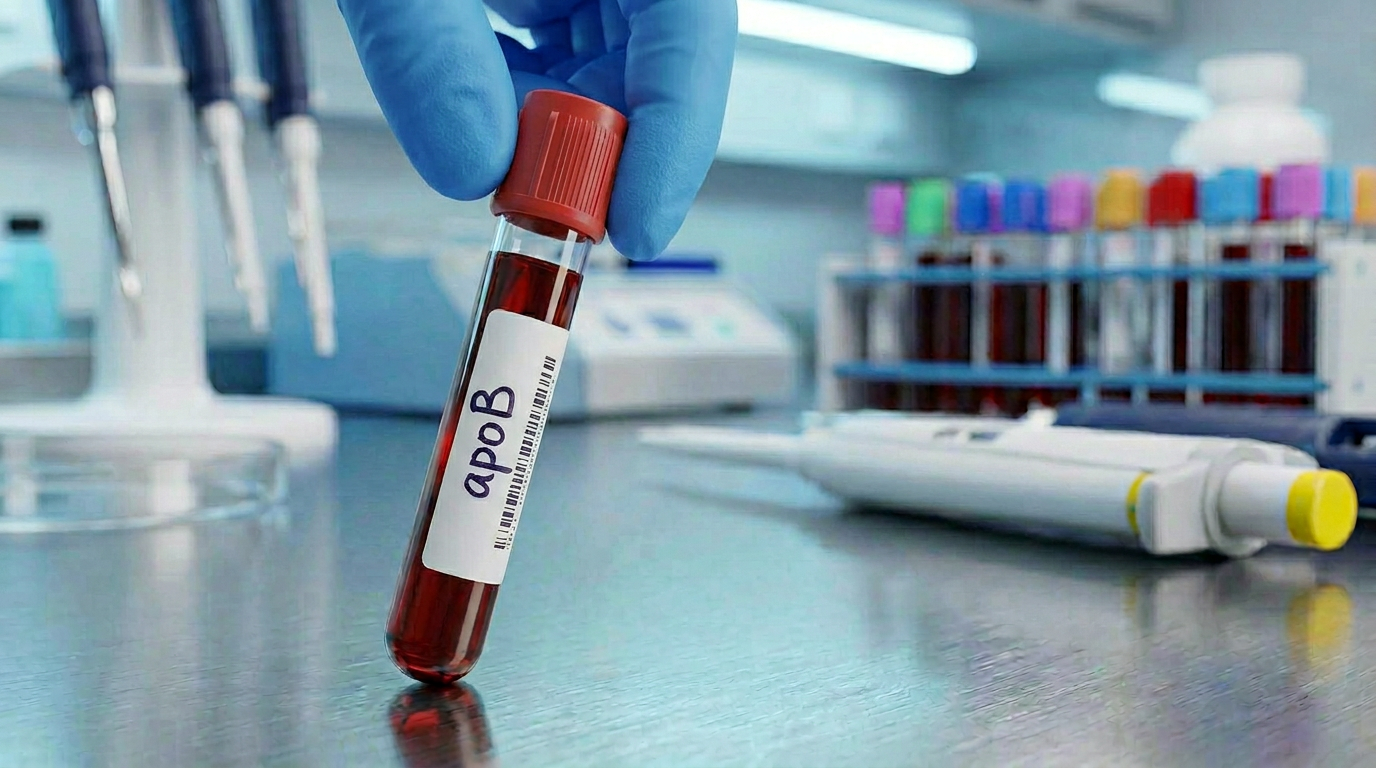
A recent study, published in JAMA, has found that another blood test, called the apolipoprotein B (apoB) test, may be better at identifying people who are truly at risk of heart attacks and strokes. Researchers say that apoB measures the number of harmful cholesterol-carrying particles in the blood rather than just the amount of cholesterol they contain. This means some people with normal LDL cholesterol could still have a high number of dangerous particles that increase their risk of heart disease, making apoB a more accurate marker in many cases.
What Does A Regular Cholesterol Test Measure?
A standard cholesterol test, also known as a lipid profile, measures several types of fats in the blood. These include total cholesterol, LDL cholesterol, high-density lipoprotein (HDL) or "good" cholesterol, and triglycerides.
Among these, LDL cholesterol has long been the main focus. This is because high LDL levels are linked to plaque build-up inside arteries. Over time, this plaque can narrow blood vessels and increase the risk of heart attacks and strokes. However, cholesterol itself is carried through the bloodstream inside tiny particles. Two people can have the same LDL cholesterol level but a very different number of these particles. Since each particle can lead to plaque formation, simply measuring the amount of cholesterol may not always highlight the real problem.
Ciaran Kohli-Lynch, assistant professor of preventive medicine in the division of epidemiology at Northwestern University Feinberg School of Medicine and lead author of the study said, "We found that apoB testing to intensify cholesterol-lowering medication would prevent more heart attacks and strokes than current practice."
How Is The ApoB Test Different?
The apoB test looks at apolipoprotein B which is a protein found on every harmful cholesterol particle, including LDL particles. Since each harmful particle contains one apoB molecule, measuring apoB effectively counts the total number of artery-clogging particles in the blood.
This is an important difference because instead of measuring how much cholesterol is present inside the particles, the apoB test measures how many harmful particles are circulating. Experts believe the number of particles may provide a better picture of a person's risk of developing cardiovascular disease.
For people with conditions such as diabetes, obesity, metabolic syndrome or high triglycerides, LDL cholesterol may appear normal even when the number of harmful particles is high. In such cases, the apoB test could identify hidden risks that a standard cholesterol test might miss.
Kohli-Lynch said, "Research strongly shows that apolipoprotein B (apoB) is better at identifying who is at risk, because it counts the total number of harmful particles in the blood."
What Did The New Study Find?
Researchers used computer modelling to compare different ways of guiding cholesterol treatment in adults eligible for statin therapy. They found that using apoB levels to decide when to intensify treatment prevented more heart attacks and strokes than relying on just LDL cholesterol or non-HDL cholesterol targets alone.
The findings suggest that apoB-guided treatment could help doctors identify people who need stronger cholesterol-lowering medicines earlier. This could potentially prevent thousands of cardiovascular events over time. However, the study does not say that the current cholesterol tests are useless.
Should Everyone Get an ApoB Test?
Most doctors still use the standard lipid profile as the first step in assessing heart health because it is widely available, affordable and backed by years of research. The apoB test may be especially useful for people whose heart disease risk is difficult to assess. This includes those with diabetes, obesity, high triglycerides, metabolic syndrome, a strong family history of heart disease or people whose LDL cholesterol appears normal despite other risk factors. Researchers say that the apoB test should be viewed as an additional tool rather than a replacement for the regular cholesterol test.
Disclaimer: This content including advice provides generic information only. It is in no way a substitute for a qualified medical opinion. Always consult a specialist or your own doctor for more information. NDTV does not claim responsibility for this information.