

)
Pregnancy is one of the most transformative periods in a woman's life. Alongside the excitement of expecting a baby come significant physical, emotional, and hormonal changes that can affect everything from sleep and posture to mood and energy levels. As a result, many women seek safe ways to remain active, manage stress, and prepare their bodies for labour.
Among the various forms of physical activity recommended during pregnancy, prenatal yoga has gained widespread popularity. Combining gentle movement, stretching, breathing exercises, and mindfulness, prenatal yoga offers benefits that extend beyond physical fitness. Research suggests it may help improve flexibility, reduce anxiety, relieve lower back pain, enhance sleep quality, and promote emotional well-being during pregnancy.
However, experts caution that pregnancy is not the time to push physical limits. Every trimester brings unique physiological changes, making it essential to adapt yoga practice accordingly.
"Prenatal yoga has become one of the most popular forms of exercise for pregnant women because it offers physical conditioning, emotional relaxation, and preparation for labour," says Dr Rituparna Bera, Consultant Obstetrician and Gynaecologist, Motherhood Hospitals, HRBR Layout, Bengaluru. "But safety depends on understanding how yoga should be modified at different stages of pregnancy."
On International Yoga Day, here's what experts want every expectant mother to know.
Why Prenatal Yoga Is Becoming More Popular
As women age through pregnancy, the body undergoes profound cardiovascular, musculoskeletal, and hormonal changes.
"After conception, the focus is not on improving athletic performance or flexibility but on maintaining joint mobility, promoting healthy circulation, reducing discomfort, and encouraging relaxation," says Dr Bera.
According to the American College of Obstetricians and Gynecologists (ACOG), regular physical activity during pregnancy is associated with reduced back pain, improved mood, lower risk of excessive weight gain, and better overall fitness. Yoga is often particularly appealing because it is low-impact and can be adapted to varying fitness levels.
A review published in the journal Complementary Therapies in Clinical Practice found that prenatal yoga may help reduce stress, anxiety, depressive symptoms, and pregnancy-related discomfort while improving quality of life.
Prenatal Yoga Do's: Essential Safety Tips
- Get Medical Clearance First: Before beginning any exercise programme during pregnancy, women should consult their healthcare provider. "It is advisable for all pregnant women to check with their primary care doctor before engaging in a new exercise programme," says Dr Bera. This is especially important for women with high-risk pregnancies, hypertension, placenta-related complications, or a history of preterm labour.
- Choose Pregnancy-Specific Classes: Experts recommend attending prenatal yoga classes led by certified instructors trained in pregnancy modifications. "Pregnant women should ensure they practise yoga in specially designed classes conducted by qualified instructors," says Dr Bera.
- Focus On Breathing: Controlled breathing is a cornerstone of prenatal yoga. "Rhythmic breathing through the diaphragm helps manage stress, lower blood pressure, and can also be useful during labour," Dr Bera explains. Research suggests breathing exercises may reduce anxiety and improve emotional well-being during pregnancy.
- Use Props For Support: Blocks, bolsters, blankets, and chairs can improve comfort and stability. "Props help ensure stability and reduce strain on the joints as the body changes during pregnancy," says Dr Bera.
- Stay Well Hydrated: Pregnant women are more susceptible to dehydration, which can increase the risk of dizziness and overheating during exercise.
Also Read: People Who Should Exercise Caution While Practising Yoga Asanas
Prenatal Yoga Don'ts: What To Avoid
While yoga can be beneficial, certain poses and practices may be unsafe during pregnancy.
- Avoid Deep Closed Twists: "Deep twists where the stomach is compressed should be replaced with open twists that allow movement through the shoulders without squeezing the abdomen," says Dr Bera.
- Avoid Lying Flat On The Back After The First Trimester: After approximately 20 weeks of pregnancy, prolonged supine positioning may compress the inferior vena cava, a major blood vessel that returns blood to the heart. "Flat lying on the back after the first trimester is not recommended because pressure from the uterus can reduce blood flow and cause dizziness," Dr Bera explains.
- Avoid Hot Yoga: Hot yoga and heated exercise environments are generally discouraged during pregnancy. "Hot yoga should not be practised because of the risk of hyperthermia," says Dr Bera. According to ACOG, elevated maternal body temperature may pose risks during pregnancy, particularly in early gestation.
- Avoid Overexertion: Pregnancy is not the time for intense workouts or pushing through discomfort. Experts advise stopping immediately if symptoms such as dizziness, vaginal bleeding, chest pain, contractions, or reduced fetal movement occur.
Trimester-Wise Prenatal Yoga Guide
First Trimester: Focus On Stability And Energy Conservation
The first trimester is often characterised by fatigue, nausea, and dramatic hormonal changes.
"The first part of pregnancy emphasises the need to find balance and conserve energy," says Dr Bera.
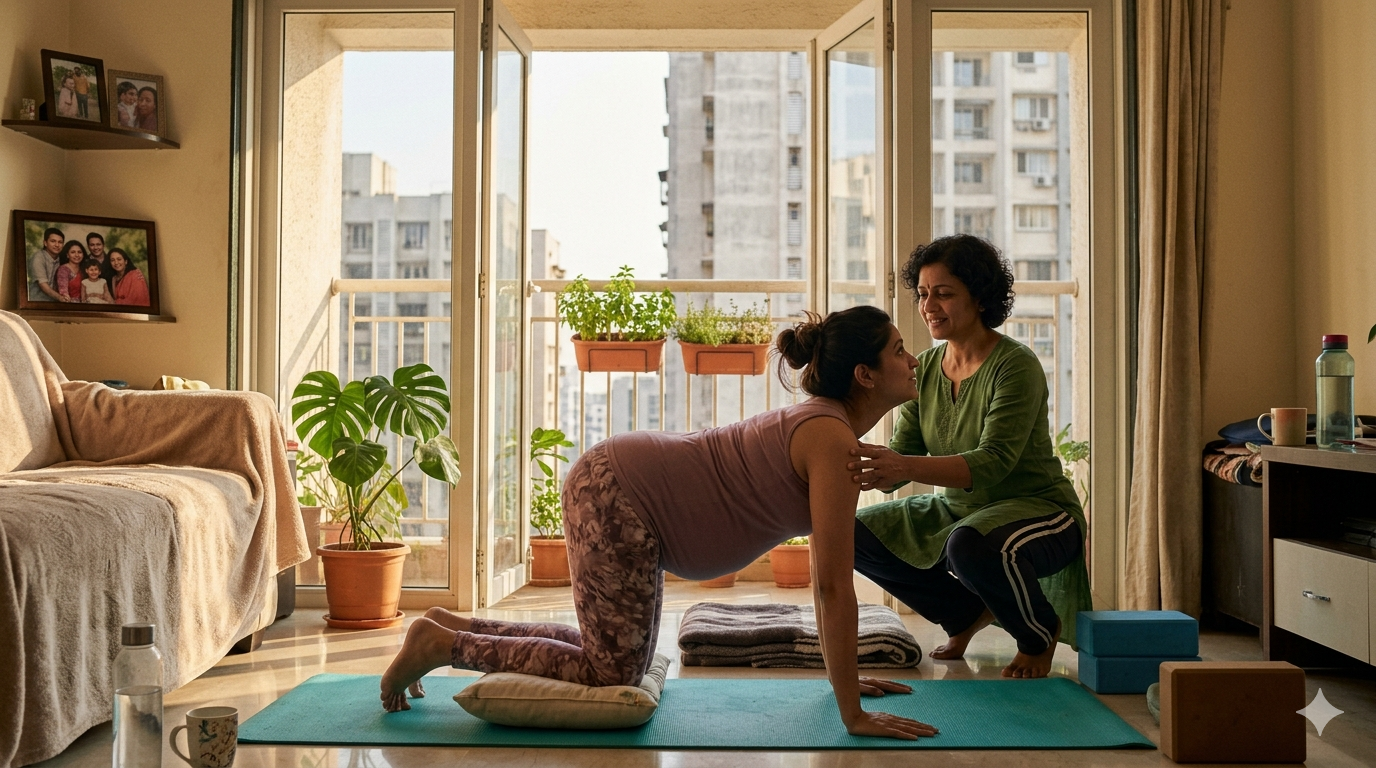
Recommended Pose: Cat-Cow Stretch
Cat-Cow involves gentle movement between a neutral spine and an arched back position.
"Cat-Cow pose is particularly useful because it can help reduce lower back discomfort and improve spinal mobility," she says.
Second Trimester: Build Strength And Balance
For many women, the second trimester is the most comfortable phase of pregnancy.
However, as the abdomen expands, balance can become more challenging.
Recommended Pose: Modified Triangle Pose
"The Triangle Pose can be very helpful when modified with the support of a wall or yoga block," says Dr Bera.
This pose promotes gentle stretching through the sides of the body and improves posture.
Recommended Pose: Modified Warrior II
A narrower stance helps build leg strength while maintaining stability.
"Modified Warrior II strengthens the legs that support the body's additional weight without creating excessive strain," Dr Bera explains.
Also Read: What Are The Types Of Yoga? Different Variations Explained
Third Trimester: Prepare For Birth
During the final trimester, the focus shifts towards relaxation, pelvic mobility, and preparing for labour.
Recommended Pose: Supported Garland Pose (Malasana)
"The Garland Pose can be practised safely with support under the hips to avoid overexertion of the pelvic muscles," says Dr Bera.
This position may help encourage pelvic opening and support labour preparation.
Recommended Pose: Extended Child's Pose
Performed with knees wide apart to accommodate the growing abdomen, this pose promotes relaxation and relieves lower back pressure.
"Extended Child's Pose helps calm the nervous system and ease discomfort in late pregnancy," she adds.
Prenatal yoga is more than a fitness trend-it is a holistic practice that can support physical comfort, emotional resilience, and preparation for childbirth. When adapted appropriately for each trimester and performed under expert guidance, yoga can help women navigate many of the common challenges of pregnancy safely.
"Yoga can become a sustainable and meaningful practice during pregnancy because it supports flexibility, strength, balance, and mental well-being while respecting the body's changing needs," says Dr Bera.
This International Yoga Day, experts emphasise that the goal is not perfection in poses but creating a safe, mindful practice that supports both mother and baby throughout pregnancy.
Disclaimer: This content including advice provides generic information only. It is in no way a substitute for a qualified medical opinion. Always consult a specialist or your own doctor for more information. NDTV does not claim responsibility for this information.