

)
India's dengue burden has changed shape over the past two decades. What health authorities once treated as a monsoon problem now stretches across most of the calendar year. Reported cases have risen roughly elevenfold since the early 2000s, and the trend shows no sign of flattening.
In 2024 alone, India recorded over 233,000 dengue cases and close to 300 deaths, according to national surveillance figures reported by the government's vector borne disease control programme. The following year was somewhat of a relief, with cases falling to just under 122,000, but still over 130 died. Early 2026 data points to a worrying trend. By the end of February this year, nearly 7,000 cases had already been logged, a volume that would normally take much longer to accumulate. Public health officials describe this as an unusually early start to transmission, a signal that the disease calendar itself is shifting.
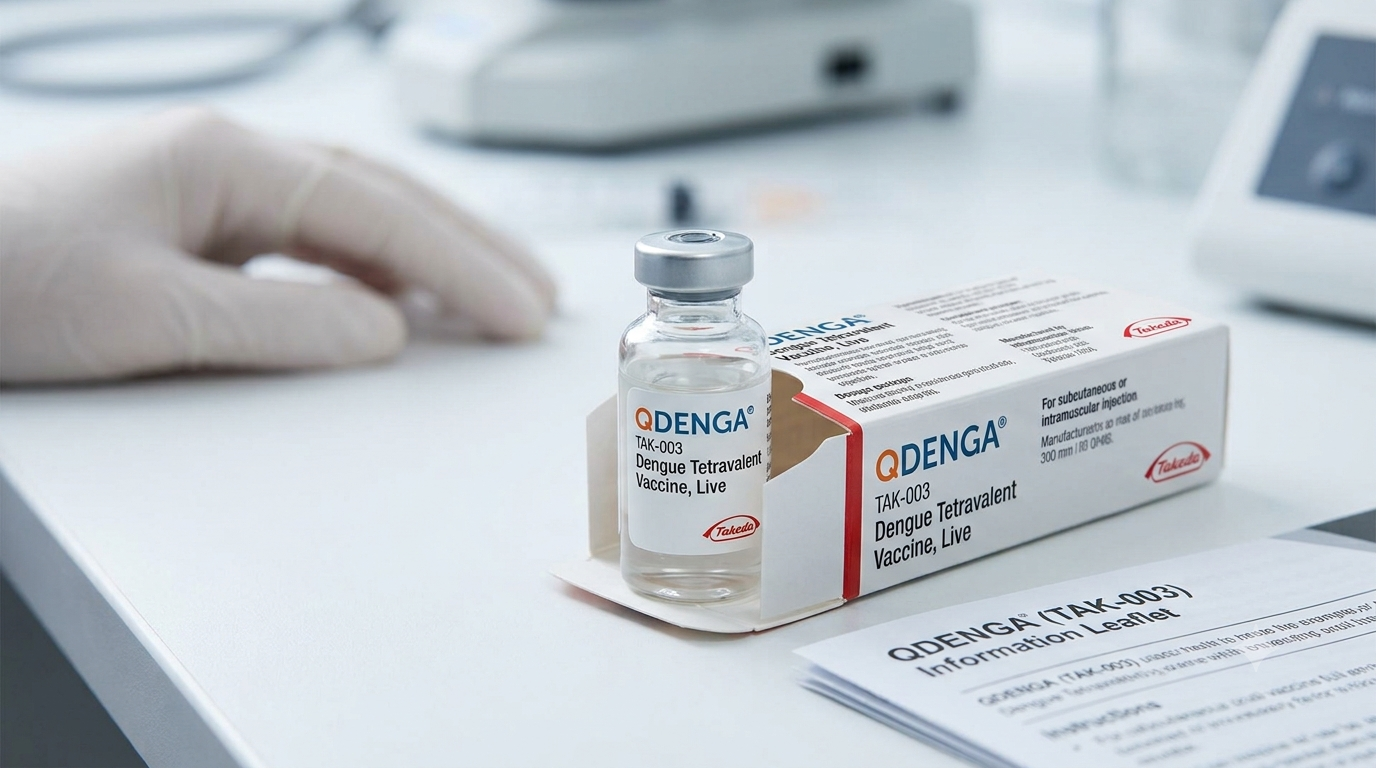
Against this backdrop, the approval of India's first dengue vaccine marks a genuine milestone. But the real question facing policymakers has little to do with the vaccine itself. It concerns whether the health system is prepared to use it well.
The Cost of Managing Outbreaks Instead of Preventing Them
For decades, India's approach to dengue has seen the same cycle get repeated. Cases rise through the monsoon, hospitals fill with fever patients, fogging drives intensify, and attention fades once the rains recede. This cycle repeats with little structural change from one year to the next.
A vaccine changes what is possible, but only if it is treated as part of a wider shift in strategy rather than an added item on an immunisation calendar. India now has an opening to move from a reactive posture toward one built on anticipation. This means identifying outbreak-prone districts before case counts spike, reducing the share of infections that progress to severe disease, building region-specific response plans rather than uniform national ones, and directing resources toward prevention before hospital wards reach capacity.
Achieving this requires treating the vaccine as one tool within a broader system of surveillance, vector control and health infrastructure planning, rather than as a standalone solution.
Also Read: Why India's Multi-Strain Dengue Outbreaks Are Dangerous
Climate Change Is Rewriting the Rules of Infectious Disease
Dengue's changing behaviour cannot be separated from climate trends. Warmer temperatures extend the breeding period for mosquitoes, while erratic rainfall patterns create new pools of standing water in places that previously stayed dry for much of the year. Urban heat islands compound the problem by keeping night temperatures high enough for mosquito activity to continue almost uninterrupted.
Several consequences follow from this. Transmission seasons are stretching well beyond the traditional monsoon window. Regions that historically saw little dengue activity, including higher-altitude and semi-arid areas, are now reporting cases. Surveillance systems built around a fixed seasonal calendar are becoming less reliable as a result.
Climate-informed surveillance needs to become standard practice, with case tracking, mosquito density mapping and weather data feeding into the same decision-making framework. A vaccine fits into this picture as one layer of resilience, useful alongside vector control, water management and urban planning, not as a substitute for any of them.
The Challenge Now Is Implementation
The arrival of this vaccine invites a set of harder questions that India's health planners will need to confront directly. Should states prioritise high-burden districts for early rollout instead of pursuing a uniform national campaign from the outset? Can vaccination schedules be shaped by epidemiological modelling rather than administrative convenience? Should climate-risk mapping guide where doses are deployed first, particularly in areas showing signs of expanding transmission? And how can state health departments use existing surveillance data to act before case numbers climb, rather than scaling up response only after wards begin filling?
These questions do not have easy answers, and different states will likely need different combinations of measures depending on local disease patterns, health infrastructure and population density. What matters is that these questions get asked now, while rollout decisions are still being shaped, rather than after implementation has already locked in a particular approach.
Also Read: India Gets Its First Dengue Vaccine, QDENGA: Effectiveness, Doses, Eligibility Explained
Measuring Success Beyond Doses Administered
Vaccine coverage numbers will dominate headlines in the months ahead, and they matter. But coverage alone will not indicate whether India's approach to dengue has genuinely changed.
The real test lies elsewhere. It lies in whether severe dengue cases decline in the districts that have historically carried the heaviest burden. It lies in whether health systems begin acting on early warning signals instead of waiting for hospital wards to fill. It lies in whether surveillance data starts driving decisions before outbreaks peak rather than after.
If integrated thoughtfully into a wider public health strategy, this vaccine can become the starting point for a system built around anticipation rather than response. That shift, more than any single number of doses delivered, will determine whether this moment becomes a turning point or simply another entry in the long record of India's fight against dengue.
(By Dr. Sabine Kapasi, CEO, Enira Consulting Pvt. Ltd., Founder, ROPAN Healthcare Pvt. Ltd., and a UN Advisor)
Disclaimer: The opinions expressed within this article are the personal opinions of the author. NDTV is not responsible for the accuracy, completeness, suitability, or validity of any information on this article. All information is provided on an as-is basis. The information, facts or opinions appearing in the article do not reflect the views of NDTV and NDTV does not assume any responsibility or liability for the same.