

)
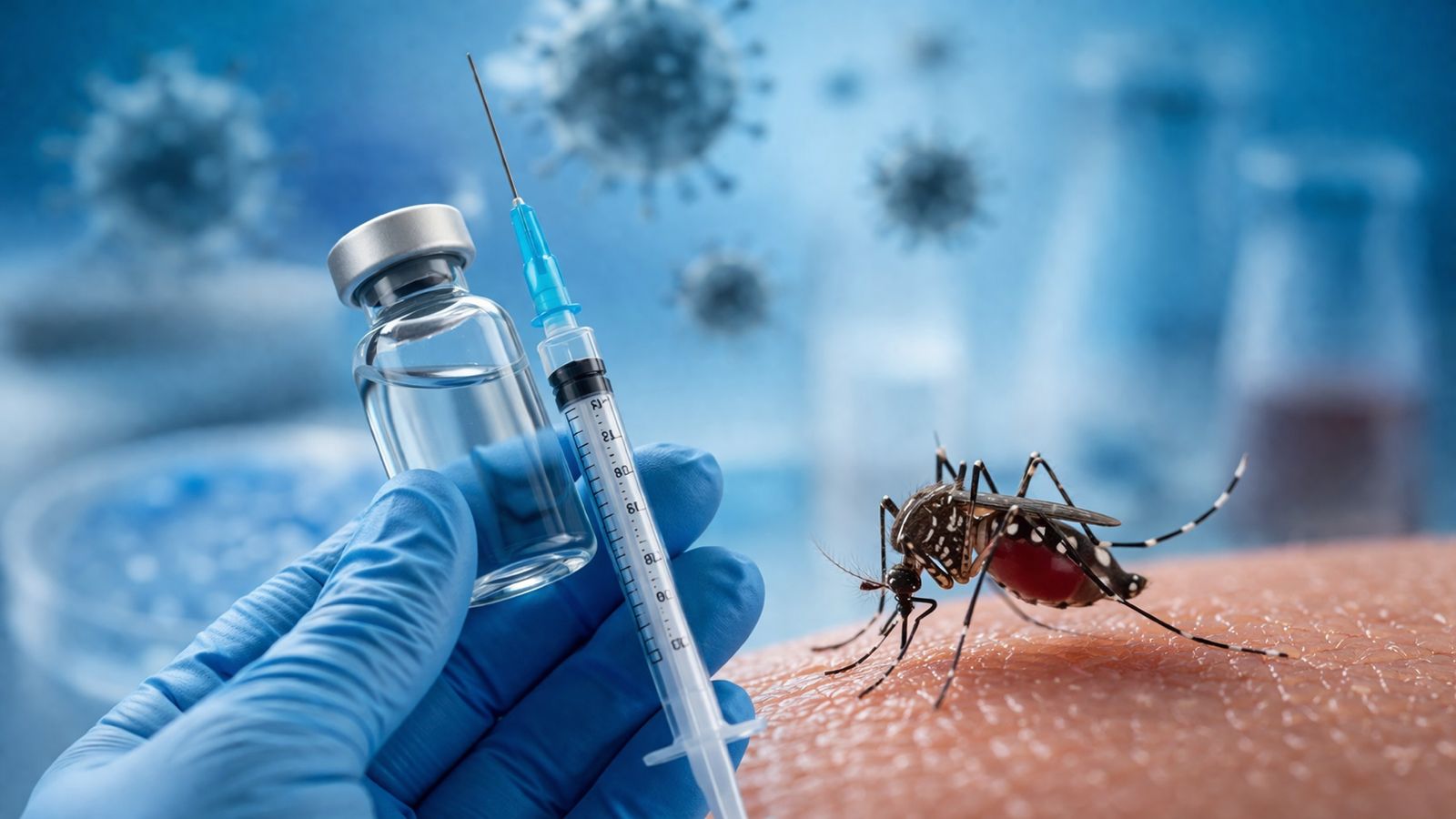
The World Health Organization has recorded 282 million cases of malaria and 610 000 malaria deaths in 80 countries. The global health issue is only expanding its patient caseload and leading to health complications. According to the World Malaria Report 2024, 246,696 cases of malaria were recorded, which speaks to the urgency needed to prevent it. Malaria is a mosquito-borne disease that is spread by parasites near the mosquito bite site. It can be prevented by vaccination, but if it infects the host body, it can even cause death.
Currently, India doesn't have vaccines for malaria in its Universal Immunisation Programme as per the National Centre for Vector Borne Disease Control (NCVBDC). Instead, malaria control in India is currently based on controlling the breeding of mosquitoes, surveillance, early diagnosis, and complete treatment. Malaria has a significant global impact, especially in tropical regions, as the mosquitoes breed in favourable climate conditions. This is why prevention is critical and needs to be done in a manner that prevents deaths.
Understanding Malaria And Its Prevention Strategies
NDTV spoke to Dr Neha Rastogi, Senior Consultant, Infectious Disease, Fortis Memorial Research Institute, Gurugram, explains, "Vaccination plays an increasingly crucial role in the prevention and control by limiting transmission of malaria, a life-threatening disease caused by Plasmodium parasites and transmitted through the bites of infected Anopheles mosquitoes."
She adds, "Despite decades of efforts involving insecticide-treated bed nets, indoor spraying, and antimalarial drugs, malaria continues to affect millions of people worldwide, particularly in tropical and subtropical regions. The development and deployment of vaccines mark a major breakthrough in reducing the global burden of this disease."
Malaria Prevention Strategies In Use
According to the World Malaria Report 2024, the national framework for Malaria Elimination (NFME) and NCVBDC strategies include the following:
- Mosquito nets and indoor spraying to prevent mosquito bites, so the risk factor is significantly reduced.
- Antimalarial drugs are used as per the antimalarial drug policy in India.
- Environmental control is necessary regularly, which involves spraying the potential breeding ground of mosquitoes.
- Limitations of these methods include not using vaccination, and mosquitoes can still bite humans, though these measures are practised.
When it comes to malaria prevention strategies, the key is to be holistic and not limit the scope of the current established practices. Indians can proactively protect themselves by consciously introducing strong mosquito repellents that are proven by science to reduce mosquito bites.
Also Read: Johns Hopkins Expert Warns Of Rising Malaria Threat Despite Vaccinations
What Are Malaria Vaccines And How Do They Work?
Dr Neha Rastogi pinpoints, "The introduction of vaccines like RTS-S (Mosquirix) and newer candidates such as R21/Matrix-M has brought new hope to malaria-endemic countries. These vaccines have shown promising results in reducing clinical malaria cases, particularly when used alongside existing interventions."
"Although they do not offer complete protection, even a moderate reduction in cases can have a significant public health impact in high-transmission areas. Fewer infections mean reduced strain on healthcare systems and lower economic burden on affected communities."
The WHO has approved and recommended two malaria vaccines for children in moderate-to-high transmission areas:
- RTS-S/AS01 (recommended in October 2021), which has more than 99% of vaccinated children, developed anti-circumsporozoite protein (anti-CSP) antibodies after completion of the 3-dose primary schedule.
- R21/Matrix-M (recommended in October 2023)
- These vaccines are mainly being rolled out in sub-Saharan African countries, not yet in India's public immunisation system.
According to the research published in the New Microbes and New Infections Journal, children under the age of 5 are most susceptible to malaria morbidity and mortality. Hence, getting them vaccinated is key to avoiding dealing with the fallout later.
Immune response correlates with 30-55% efficacy against clinical malaria in young children during the first year after vaccination.
There is a clear difference between partial and full immunity from sanctioned malaria vaccines, but in high-transmission areas, it is a necessity.
The Role Of Vaccinations In Malaria Prevention
Dr Neha Rastogi highlights, "One of the most significant contributions of vaccination is its ability to provide partial immunity, especially among vulnerable populations such as young children and pregnant women."
- "Unlike traditional preventive measures that focus on controlling mosquitoes or treating infections, vaccines work by strengthening the body's immune response."
- "They prepare the immune system to recognise and fight the malaria parasite before it can multiply and cause severe illness."
- "This early defence reduces both the severity of the disease and the risk of death."
- The role of vaccinations in malaria prevention is vital, and knowing if your children need to get vaccinated is a responsibility for reducing their risk of malaria.
Photo Credit: AI Generated Image
Global Malaria Prevention Programmes
Dr Neha Rastogi points to another key benefit: "Its contribution to long-term malaria elimination goals."
- She says, "Vaccines support global initiatives led by organisations like the WHO by adding a sustainable preventive tool."
- "Unlike treatments that must be administered repeatedly after infection, vaccines can provide lasting protection with scheduled doses."
- "This makes them especially valuable in remote or resource-limited settings where access to healthcare may be limited."
Also Read: Did You Know Genetically Altered Mosquitoes Can Help Fight Malaria? Here's How
Challenges And Limitations Of Malaria Vaccination
There are challenges and limitations that can be attached to malaria vaccination on the global level, as well as in remote areas where transmission rates are high. These are as follows:
- Accessibility and cost, which are major barriers for people in high transmission areas to receive malaria vaccination on time.
- Need for multiple doses, as only partial immunity is achieved with a single dose.
- Storage and distribution challenges are present, which can affect the people who need malaria vaccination on time.
The Future Of Malaria Prevention Through Vaccination
Malaria prevention is possible through vaccination, as established measures only go as far as reducing the risk of malaria. Here is how it can look like:
- There is ongoing research that can improve the status of the malaria disease burden.
- Next-generation vaccines could prove their effectiveness, but when they do get a global rollout, even in remote areas with high transmission rates, they could prove beneficial.
- The role of innovation in global malaria control is vital, as a multi-pronged approach is needed for tackling the high disease burden because of malaria.
Dr Neha Rastogi highlights, "Vaccination represents a transformative advancement in malaria prevention. By enhancing immunity, reducing disease severity, and contributing to lower transmission rates, vaccines are becoming a vital component of global malaria control strategies. When integrated with existing preventive measures, they offer a powerful pathway toward reducing and eventually eliminating malaria as a major public health threat."
Disclaimer: This content, including advice, provides generic information only. It is in no way a substitute for a qualified medical opinion. Always consult a specialist or your own doctor for more information. NDTV does not claim responsibility for this information.