

)
In the collective memory of eastern India, particularly West Bengal, the phrase "Joy Bangla" evokes both political history and an unusual medical association. Popularised during the Bangladesh Liberation War, the slogan became a rallying cry for freedom. Yet, around the same time, a widespread outbreak of conjunctivitis swept across Bengal, leading people to colloquially label the infection as "Joy Bangla", a name used even today.
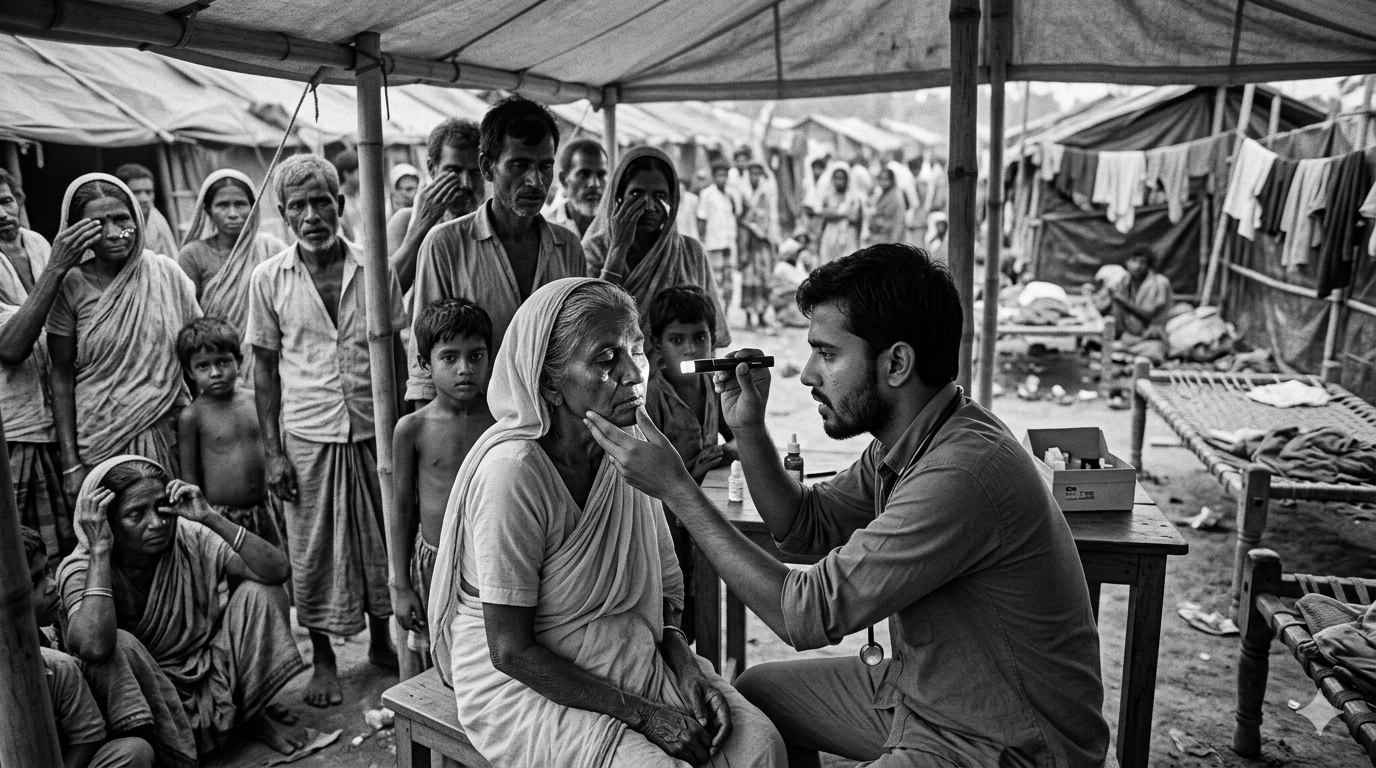
The overlap was not coincidental, and the association is not folklore. The massive influx of refugees from East Pakistan (now Bangladesh), overcrowded refugee camps, poor sanitation, and humid climatic conditions created the perfect environment for infectious diseases to spread rapidly. Among these was conjunctivitis, commonly known as eye flu, which became so prevalent that it was humorously, yet tellingly, linked to the slogan of the time. A rare contemporaneous medical reference, published in The Practitioner journal in December 1971, explicitly documented an outbreak titled "Joy Bangla: An epidemic of conjunctivitis in India". This suggests that the term was already in circulation during the crisis, not a later cultural invention.
Decades later, the term persists in public discourse, especially during seasonal outbreaks. While not a medical term, it reflects how history, culture, and public health intersect. Understanding this evolution is critical, not just for historical curiosity, but for improving awareness about prevention and hygiene in regions still prone to such outbreaks.
The Historical Context: War, Migration, and Disease
The year 1971 marked one of the largest refugee crises in South Asian history. According to archival records from the United Nations High Commissioner for Refugees and historical analyses such as those by Yasmin Saikia, nearly 10 million refugees entered India, primarily through West Bengal.
Scholarly works like "The Blood Telegram" by Gary J. Bass and reports archived by the World Health Organization (WHO) highlight the severe public health challenges in refugee camps - overcrowding, poor sanitation, and limited access to clean water. These conditions were ideal for the spread of infectious diseases, including conjunctivitis.
Though specific epidemiological data on conjunctivitis outbreaks during this period is sparse, public health literature from the time consistently documents surges in communicable diseases in eastern India during and after the refugee influx.
A Global Pandemic Behind the Local Outbreak?
The Bengal outbreak was not isolated. It coincided with a global pandemic of acute haemorrhagic conjunctivitis (AHC) between 1969 and 1971. Cases were seen rising in Vietnamese refugee camps in Florida as well as Guam, making conjunctivitis an issue of global proportions, and one originating in humid climates of South and Southeast Asia. According to the WHO, a new virus, Enterovirus 70, was identified during these epidemics, and the outbreak spread across Africa, Asia, and parts of Europe between 1969-71.
India, specifically the Bengal region, was part of this pandemic wave. A study in the British Journal of Ophthalmology confirms:
- AHC spread across South-East Asia and India in 1970-71
- Both adenoviruses and picornaviruses were involved in outbreaks
This places Bengal's "Joy Bangla" epidemic within a larger transnational viral event, rather than a purely local phenomenon.
Why Conjunctivitis Spread Rapidly
Dr Purnendu Bikash Sarkar, a senior ophthalmologist and founder of the Saltlake Eye Foundation, Kolkata, explains the environmental factors clearly. "The climate of West Bengal and Eastern India is mostly humid, which helps bacteria, fungi and virus to grow rapidly. In this climate, conjunctivitis becomes epidemic and aggressive," he explains.
In 1971 Bengal, the scale of the refugee crisis intensified disease spread. Research on the 1971 crisis shows:
- 10 million refugees entered India
- Camps faced severe shortages of sanitation, water, and healthcare
- Epidemics such as cholera and malnutrition were widespread
- Up to 22% infection rates in conjunctivitis outbreaks
While conjunctivitis is less fatal than cholera, it spreads far more easily through:
- Close contact
- Shared objects
- Poor hygiene conditions
This data strongly supports the likelihood that Bengal's refugee camps acted as high-transmission zones, even if direct conjunctivitis surveillance data from 1971 India is limited. Humidity, combined with dust and overcrowding, increases the survival and transmission of pathogens. According to Dr Sarkar and the Indian Council of Medical Research (ICMR), viral conjunctivitis, most commonly caused by adenoviruses, spreads easily in such environments. This aligns with global data from the Centers for Disease Control and Prevention (CDC), which states that viral conjunctivitis is highly contagious and often responsible for outbreaks.
The Myth vs Reality of Transmission
A persistent myth associated with conjunctivitis even today is that it spreads by merely looking into an infected person's eyes. "The disease is highly contagious," Dr Sarkar clarifies. "Some people think it spreads by looking towards the eye. Actually it spreads through direct contact like secretion, mobile, towels, etc."
Scientific evidence supports this. Transmission occurs through contact with infected ocular secretions or contaminated surfaces (fomites). Shared items such as towels, handkerchiefs, and even mobile phones act as carriers.
Why the Name 'Joy Bangla' Stuck
The term "Joy Bangla" for conjunctivitis is not rooted in medicine but in socio-cultural coincidence. Dr Sarkar states clearly that it "is not a medical term." During the 1971 crisis, the simultaneous prevalence of the slogan by Bangladeshi refugees arriving at camps in West Bengal, especially Kolkata, and the infection turning into an epidemic in the same camps (and then spilling over to the cities) led to a linguistic association. Oral histories and regional narratives, often documented in Bengali literature and local archives, suggest that people began using the phrase humorously or metaphorically to describe the "spreading" nature of both the slogan and the disease.
Symptoms, Relief, Misconceptions: Trends Have Changed Since 1971
Common symptoms of conjunctivitis include redness, irritation, watering, and sensitivity to light. Many people across India, not just Bengal, believe that wearing sunglasses while one has conjunctivitis can prevent transmission. This is incorrect, because all they do is alleviate symptoms. "Sunglass gives comfort, prevent photophobia and sometimes watering," Dr Sarkar comments. The infection typically resolves on its own in viral cases but requires hygiene precautions to prevent spread.
"Fortunately, awareness against conjunctivitis has much improved in recent years. This is because of continuous awareness programme, advanced medication and sense of personal hygiene," says Dr Sarkar. Public health campaigns, improved access to healthcare, and better hygiene practices have reduced the severity and frequency of large-scale outbreaks.
"Joy Bangla" Today: Prevention Still Remains Key
"Prevention, hygiene, and early consultation with an ophthalmologist" are still the best ways to manage conjunctivitis today, Dr Sarkar emphasises.
Basic measures include:
- Frequent handwashing
- Avoiding sharing personal items
- Cleaning surfaces regularly
- Seeking timely medical advice
The story of "Joy Bangla" conjunctivitis is not just anecdotal. It is historically grounded in events from 1971, a contemporary global viral pandemic, and one of the largest refugee crises in modern history. It is also born from a unique intersection of history, language, and epidemiology. Born out of the chaos of war and migration in 1971, it reflects how communities interpret and respond to disease outbreaks. And most importantly, the key message from this piece of medical history is still relevant today.
As Dr Sarkar warns in Bengali: Joy Bangla-ke abahela korben na, eti andhatwer karon hote pare. (Do not neglect 'Joy Bangla'; it can lead to blindness.)
Disclaimer: This content, including advice, provides generic information only. It is in no way a substitute for a qualified medical opinion. Always consult a specialist or your own doctor for more information. NDTV does not claim responsibility for this information.