

)
Holi may be the festival of colours, but for your hair, it often becomes the festival of consequences. Every year, as soon as the colours settle and the water guns are put away, people across the country see a rise in hair damage complaints, from roughness, dryness, and breakage to sudden hair fall. And while Holi has evolved into a far more vibrant celebration than its traditional one. Spefically, the colours used today are unfortunately far removed from the safe, plant‑based powders used before the most sought-after easily affordable but chemically produced dyes and pigments.
Scientific analysis in the Journal of Public Health Policy has repeatedly found that many commercially available colours contain hazardous heavy metals such as lead, which are far above permissible limits, alongside endotoxins that irritate the scalp and skin. Once these pigments settle on hair strands, they bind strongly and can even seep into the scalp, making removal difficult and further increasing the damage.
Why Your Hair Suffers After Holi
Speaking to NDTV, Dr Priyanka Kuri, Consultant Dermatologist, Aster Whitefield Hospital, explained that most modern Holi colours are now made using synthetic dyes and industrial pigments, not natural sources. The use of these dyes can increase hair damage during Holi, and it happens through multiple mechanisms, and most people don't realise how vulnerable hair fibres really are. NDTV also spoke to Dr Sakshi, Bachelor of Ayurvedic Medicine and Surgery (BAMS), Team Leader at Traya Health, who explained that the key effects of holi colours on the delicate hair strands, here are the key effects that you should know:
1. Damage To The Cuticle
The hair cuticle is your hair's outermost shield, and it gets compromised when coarse pigment particles cling to it or are rubbed into the strands during play. Dr Kuri explains that this abrasion leads to dry, rough, brittle hair and split ends, especially in people who already undergo chemical treatments, heat styling, or frequent colouring. Once the cuticle is weakened, hair becomes more porous and prone to breakage. While Dr Sakshi has said that harsh chemicals and sun exposure lift the cuticle, causing frizz, roughness, and high porosity.
2. Alkaline Liquid Colours Worsen Dryness
The liquid colours popular in many celebrations pose an additional threat. They are usually dissolved in alkaline solutions, which strip natural oils from the scalp and hair. Without these oils, the hair shaft loses its flexibility, making strands stiff and break‑prone. And Dr Sakshi says that colours strip natural oils, making hair brittle and prone to split ends.
3. Post‑Holi Scrubbing Causes More Harm Than The Colours
Many people assume the harsh scrubbing they do to remove colours is "cleaning". In reality, this vigorous friction is what leads to most of the immediate post-Holi hair fall. Dr Kuri clarifies that this is not true shedding from the roots but breakage along the shaft, caused by weakened, dehydrated hair snapping under pressure. In addition, Dr Sakshi conveyed that chemicals may cause dullness, hair fall, and even premature greying if not washed properly.
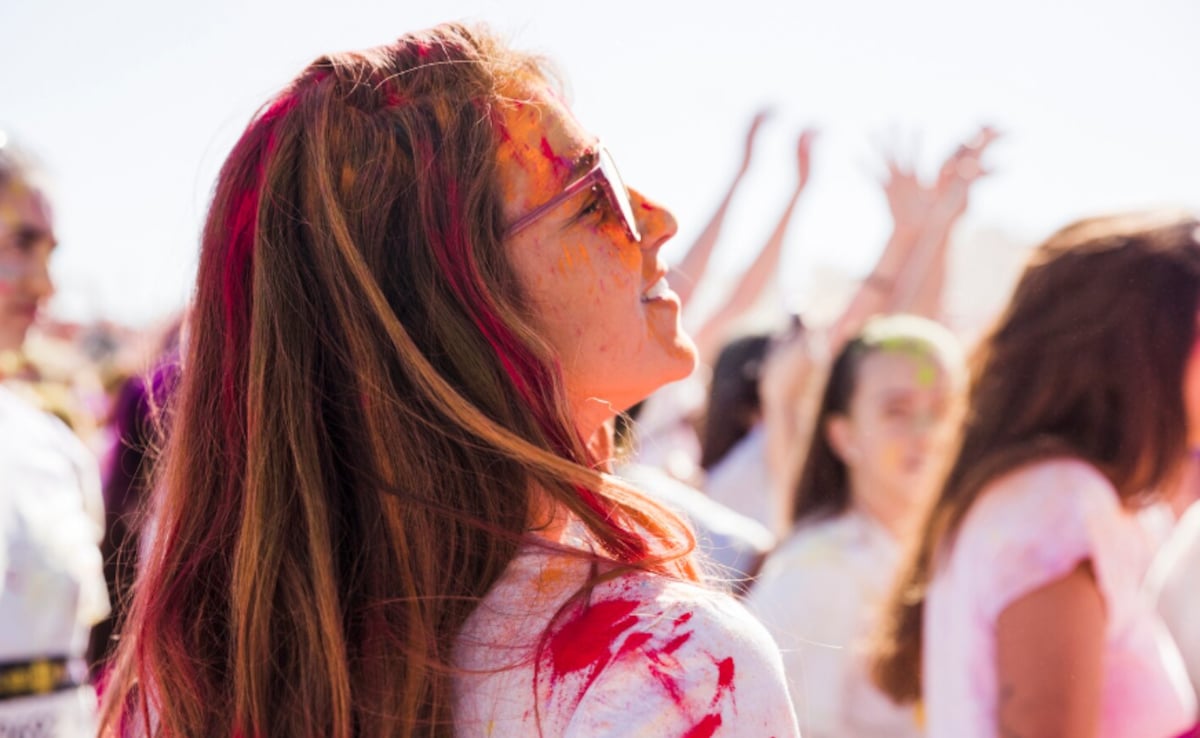
Holi colour on hair strands
Photo Credit: Freepik
Side-Effects Of Dry And Liquid Holi Colours On Hair
While speaking to Dr Sakshi, she goes on to explain the exact impact of dry powders and liquid holi colours on hair strands, these side-effects can include:
Dry Powders:
- Stick to the scalp and strands.
- Increase friction and breakage
- Causes itching and staining (especially on treated hair)
Liquid Colours:
- Penetrate deeper into the cuticle.
- May trigger allergic reactions or contact dermatitis
- Cause stronger staining
What You Can Do: Dermatologist‑Approved Precautions
Most of this inflicted damage is preventable. With a few mindful steps, as emphasised by Dr Kuri, you can protect your hair before you step out and treat it lovingly once the celebrations are over.
1. Oil Your Hair Generously Before Stepping Out
Apply coconut, almond, or a light hair oil to seal the hair strands. The oil forms a protective barrier that can help with:
- Limiting the negative impact of chemical pigments that are present in synthetic Holi colour packets.
- Makes it easier to wash colours off later, as once the Holi colours are dried, they are hard to wash off.
2. Never Play Holi With Freshly Washed Hair
Slightly oily hair offers far superior protection than clean, dry hair. As the pores of the hair open when they are washed. The natural sebum acts like a buffer between your hair and the pigments.
3. Tie Your Hair Or Cover It
Whether it's a bun, braid, scarf, or bonnet, limiting direct exposure ensures fewer pigments latch onto your strands and scalp. This will protect your hair strands, especially from harsh chemical exposure that can't be controlled.
4. Rinse With Plain Water First
After the celebrations, Dr Kuri recommends a simple water rinse to remove the accumulated Holi colour in the hair strands. Make sure that there is no friction and no shampooing yet. This helps flush out loose particles without stressing the hair.
5. Then Use A Gentle, Sulphate‑Free Shampoo
Sulphate‑free shampoo formulas cleanse without stripping whatever moisture your hair has left. To protect it further, you can follow this up with a deep‑conditioning mask or a moisturising hair spa treatment to replenish lost hydration.
6. Avoid Heat Styling and Harsh Scrubbing For 2 to 3 days
Let your hair recover after the heavy chemical exposure. Blow-drying, ironing or using hot water on your hair can further dehydrate already-stressed strands.
7. Opt For Natural Colours When Possible
While availability varies, herbal, floral, or vegetable‑based colours remain significantly safer, as highlighted by being less harsh on your hair tresses. The lesser the chemical load, the lesser the aftermath.
Also Read: Dermatologist Explains 4 Natural Remedies For Winter Hair Fall And Dandruff
Safety Tips: Choose Herbal Colours
Dr Sakshi has detailed the herbal process of making Holi colours that can lead to a safe Holi celebration especially for your hair. She says that, 'Herbal gulal is made from natural ingredients like flowers, leaves, and spices mixed with flour for softness.
Examples:
- Yellow: turmeric + gram flour (antibacterial).
- Red/Pink: beetroot or hibiscus.
- Green: henna or neem (anti-allergic).
- Blue: Indigo or Jacaranda flowers.
- Orange: Boiled Palash (Tesu) flowers.
The Traditional Process
1. Selection
2. Drying
3. Grinding and Sifting
4. Base Mix With arrowroot powder and multani mitti
5. Aromatic Infusion - Sandalwood/Rose
Why Choose Herbal Colours?
- Safe for hair and skin
- Eco-friendly
- Non-toxic
- Easy to wash off
Why These Steps Matter
Hair is structurally delicate, as it is made up of overlapping keratin layers that can easily lift, crack, or break when exposed to external stress. The chemicals in today's Holi colours aren't just harsh; they are extremely tough, alkaline, and laced with toxins. When they penetrate the scalp or embed into hair fibres, they cause both immediate mechanical damage and long‑term chemical degradation.
But with the right preparation and aftercare, you can drastically minimise the impact. As Dr Kuri sums up, “With simple preparation and gentle aftercare, much of the dryness and brittleness commonly seen after Holi can be prevented.”
And that's the key takeaway from this that your Holi can stay colourful without costing you the health of your hair.
Disclaimer: This content, including advice, provides generic information only. It is in no way a substitute for a qualified medical opinion. Always consult a specialist or your own doctor for more information. NDTV does not claim responsibility for this information.