Opinion | 'Insider' Info? Why US-Israel Couldn't Have Struck Khamenei Without Help
The only way actionable intelligence would reach Israel and the US on Khamenei's whereabouts, movements, and schedules, is if the calls were coming from inside the house itself.
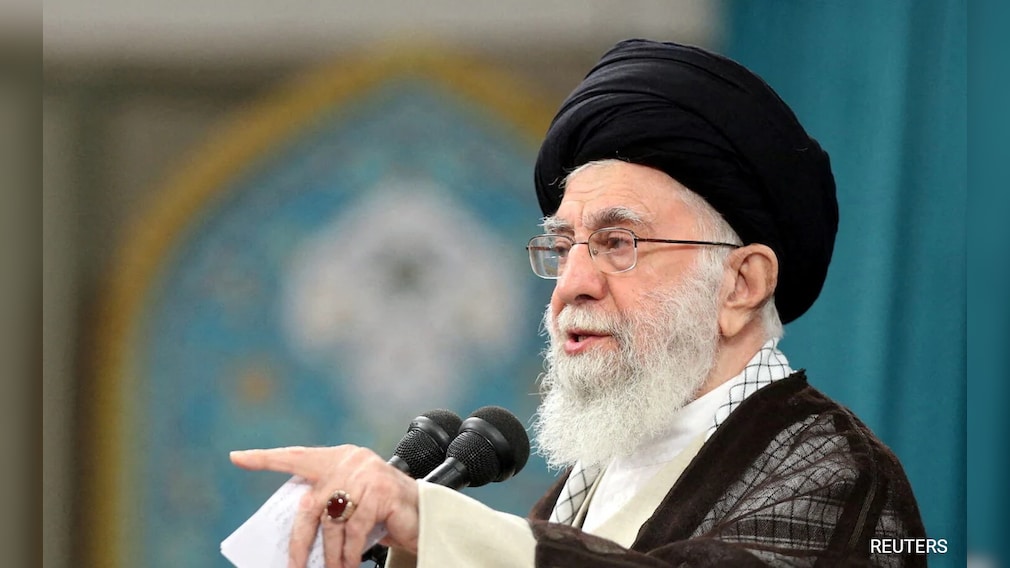
The assassination of Supreme Leader Ayatollah Khamenei, who had been Iran's spiritual and overarching leader since 1989, by a coordinated day-time raid conducted jointly by the United States and Israel, has pushed the Shia seat of power into a timeline of the unknown. In a departure from the air strikes of last year, which actively did not target the Ayatollah, todaym the American-led narrative was clear: that of regime change.
The removal of Khamenei is a tectonic shift in the region. Iran since 1979 had solidified its role as a pole of power, ideology, and identity. During its monarchic era, specially under Reza Shah Pahlvi, it was pro-West and had strategic relations with Israel, which were severed following the Islamic Revolution. Since then, the centrality of the Ayatollah in taking Iran down the path of having a vehemently anti-US and anti-Israel stance has been core to the theocracy's very identity.
Those Working From Within
Over the past years, the question of who replaces Khamenei, who was 86 and ailing, was a contested one. Even when Ayatollah Khomeini, who was popular as he took over the state coming out of his exile in France, died, his selection for his successor was unexpected. There were others, more senior, and those closer to Khomenei, who were looked past to allow a youngish, 50-year old cleric to take charge of one of the Middle East's largest states, and one that was going to build its capacities that would end up building a level of consensus between Arab powers and Israel, most in the former who did not have political relations with the latter.
What, or who, will be Khamenei's replacement is an open-ended question right now. However, Iran also has bigger issues to deal with in the interim. The only way actionable intelligence would reach Israel and the US on Khamenei's whereabouts, movements, and schedules, is if the calls were coming from inside the house itself. Following 2025, the Iranian government ran an extensive programme across its political and military ranks to weed out those who were helping provide intelligence to the enemy. Reports suggested that hundreds were taken out of their ranks, often without trial, and were made an example of - via imprisonment or being sent to death - to instil fear. The fact that the Ayatollah was killed in his own office shows that those working against the Islamic Republic from within remain prominent. Only a few days prior, America's Central Intelligence Agency (CIA) posted multiple videos online in Farsi, asking Iranians to contact them with intel and information in exchange for dividends.
Iran, oddly today, stands at a poetic juncture where two roads stare at it: one it has been taking since 1979, and one which is yet to be taken. It remains unlikely that an inward collapse of the Islamic Republic will take place purely due to Khamenei's death. The US is demanding capitulation of not the Ayatollah, but the system in place, defanging much beyond the nuclear programme.
How Will Iran Respond?
As a response, beyond regime sustainability, Iran is also facing a stark crisis of an ability to respond. Tehran over the past months seemed to have realised that while it does indeed have a large stockpile of missiles, their technological prowess, which is needed to target Israel around a thousand kilometres away, is severely restrained. So, to cause maximum regional concern over the trajectory of the conflict, it has lobbed drones and missiles, seemingly in a restrained manner, towards Gulf capitals such as Dubai, Abu Dhabi, Manama, Doha and Kuwait City. The hope here would be to push a regional crisis, and at this stage, pull the US even further into an entrenched and protracted war, something Trump is averse to. Iran is a survivalist state and has been for decades. Putting such a state against the wall often leads to a fight till the end, and not capitulation, as the White House seems to be hoping.
However, Iran is on a significant backfoot and in a ditch that seems to be of its own making. Despite the strikes of 2025, Tehran seems to have not taken Trump's wish to use military force that seriously, or may have mistaken the strikes as a one-off occurence. This cognitive dissonance is perplexing, considering Trump in 2020, seemingly at a whim, had decided to assassinate the Islamic Revolutionary Guard Corps's top leader Qasseim Soleimani as he arrived at Baghdad airport. Soleimani was the architect of what eventually started to be called as Iran's ‘Axis of Resistance', a group of militias supported by Tehran to push a maximalist foreign and security policy utilising culpable deniability. Soleimani's killing was a critical look into Trump's preferred modus operandi, which was high-risk, low on strategic calculus, and designed for short-term gain and posture. Moreover, this window also provided a look - for those who were willing to see it - that just a nuclear deal with Iran was not something he was interested in.
The next few days and weeks will be precarious for the Middle East as Tehran enters a timeline of the unknown. However, a complete shift in political system in Iran, as desired by Israel and the US, may not have the required groundwork needed for such an implementation. Simultaneously, choosing a new Supreme Leader from Iran's fractious political power and theological power circles is also easier said than done.
(Kabir Taneja is Executive Director of the Observer Research Foundation, Middle East)
Disclaimer: These are the personal opinions of the author
-
Opinion | Who Gets The 'Peace Prize' Now, Mr Trump - The Drones Or The Bombers?

A president who returned to the White House on the promise of ending 'Forever Wars' - and wanted a Nobel Peace Prize, no less - now presides over the largest American military build-up in the region since the infamous Iraq war.
-
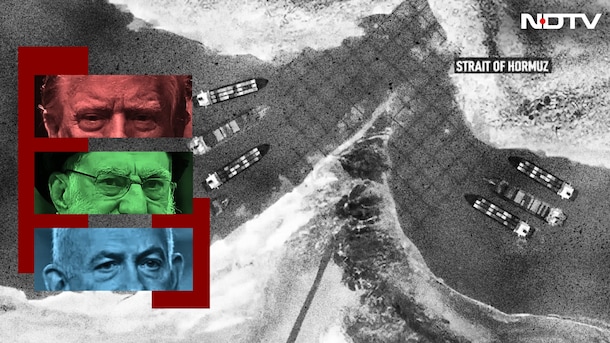
Exclusive: How War In A Narrow Sea Could Reshape Global Economy Overnight
NDTV speaks to industry experts to gauge the impact of a major international conflict on the global shipping industry.
-
Opinion | What's Driving Pakistan-Afghanistan War? Islamabad's Never-Ending Cycle Of Insecurity
Islamabad has accused Kabul of drifting into an "India colony", a charge that was further sharpened following Afghan Foreign Minister Amir Khan Muttaqi's visit to New Delhi last year
-
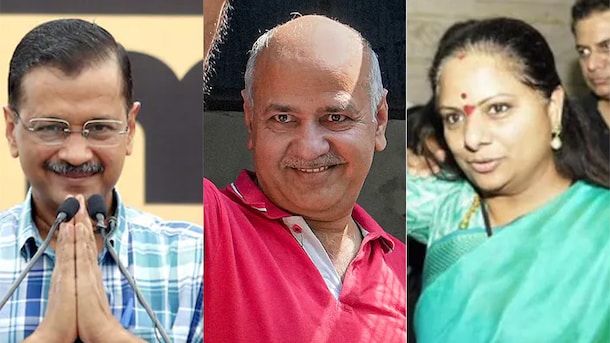
Behind Arvind Kejriwal's Freedom: The 'South Group' Tag, A US Drugs Case
Special Judge Jitendra Singh also asked searching questions of the Central Bureau of Investigation, the federal agency tasked with building the corruption case against Kejriwal.
-
Opinion | The Hypocrisy Of Pakistan And Turkey's Frustration With India-Israel Ties
Even before the conclusion of PM Modi's visit, editorials and op-eds appeared in Pakistani and Turkish media, indulging in fear-mongering about India and Israel's deepening ties.
-
Soviet Union, US Coalition, And Now Pakistan: Afghan Military's New Test
Pakistan would have the upperhand in a short, conventional war. But if history is any indicator, Afghanistan can bleed Pakistan in a prolonged guerrilla warfare condition
-
Arvind Kejriwal Won The Case That Cost Him His Job
Months of drama followed Kejriwal's arrest, including allegations of medical negligence and the AAP claiming the BJP was trying to 'kill' him in prison by denying him insulin.
-
Opinion | Why Social Media Platforms Must Share The Wealth Others Create For Them
There are an estimated 2-2.5 million active digital creators in India. Yet only 8-10% effectively monetise their work.
-
Opinion | Congress's 'Jamaat' Experiment In Kerala Can Backfire Badly. But Does It Care?
The Jamaat has always been sort of a political pariah in the state. Why, then, is the Congress warming up to it?
-
Opinion | A BAFTA Award, Straight From The Ashes Of Manipur's Moreh
The shooting for 'Boong' in Moreh wrapped up barely a week before violence engulfed the township. Many who stood behind and before the camera are today internally displaced.