

)
Actor Nana Patekar died of a cardiac arrest at the age of 75 on Thursday after suffering a severe cardiac arrest. The veteran actor was found unconscious at his home in Goa and was rushed to Manipal Hospitals, where doctors attempted to revive him with continuous cardiopulmonary resuscitation (CPR) for almost 45 minutes. However, they couldn't revive him and the actor was declared dead at 5:20 am. Speaking to news agency ANI, Dr Shekhar Salkar, Chief of Oncology Department at Manipal Hospital, said, "Despite 45 minutes of continuous CPR, he could not be revived. A medico-legal case (MLC) has been registered, and a post-mortem will be conducted."
The actor's death has highlighted how quickly a cardiac emergency can turn life-threatening. While CPR is an emergency technique that can help maintain blood flow to the brain and other vital organs when the heart stops, it cannot guarantee survival in every case. Dr Anurag Sharma, Chairman - Cardiology - Interventional, Paras Health Panchkula, said, "Cases of sudden cardiac arrest are a reminder that serious cardiac events do not always present with dramatic symptoms. In my clinical experience, patients often tend to overlook symptoms such as recurrent chest discomfort, unusual breathlessness, palpitations, unexplained fatigue or episodes of dizziness, particularly when these symptoms settle on their own. These can sometimes be early indicators of an underlying heart condition."
It is equally important to know what to do when cardiac arrest actually occurs, said Dr Sharma. "If a person suddenly collapses and is unresponsive with no normal breathing, the priority should be to call for emergency medical assistance and begin CPR immediately."
What Is CPR?
Cardiopulmonary resuscitation, or CPR, is an emergency lifesaving technique that is used when a person's heart has stopped beating normally and they are unresponsive. It involves repeated chest compressions that help keep blood moving to the brain and other vital organs until the heart can be restarted or advanced medical care takes over.
Dr Edmond Fernandes, Consultant - Preventive Medicine and Director, Edward & Cynthia Institute of Public Health, says CPR is a basic life-support technique that needs to be performed correctly to be effective. CPR does not simply mean pressing on someone's chest; the timing, depth and consistency of compressions are important. "If done correctly with over 100 compressions per minute, the person's heart beat would be revived many times within 2-12 minutes. It is extremely rare for anyone to get CPR for 45 minutes, and it is even more rare for lay people to continue giving CPR the right way for 45 minutes, unless trained people give CPR in rotation every 3-5 minutes taking turns."
Step-By-Step Guide On How To Perform CPR
1. Place the person on their back
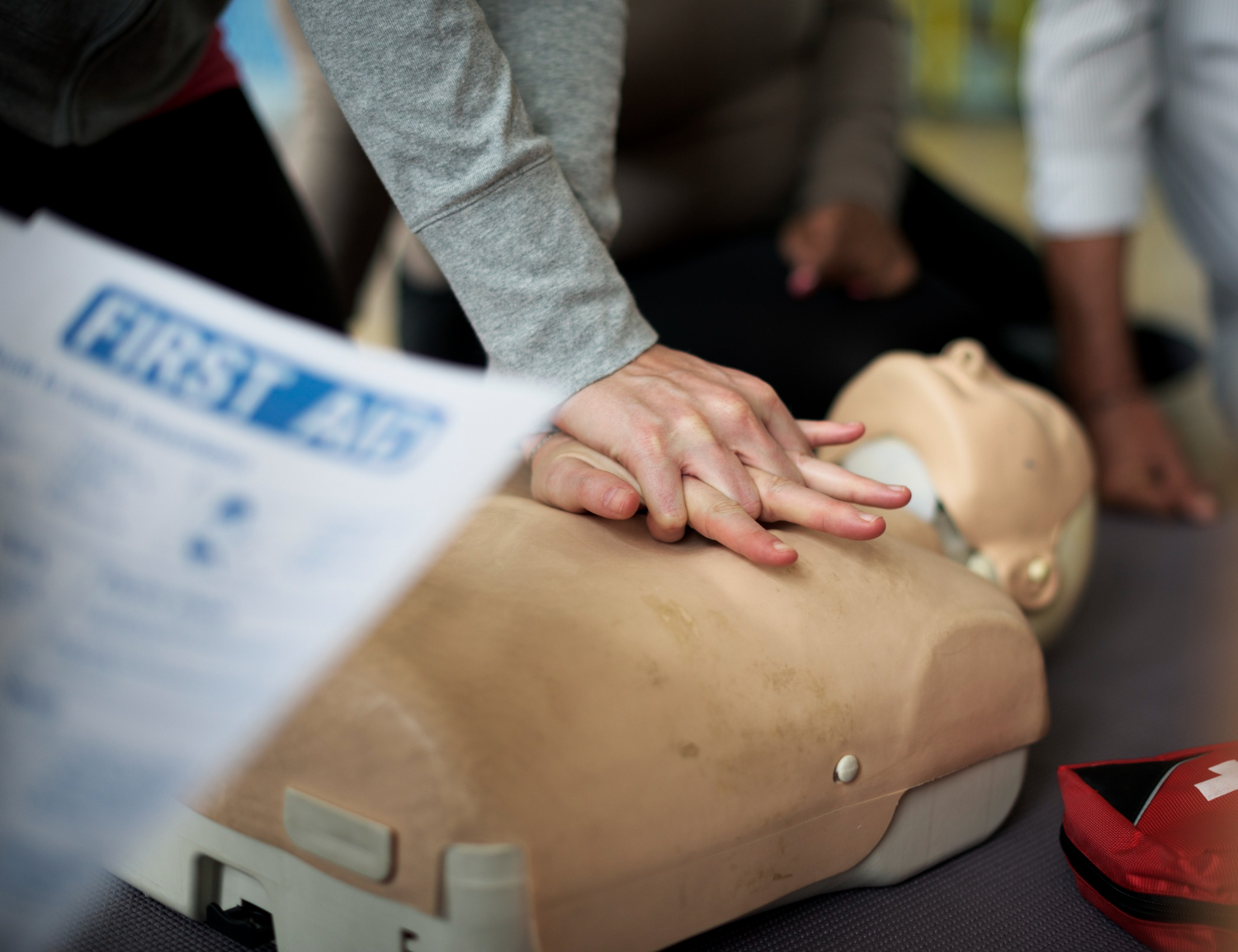
Carefully place the person on a firm, flat surface. Kneel beside their chest. CPR works best when chest compressions are performed on a firm surface.
2. Position your hands correctly
Place the heel of one hand in the centre of the person's chest, on the lower half of the breastbone. Place your other hand on top and interlock your fingers and keep your arms straight.
3. Start chest compressions
Push down hard and fast in the centre of the chest. Aim for a rate of about 100-120 compressions per minute. Allow the chest to come back up completely after each compression. For an adult, compress the chest to a depth of around 5-6 cm.
4. Continue CPR
Use cycles of 30 chest compressions followed by two rescue breaths. If you are not trained or are uncomfortable giving mouth-to-mouth breaths, hands-only CPR with continuous chest compressions is still an important option.
Do not stop simply because the person does not immediately respond. Continue CPR until the person shows clear signs of life, or there's trained medical professionals to take over, or an AED is ready to be used, or you become physically unable to continue.
5. Use an AED if available
An automated external defibrillator, or AED, can analyse the heart rhythm and determine whether an electric shock is required. Switch it on, follow its instructions and attach the pads to the person's bare chest as shown.
CPR Risks
CPR has risks because of how hard the chest compressions have to be to keep the blood circulating. During the process, it is possible to break ribs and injure organs within the chest during CPR. But the risk is worth it when you're trying to save a person's life.
Disclaimer: This content including advice provides generic information only. It is in no way a substitute for a qualified medical opinion. Always consult a specialist or your own doctor for more information. NDTV does not claim responsibility for this information.