

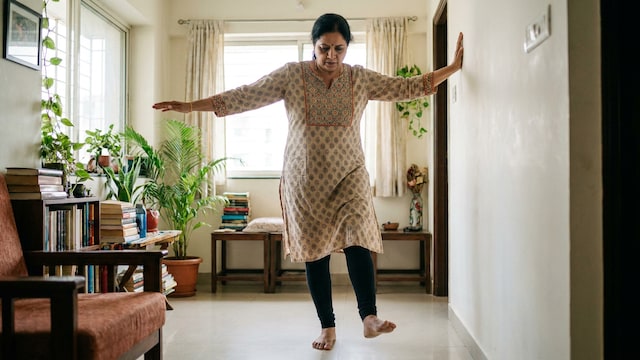
Standing on one leg for 10 seconds may seem like a simple task, but it can say more about your balance and physical health. As we age, our muscles, joints, vision and nervous system undergo changes that can affect our balance. While some people can stand on one leg, others may find it difficult to stay steady even for a few seconds. This becomes particularly important as we grow older because poor balance can increase the risk of falls and related injuries.
The 10-second one-leg stand is a simple way to check physical function in older adults. However, being unable to perform the test does not automatically mean that someone has a serious health problem. Balance depends on several factors, including age, strength, mobility and existing medical conditions. Read on to know more about what the test measures, why it matters and when difficulty balancing needs your attention.
What Does Standing On One Leg For 10 Seconds Tell You?
Standing on one leg requires your body to coordinate several systems at the same time. Your muscles must support your weight, your joints must remain stable, and your brain must process information from your eyes and inner ear to help you stay upright.
The test is not a diagnosis of any particular disease. Instead, it is a simple indication of balance and physical function. In older adults, difficulty maintaining balance may be an indication that they need a check on mobility, muscle strength and fall risk
A study published in the British Journal of Sports Medicine in 2022 found that middle-aged and older adults who could not stand on one leg for 10 seconds had a higher risk of death from any cause over the following years than those who could complete the test. The results suggest that balance may give useful information about overall health, particularly as people age.
Why Is This Balance Test Important?
1. It may help identify a higher risk of falls
Falls become more common with age, especially when muscle strength, coordination and reaction time decline. Standing on one leg challenges your ability to control your body and maintain stability. Difficulty performing this may indicate that your balance needs attention. However, a single test cannot predict whether you will fall.
2. It reflects coordination between the brain and body
Maintaining balance is not just about having strong legs. Your brain receives information from your eyes, inner ear and sensory nerves, then coordinates muscle movements. If these systems do not work together, standing on one leg can become difficult.
3. It can reveal changes in muscle strength
Your hips, thighs, ankles and core muscles work together to keep you steady when you're standing on one foot. Weakness in these muscles can make it harder to control movements and prevent yourself from falling. As people age, muscle mass and strength may decline, especially without regular physical activity. Practising strength and balance exercises can help maintain mobility and independence.
4. It may offer clues about healthy ageing
Being able to balance on one leg requires a combination of strength, coordination and sensory function. These are important for everyday activities, such as climbing stairs, getting dressed, stepping over obstacles and walking on uneven surfaces. The 10-second test can therefore be one small part of understanding how well someone is functioning physically.
How To Test Your Balance Safely
You can try the 10-second test at home, but take precautions to avoid falling.
- Stand on a flat, non-slippery surface
- Keep a sturdy chair or a wall within reach for support
- Stand upright with your feet together and your arms by your sides
- Lift one foot slightly off the ground and start counting
- Try to maintain your balance for 10 seconds, then repeat with the other leg
How Can You Improve Your Balance?
Regular physical activity can help improve balance, strength and coordination. Simple activities, such as walking, practising supported heel-to-toe standing and doing appropriate leg-strengthening exercises, may help. Tai chi and supervised balance training can also benefit some older adults. Start with exercises that are suited to your ability and use support whenever necessary.
Standing on one leg for 10 seconds is a simple way to check one aspect of physical function, particularly in older adults. However, it is not a definitive test of health or life expectancy.
Disclaimer: This content including advice provides generic information only. It is in no way a substitute for a qualified medical opinion. Always consult a specialist or your own doctor for more information. NDTV does not claim responsibility for this information.