

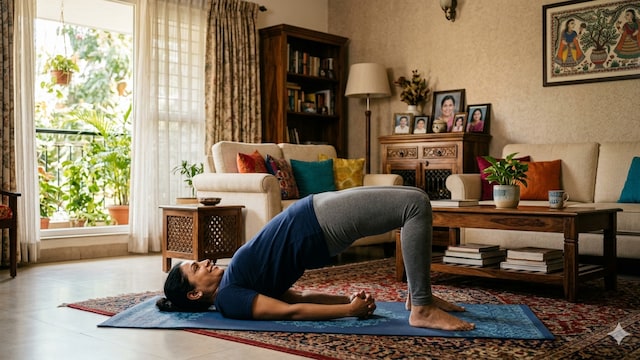
Maintaining good body posture is important for overall health and well-being. The way we sit, stand and walk can affect how our muscles and joints function. Poor posture, often caused by prolonged sitting, looking down at mobile phones or working on computers for long hours, can put extra strain on the neck, shoulders and back. Over time, this may lead to muscle stiffness, discomfort and reduced flexibility. Good posture helps keep the spine properly aligned, distributes body weight evenly and allows muscles to work more efficiently. It can also make everyday activities, such as walking, standing and sitting, more comfortable.
Yoga can be an effective way to improve body posture by strengthening the muscles that support the spine, stretching tight muscles and improving flexibility. Certain yoga poses focus on the back, shoulders, hips and core muscles, which play an important role in maintaining an upright position. Here are a few yoga poses that can help to improve body posture.
Yoga Poses To Improve Body Posture
1. Mountain Pose (Tadasana)
This pose helps improve awareness of body alignment and encourages you to stand upright without slouching. This can be especially useful for people who spend long hours sitting at a desk or looking at their phones. To practise this pose, stand straight with your feet comfortably apart. Let your arms rest beside your body and keep your chin parallel to the floor. Hold the position for 30-60 seconds while breathing normally.
2. Cat-Cow Pose (Marjaryasana-Bitilasana)
This pose involves moving the spine gently between two positions. It helps improve spinal mobility, reduce stiffness and make the back more flexible. This pose can be beneficial for people who sit for long periods. Start on your hands and knees, keeping your wrists below your shoulders and your knees below your hips. As you inhale, lower your abdomen, lift your chest and look slightly forward. As you exhale, round your back towards the ceiling and lower your head gently. Repeat these movements for 8-10 rounds.
3. Cobra Pose (Bhujangasana)
Cobra Pose helps strengthen the muscles along the back while gently stretching the chest and abdomen. This pose may help improve chest mobility and strengthen the back muscles that support the spine. To perform Cobra Pose, lie on your stomach with your palms placed beside your chest and your elbows close to your body. Slowly lift your head and chest while keeping your lower body on the floor. Keep your shoulders away from your ears and hold the position for 10-20 seconds.
4. Downward-Facing Dog (Adho Mukha Svanasana)
Downward-Facing Dog stretches the shoulders, back and hamstrings while strengthening the arms. This pose encourages the spine to lengthen and helps improve flexibility in several muscle groups involved in everyday movement. Begin on your hands and knees. Tuck your toes under and lift your hips towards the ceiling, forming an inverted V shape with your body. Hold the position for 15-30 seconds while breathing normally. Avoid rounding your back or forcing your heels towards the floor.
5. Bridge Pose (Setu Bandhasana)
Bridge Pose strengthens the glutes, core and muscles around the hips. These muscles help stabilise the pelvis and support the lower back, which plays an important role in maintaining good posture. Lie on your back with your knees bent and your feet flat on the floor, hip-width apart. Keep your arms beside your body with your palms facing down. Press gently through your feet and lift your hips towards the ceiling. Hold the position for 10-20 seconds before lowering your hips slowly.
6. Child's Pose (Balasana)
Child's Pose is a gentle asana that stretches the back and hips. It may help ease muscle tension and stiffness caused by prolonged sitting or staying in the same position for long periods. Kneel on the floor and bring your big toes together. Sit your hips back towards your heels and extend your arms forward. Lower your chest towards the floor as far as comfortable and rest your forehead on the mat. Breathe slowly and hold the position for 30-60 seconds.
Disclaimer: This content including advice provides generic information only. It is in no way a substitute for a qualified medical opinion. Always consult a specialist or your own doctor for more information. NDTV does not claim responsibility for this information.