





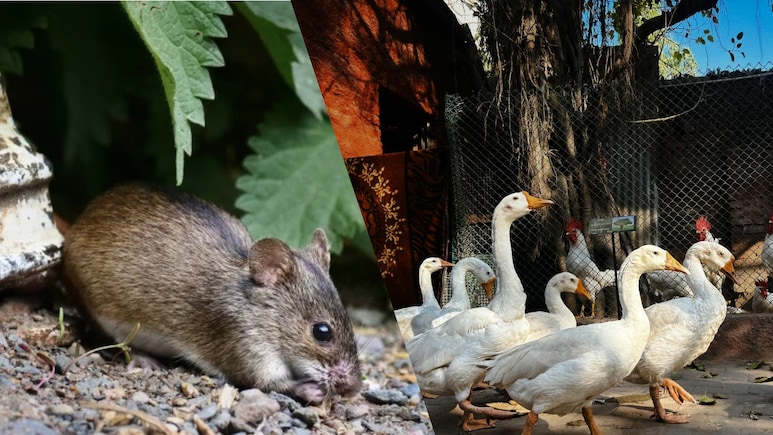
- Hantavirus spreads through aerosolised rodent waste in localized, confined environments
- Bird flu transmits via contact with infected poultry and spreads rapidly through global farming
- Bird flu mutates quickly, enabling faster adaptation and potential human-to-human transmission
Several zoonotic diseases that can leap from animals to humans are becoming increasingly diverse in their modes of transmission. As global health surveillance intensifies, two names have dominated recent headlines: Hantavirus and Bird Flu (Avian Influenza). While both can result in severe, often fatal outcomes, they occupy very different mechanisms. The urgency of understanding these threats was underscored recently by the World Health Organization(WHO). In a briefing regarding emerging viral clusters, a WHO panel on hantavirus noted:
"While Hantavirus remains a significant localised threat, particularly in regions with high rodent-human interface, its transmission dynamics are fundamentally constrained by environmental factors that do not currently mirror the rapid, globalised spillover potential seen in highly pathogenic avian influenza strains."
This distinction is the crux of the debate: which virus actually poses the greater risk of rapid spread to the human population?
How Hantavirus And Bird Flu Spreads to Humans
To understand speed, one must understand the vehicle. Hantavirus is a rodent-borne virus. Humans typically become "accidental hosts" when they breathe in air contaminated with the virus. This happens through the aerosolisation of rodent urine, droppings, or saliva that is often present during activities like cleaning out a shed, cabin, or barn that has been dormant.
Conversely, bird flu (specifically strains like H5N1 or H7N9) thrives in birds. The transmission to humans usually occurs through direct contact with infected poultry or surfaces contaminated by their mucus or faeces. However, the "speed" of bird flu is fuelled by the scale of its reservoir. While Hantavirus requires you to be in a specific, dusty room with a specific mouse, Bird Flu can be found in the massive, interconnected webs of global poultry farming and the migratory paths of wild birds that span continents.
Also Read: "More Cases May Appear Soon, But Public Health Risk Low": WHO Chief On Hantavirus Outbreak
Key Differences At A Glance: Hantavirus vs Bird Flu
When these two viral infections are concerned, the differences in their biological "behaviour" become clear. Here is how they stack up:
- Primary Source of Infection: Hantavirus is strictly tied to rodents like deer mice and cotton rats. Bird flu, however, circulates globally via wild aquatic birds and domestic poultry.
- Primary Route of Transmission: Humans typically inhale Hantavirus through aerosolised waste in confined spaces. Bird flu is transmitted through direct contact with infected birds, contaminated surfaces, or even respiratory droplets in high-density environments.
- Outbreak Style: Hantavirus outbreaks are almost always sporadic, isolated, and highly localised to specific buildings or rural areas. Bird flu presents as larger clusters with a high potential for rapid escalation across borders.
- Global Monitoring Levels: While hantavirus is monitored in known hotspots, bird flu is under "extreme" surveillance by the WHO and CDC as a top-tier pandemic threat.
- Genetic Adaptability: Hantavirus has a relatively stable genetic structure, making mutations rare. In contrast, bird flu has a "very high" mutation rate, frequently swapping genetic material to adapt to new mammalian hosts.
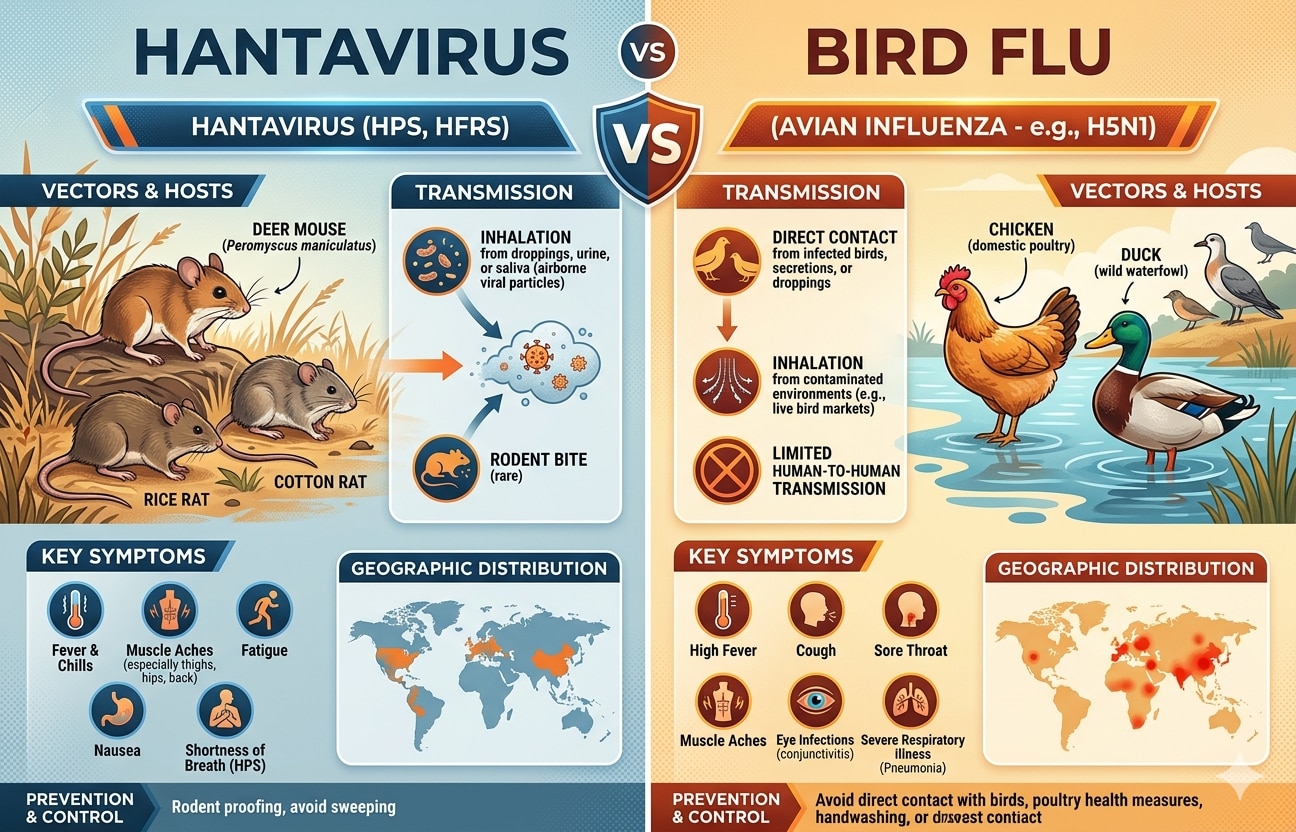
Hantavirus and bird flu causes and prevention methods
Photo Credit: A.I generated image
Why Bird Flu Moves Faster
Bird flu can spread quickly, as according to research tracked by Pandemic PACT (2025), the virus's ability to live in domestic livestock creates a constant, high-volume exposure loop for humans. In live bird markets or industrial farms, the density of hosts allows the virus to circulate and jump to humans far more frequently than the relatively shy, reclusive rodent hosts of Hantavirus.
Furthermore, bird flu is a master of disguise. It undergoes an "antigenic shift", which is a process where different strains swap genetic material to create a new subtype. This biological agility allows it to bypass human immune systems more effectively than the more genetically stable Hantavirus. A 2026 WHO report highlighted that while Hantavirus deaths are tragic and often reach a 38% fatality rate, they rarely trigger the international "red alerts" that a single cluster of H5N1 does, precisely because bird flu has the "machinery" to move through populations at a much higher velocity.
Human-To-Human Transmission: The Final Barrier
The ultimate metric of a virus's speed is whether it can move from Person A to Person B.
Hantavirus: For the vast majority of strains, the virus is a "dead-end" in humans. It does not spread between people. The only notable exception is the Andes virus in South America, which has shown limited person-to-person spread, but these events remain extremely rare.
Bird Flu: While sustained human-to-human transmission has not yet been achieved in a way that would trigger a pandemic, "limited, non-sustained" spread has been documented in family clusters. Scientists fear that bird flu is only a few mutations away from airborne human-to-human transmission, which is a leap Hantavirus is biologically unlikely to make.
The Public Health Perspective
The comparison between these two isn't meant to incite panic but to direct resources. Health organisations prioritise bird flu surveillance because of its pandemic potential. Hantavirus, while devastating to the individual, lacks the "fuel" for a global fire.
As noted in a recent study by CIDRAP (2026), the rise of bird flu in non-avian species, such as dairy cattle and marine mammals, indicates a virus that is aggressively seeking new hosts. Hantavirus, meanwhile, remains "contained" by the biology of the rodents it inhabits.
While both infections are serious zoonotic threats, bird flu spreads faster to humans and poses a higher systemic risk. Hantavirus is a danger of the "neglected corner", which is a rare, exposure-dependent event. Bird flu is a danger at the "global crossroads".
For the average person, the advice from the medical community remains consistent: practise high standards of hygiene, avoid contact with sick or dead animals, and ensure that living spaces are rodent-free. In the battle of the viruses, knowledge and taking the necessary precautions are the best defences against the speed of contagion.
Disclaimer: This content, including advice, provides generic information only. It is in no way a substitute for a qualified medical opinion. Always consult a specialist or your own doctor for more information. NDTV does not claim responsibility for this information.
Track Latest News Live on NDTV.com and get news updates from India and around the world

