

)
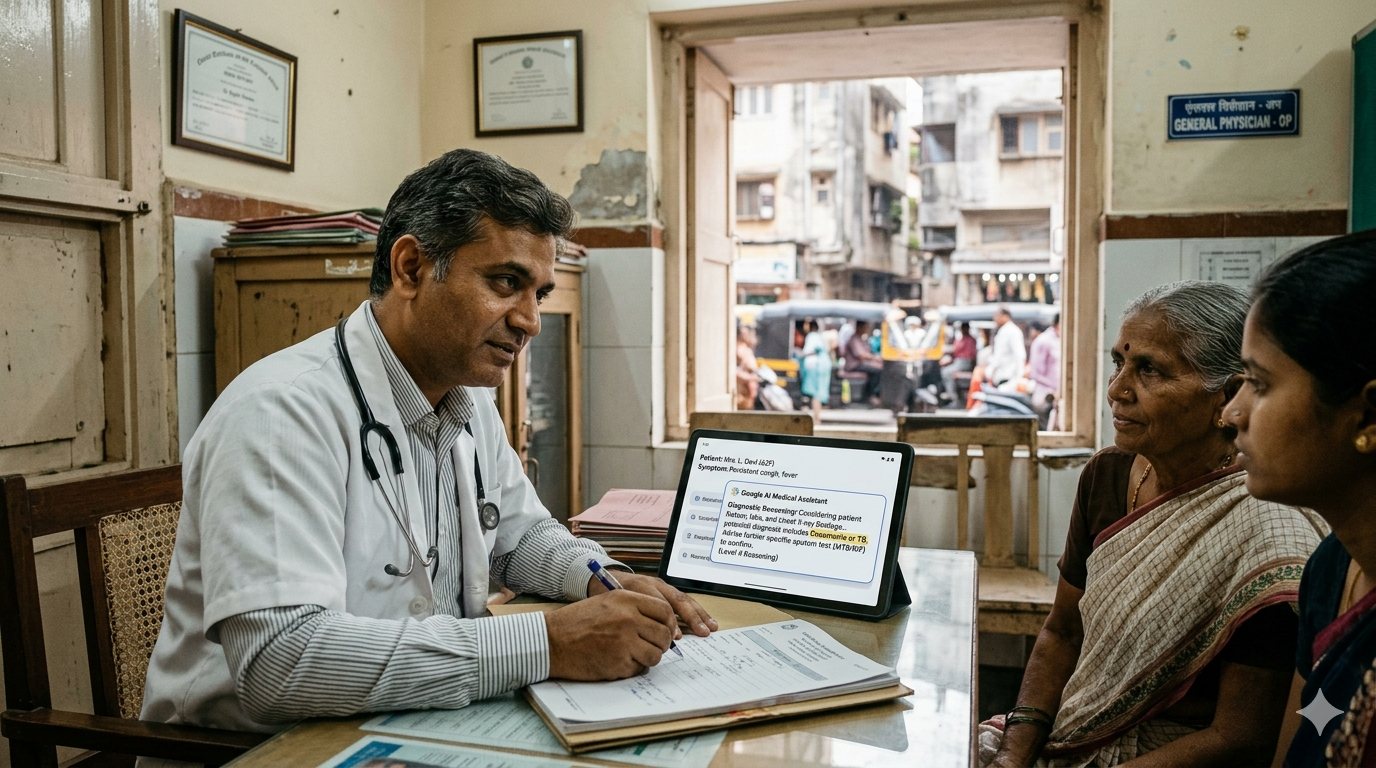
Artificial intelligence is rapidly transforming healthcare, from medical imaging to predictive diagnostics. Now, new research suggests that AI may soon play a more direct role in doctor-patient conversations. A recent clinical feasibility study evaluating a conversational artificial intelligence system developed by Google found that the AI demonstrated diagnostic reasoning comparable to physicians during real patient interactions. The system, known as Articulate Medical Intelligence Explorer (AMIE), is designed to conduct detailed medical history-taking conversations with patients before clinical consultations.
History-taking is considered one of the most important steps in diagnosing illness; studies estimate that a large proportion of diagnoses can be inferred from a patient's clinical history alone. By replicating this process, AI tools like AMIE could potentially support clinicians in collecting structured information, generating possible diagnoses and suggesting next clinical steps.
In the study, researchers tested the AI system in a real-world urgent care setting with 100 adult patients. The results indicate that the AI assistant could safely gather medical histories and produce diagnostic suggestions that were broadly comparable to those made by physicians. While the findings are promising, experts caution that such systems are still experimental and should be used as clinical support tools rather than replacements for doctors.
AI Meets Clinical Diagnosis: What The Study Found
The study, published as a preprint on arXiv, evaluated AMIE in a prospective clinical feasibility trial conducted in an ambulatory urgent care clinic. The goal was to determine whether the AI system could safely interact with patients and perform clinical reasoning during pre-visit medical interviews.
Researchers recruited 100 adult patients presenting with various health complaints. Each patient interacted with the AI system, which asked follow-up questions to understand symptoms, medical history and risk factors. The conversations were then analysed to evaluate the quality of diagnostic reasoning, including the generation of differential diagnoses and potential management plans.
To ensure fairness, clinicians reviewing the outputs were blinded to whether diagnostic suggestions came from the AI or human physicians. The final diagnosis for each patient case was determined later through detailed chart reviews that included laboratory tests, imaging and specialist evaluations.
Overall, the AI assistant demonstrated diagnostic reasoning performance comparable to primary care physicians, particularly in identifying relevant possibilities within differential diagnoses. Researchers emphasised that the AI system was used only for research purposes and did not influence clinical decision-making during the trial.
Also Read: New AI System Enables 24x7 Home Health Monitoring By Doctors
What Makes AMIE Different From Typical Medical Chatbots?
AMIE is built on a large language model designed specifically for diagnostic dialogue, the interactive conversation between doctor and patient that helps clinicians identify possible illnesses.
Unlike general-purpose chatbots, AMIE has been trained using simulated clinical encounters where AI systems play both patient and physician roles. This "self-play" learning approach allows the model to practice diagnostic conversations across many medical scenarios. The system uses multi-step reasoning to analyse symptoms, ask clarifying questions and propose a structured list of potential diagnoses, similar to how physicians formulate differential diagnoses during consultations.
Earlier research comparing AMIE with primary care physicians in simulated clinical exams also showed the AI performing strongly across multiple consultation-quality measures, including communication and diagnostic reasoning. These findings suggest that conversational AI could help standardise and improve medical history-taking, an essential but time-consuming step in clinical practice.
Why AI Assistants Could Matter For Healthcare
Diagnostic errors remain a major cause of patient harm worldwide. Studies estimate that millions of patients experience delayed or incorrect diagnoses every year, particularly in resource-limited healthcare systems. AI-based clinical decision support tools could help reduce these errors by analysing large datasets, recognising patterns in symptoms and ensuring that clinicians consider all plausible diagnoses.
Healthcare researchers also point out that such systems may help address the global shortage of medical professionals. According to global workforce projections, the world could face a shortage of around 11 million healthcare workers by 2030, which may increase diagnostic workloads for clinicians.
In practice, conversational AI could assist clinicians by:
- Conducting pre-consultation patient interviews
- Structuring medical histories in electronic health records
- Suggesting possible diagnoses or tests
- Supporting triage in busy clinics
By reducing administrative burden and improving information capture, AI systems may allow doctors to spend more time focusing on patient care.
Experts Urge Caution Despite Promising Results
Despite the encouraging findings, experts warn that AI systems are far from ready to replace human clinicians. The study itself emphasises that AMIE remains an experimental research system and requires further evaluation across diverse clinical settings. There are also broader concerns about AI reliability in healthcare. Recent investigations have shown that some medical chatbots can confidently deliver inaccurate health information when exposed to misleading prompts or misinformation.
For this reason, most researchers advocate a "human-in-the-loop" approach, where AI tools assist clinicians rather than operate independently. Regulatory oversight, clinical validation and transparency in AI decision-making will be critical before such systems can be deployed widely in healthcare settings.
The new feasibility study provides an early glimpse into how conversational AI could reshape healthcare delivery. By demonstrating diagnostic reasoning comparable to physicians during patient interviews, Google's AMIE system highlights the growing potential of AI-powered clinical assistants. However, the technology is still in its early stages. Experts stress that AI should complement, not replace, human doctors, ensuring that clinical judgment, empathy and ethical oversight remain central to medical care. As research progresses, AI-assisted diagnostics may become a powerful tool for improving efficiency, reducing diagnostic errors and expanding access to quality healthcare worldwide.
Disclaimer: This content including advice provides generic information only. It is in no way a substitute for a qualified medical opinion. Always consult a specialist or your own doctor for more information. NDTV does not claim responsibility for this information.