

)
Whether it is a gruelling nine-to-five desk job, a long day spent on your feet, or the cumulative toll of daily mental stress, the lower limbs inevitably bear the brunt of modern lifestyles. By the end of the day, many individuals are left dealing with a pair of throbbing, swollen feet and a deeply fatigued nervous system. While expensive spa treatments or complicated wellness routines might seem like the only solutions, wellness experts point to an ancient, incredibly simple trick that takes just 10 minutes.
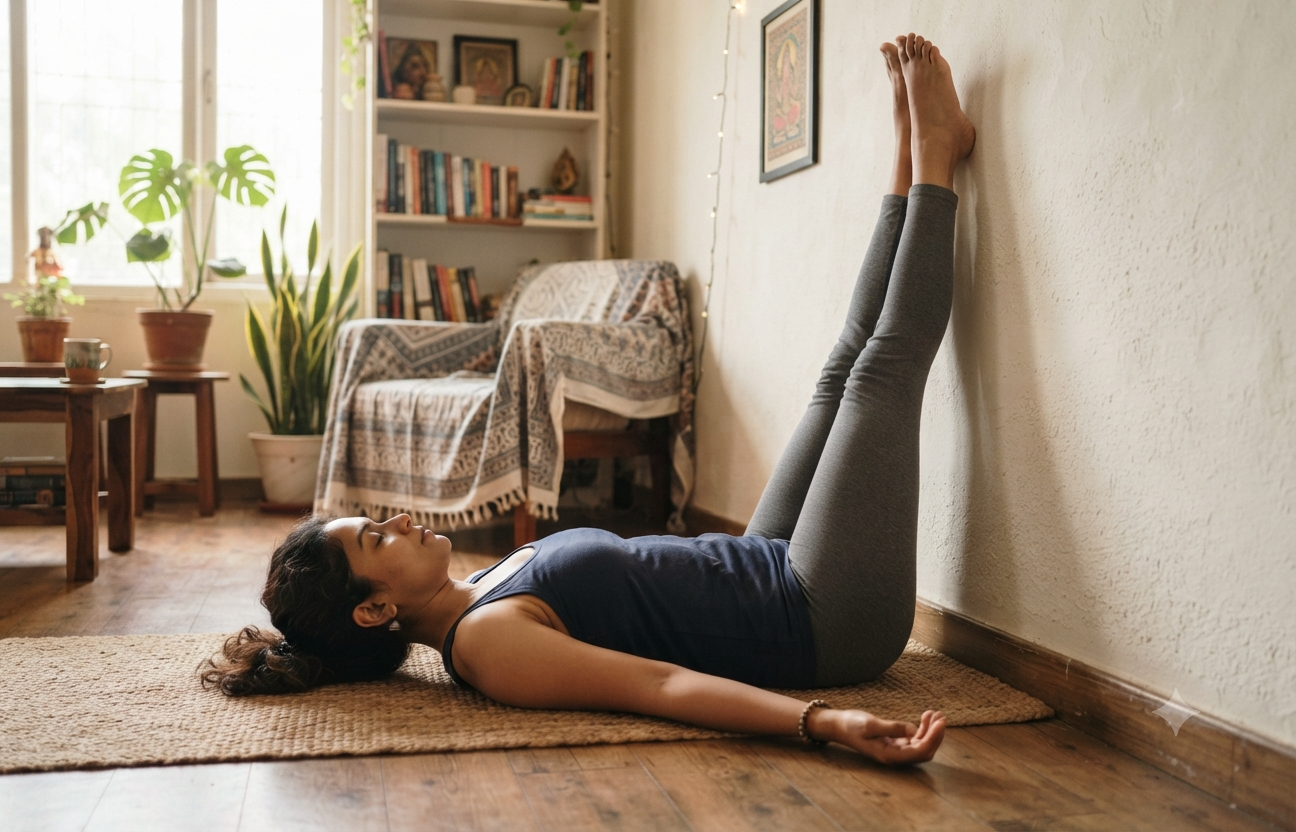
By elevating the legs straight up against a wall, one can unlock a powerful therapeutic release. It is known in restorative yoga as Viparita Karani (the legs-up-the-wall pose), this effortless practice is gaining mainstream popularity for its ability to dramatically boost circulation, relieve fluid retention, and melt away mental tension.
What Is The Legs-Up-The-Wall Pose?
At its core, Viparita Karani is a traditional restorative yoga posture that dates back centuries. Unlike active yoga styles that require strength, flexibility, or high cardiovascular exertion, this is a passive, gentle inversion designed to restore balance to the body.
The beauty of this pose lies in its accessibility. It can be easily performed in the comfort of a home with absolutely zero special equipment. All that is required is a clear wall space and a comfortable surface, such as a yoga mat, a folded blanket, or even a bed.
Dr Deepak Sharan, Sports Medicine and Rehabilitation Specialist, explains, "Viparita Karani, or the legs-up-the-wall pose, is a simple recovery position that uses gravity to assist the return of blood and fluid from the lower limbs. People who spend long hours standing, sitting, or travelling may find that elevating their legs for 10 to 15 minutes helps reduce feelings of heaviness, mild swelling, and fatigue in the feet and ankles."
How To Do It
1. Position yourself: Sit sideways with one hip pressed as close to the wall as comfortably possible.
2. Transition: Gently pivot your body, swinging your legs up onto the wall while lowering your back, shoulders, and head flat onto the floor.
3. Settle in: Rest your sit bones flush against the wall (or slightly away if your hamstrings are tight). Keep your arms relaxed by your sides, palms facing up to open up the chest.
4. Hold: Remain in this posture, breathing deeply, for 5 to 10 minutes.
Why Do Feet Become Swollen In The First Place?
To understand how this simple trick works, it is important to first understand why swollen feet occur. Under normal conditions, the veins and lymphatic system must work against gravity to pump fluids back up to the heart. However, several everyday factors can disrupt this process, leading to fluid pooling in the lower extremities:
- Prolonged Standing or Sitting: Remaining static prevents leg muscles from contracting, which stops them from actively pumping blood upward.
- Hot Weather: Heat causes blood vessels to dilate, making it easier for fluids to leak into surrounding tissues.
- High Salt Intake: Excess sodium causes the body to retain extra water.
- Pregnancy and Hormonal Changes: Increased pressure on pelvic veins and shifting hormones promote fluid retention.
- Travel: Sitting in cramped aeroplane cabins or cars for hours restricts blood flow.
- Poor Circulation: Sluggish veins struggle to return blood to the heart, exacerbating foot swelling.
How Keeping Your Legs Up A Wall May Reduce Swelling
When the legs are elevated vertically, gravity is suddenly transformed from an adversary into an ally. This inversion uses gravity to naturally assist the return of venous blood and lymphatic fluid back toward the thoracic cavity.
By relieving the pressure in the lower limbs, the pose rapidly reduces fluid pooling in the feet and ankles, offering quick relief from swollen feet. Additionally, it gives overworked calf and thigh muscles a much-needed break, allowing them to decompress and recover after hours of being vertical.
Note: Elevating the legs above the level of the heart is a highly recommended conservative therapy. It can temporarily but significantly reduce leg swelling associated with daily fatigue, standing, or sitting.
The Surprising Effect On Your Nervous System
While the physical relief to the legs is immediate, the impact on the brain is equally profound. Elevating the legs and resting flat on the back sends a powerful physiological signal to the brain that the body is safe, secure, and at rest.
This shift helps transition the nervous system away from the hyper-alert "fight-or-flight" state (governed by the sympathetic nervous system) and directly activates the parasympathetic nervous system which is the body's natural "rest and digest" response.
Pairing this posture with slow, conscious deep breathing further strengthens this effect. As the diaphragm moves freely, it lowers heart rate, reduces blood pressure, and calms racing thoughts, providing deeply restorative stress relief and calming nerves after a chaotic day.
Other Potential Benefits Of The Legs-Up-The-Wall Pose
Beyond reducing localised swelling and soothing the nervous system, making this 10-minute trick a daily habit offers several holistic health benefits:
1. May Improve Blood Circulation
By easing the workload of the veins in the lower body, the pose facilitates a smoother venous return. This boost in blood circulation ensures fresher, oxygenated blood circulates back down once you return to an upright position.
2. Can Ease Heavy And Tired Legs
For individuals who experience a dull, throbbing ache at the end of the day, this posture drains accumulated pressure, leaving the legs feeling remarkably light and refreshed.
3. Supports Post-Travel Recovery
After spending hours in pressurised cabins or stiff car seats, spending 10 minutes with the legs up helpfully re-establishes healthy fluid equilibrium.
4. Encourages Better Relaxation Before Bed
By soothing the mind and releasing muscle tension in the lower back and hips, this pose acts as an ideal wind-down ritual to prepare the body for deep, restorative sleep.
Who May Benefit Most From This 10-Minute Habit?
This practice is highly recommended for anyone whose daily routine places heavy physical demands on their lower body. In particular:
- Desk Workers and Office Employees: Who sit for hours, restricting pelvic blood flow.
- Healthcare Professionals and Teachers: Who stand on hard surfaces for the majority of their shifts.
- Frequent travellers who battle sluggish circulation due to long transits.
- Fitness Enthusiasts: Seeking a gentle, passive recovery stretch after intense workouts.
- Older Adults: Experiencing mild leg fatigue and looking for low-impact relaxation.
Who Should Avoid This Pose?
While Viparita Karani is generally incredibly safe, certain medical conditions alter the way the body handles a sudden shift in fluid pressure. Individuals with the following conditions should avoid this pose or consult a physician first:
- Uncontrolled or severe high blood pressure.
- Certain eye conditions, such as glaucoma (as the inversion can temporarily increase pressure in the eyes).
- Recent back, neck, or hip surgeries.
- Serious circulatory or congestive heart disorders.
- Severe back or neck issues that make lying flat on the floor painful.
Note: This gentle wellness practice is meant to support daily comfort and should not replace professional medical care if you are dealing with persistent or chronic swelling.
When Swollen Feet Need Medical Attention
While mild swelling after a long day is normal, persistent or sudden swelling can sometimes point to more serious underlying health conditions like deep vein thrombosis (DVT), lymphoedema, or heart, kidney, or liver disease. It is critical to consult a doctor immediately if you experience any of the following "red flags":
- Sudden, unexplained swelling.
- Swelling that occurs in only one leg.
- Swelling accompanied by pain, redness, or warmth in the calf.
- Shortness of breath, difficulty breathing, or chest pain.
- Persistent oedema (swelling that does not go away after elevation or a night's rest).
While putting your legs up a wall is an incredibly restorative wellness practice, it is not a cure-all or a replacement for active movement or medical intervention. Healthy veins rely on the physical contraction of calf muscles that is often called the "second heart" to pump blood. Therefore, this passive exercise is best used as a complementary tool alongside regular cardiovascular exercise, balanced nutrition, and appropriate medical guidance.
Disclaimer: This content including advice provides generic information only. It is in no way a substitute for a qualified medical opinion. Always consult a specialist or your own doctor for more information. NDTV does not claim responsibility for this information.