

)
Carbohydrates, often referred to as carbs, have developed a negative reputation in the weight loss industry. They are frequently labelled as the "enemy" in weight loss discussions, mainly because they can spike insulin levels, leading the body to store fat. However, it's essential to understand that not all carbs are the same. Research has shown that you can achieve weight loss just as effectively on a high-carb diet as you can on a low-carb diet, as long as your total calorie intake remains the same.
Complex carbohydrates, such as those found in whole grains, legumes, fruits, and vegetables, can actually aid in weight loss efforts. These foods are typically high in fibre, which promotes feelings of fullness and helps regulate appetite. Additionally, high-fibre carbs have a lower glycemic index, resulting in a more gradual release of glucose into the bloodstream. This helps maintain stable energy levels and reduces cravings.
In contrast, simple carbs found in sugary snacks and beverages can lead to rapid spikes in blood sugar followed by crashes, often resulting in increased hunger and overeating.
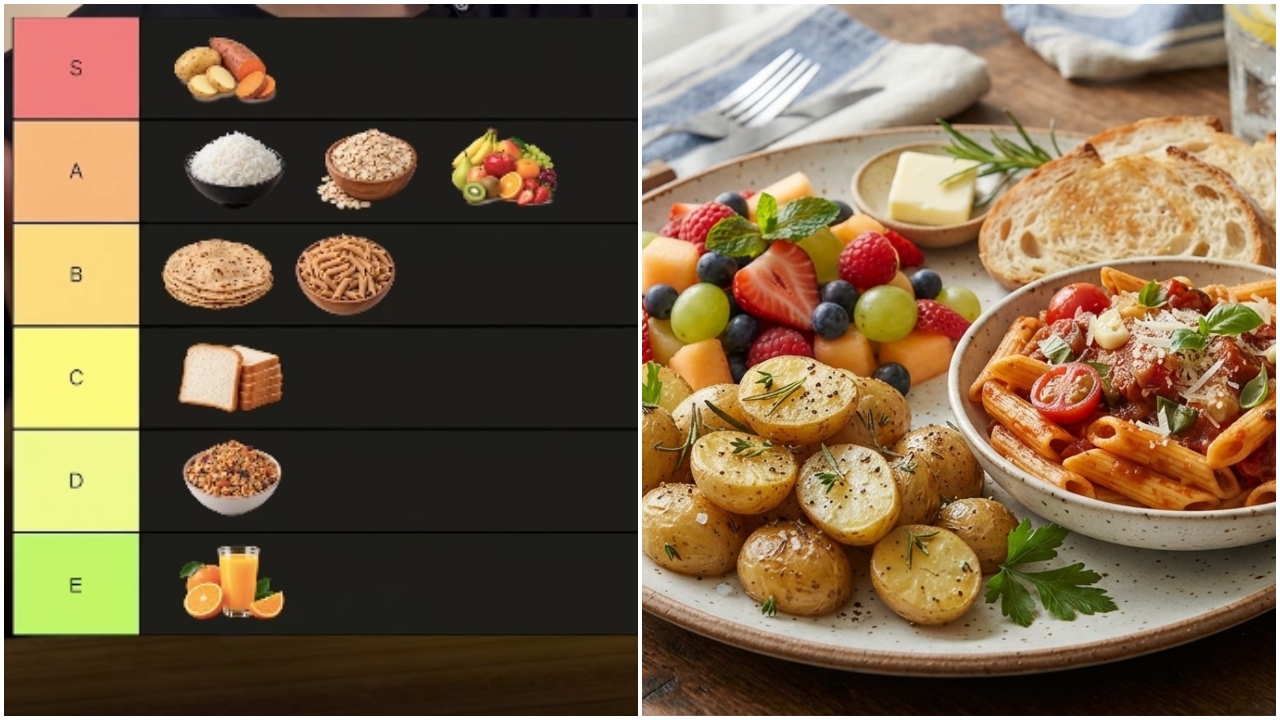
If you are wondering which carbs to eat and avoid for fat loss, we have a list for you. Darsh Surana, a CA-turned fitness coach who specifically trains working professionals, shared a video on Instagram ranking top carbs for fat loss, and the list will surprise you.
Fitness expert ranks best carbs for fat loss
S tier
-
Potatoes
Plain, boiled, or baked potatoes provide an incredible amount of physical food volume for very few calories. They take up a lot of space in your stomach, making it incredibly difficult to overeat. "The most filling carbs you can eat. It is just that so-called diet culture has made people scared of potatoes for no reason unless you turn them into fries," Surana said.
A tier
-
Rice
According to the fitness expert, this carbohydrate is known for being easy to digest and versatile, making it a great side to various protein options. It's also straightforward to measure, helping you control portion sizes effectively.
-
Oats
"Oats are high in fibre. They keep you full for long and are easy to prepare. Just don't turn them into a 700-calorie dessert by drowning them in peanut butter and honey," he mentioned. Additionally, oats absorb water and expand significantly during cooking. This slows down digestion and keeps your blood sugar stable, giving you long-lasting fullness and workout energy.
-
Fruits
Foods like berries, apples, and melons have a high water and fibre content. You can eat a bowl of fruits without exceeding your calorie budget while satisfying sweet cravings. "Rich in fibre, water and micronutrients. Just watch your portions with fruits like mangoes, bananas, and chikoos," the fitness expert mentioned.
B-tier
-
Roti
"It is a perfectly good fibre-rich carb. But calories add up pretty quickly when those rotis keep getting bigger without you realising it," he said. It feels like a substantial, satisfying meal, but coaches rank it a bit lower than oats or potatoes because eating multiple rotis can cause your calorie intake to creep up quickly if you aren't paying attention.
-
Whole wheat pasta
Pasta offers decent fibre and a surprisingly high amount of protein for a grain. However, it is highly calorie-dense, especially once heavy sauces are added. "Slightly more fibre, but it's not a magical food for fat loss. If you prefer regular pasta, eat regular pasta; just control the portions," Surana advised.
C-tier
-
Bread
While bread can be a part of a balanced diet, it can be consumed in large quantities without providing a satisfying feeling of fullness. This can make it easy to overeat.
D-tier
-
Granola
"Basically a dessert pretending to be healthy food. Just a small bowl of it is easily 500+ calories," he claimed. It provides almost no physical volume to fill your stomach, making it a very poor choice when you are actively trying to cut calories.
E-tier
-
Fruit juice
Though fruit juice comes from whole fruits, it lacks the fibre that helps with satiety, making it easy to consume a lot of calories quickly. Drinking juice can lead to unintentional calorie overload, so moderation is essential.
"Something that you don't realise- you can cut out all the carbs and still not lose fat. On the other hand, you can eat carbs and still lose fat as long as you are eating in a calorie deficit," he clarified.
Weight loss fundamentally comes down to achieving a sustained calorie deficit, meaning burning more calories than you consume. Eliminating whole food groups like fruits, vegetables, and whole grains is not required for weight loss and can often lead to nutrient deficiencies or digestive issues.
Disclaimer: This content including advice provides generic information only. It is in no way a substitute for a qualified medical opinion. Always consult a specialist or your own doctor for more information. NDTV does not claim responsibility for this information.