

)
India faces a rising burden of heart patients who are struggling with their bad cholesterol levels. Besides bad cholesterol, triglycerides are a major risk factor that can increase the chances of heart disease. These heart health risk factors have made people focus on their regular dietary choices, as they are responsible for fuelling a heart health crisis. There is a growing interest in choosing natural dietary interventions such as basil or sabja seeds. These seeds are responsible for boosting physical well-being, as they can provide fibre and polyphenols as well as omega-3 fatty acids. When these nutritional aspects are balanced, the heart can be healthier. But to understand exactly how basil seeds work on improving cholesterol and triglycerides, their mechanisms need to be looked at closely.
What Are Basil Seeds?
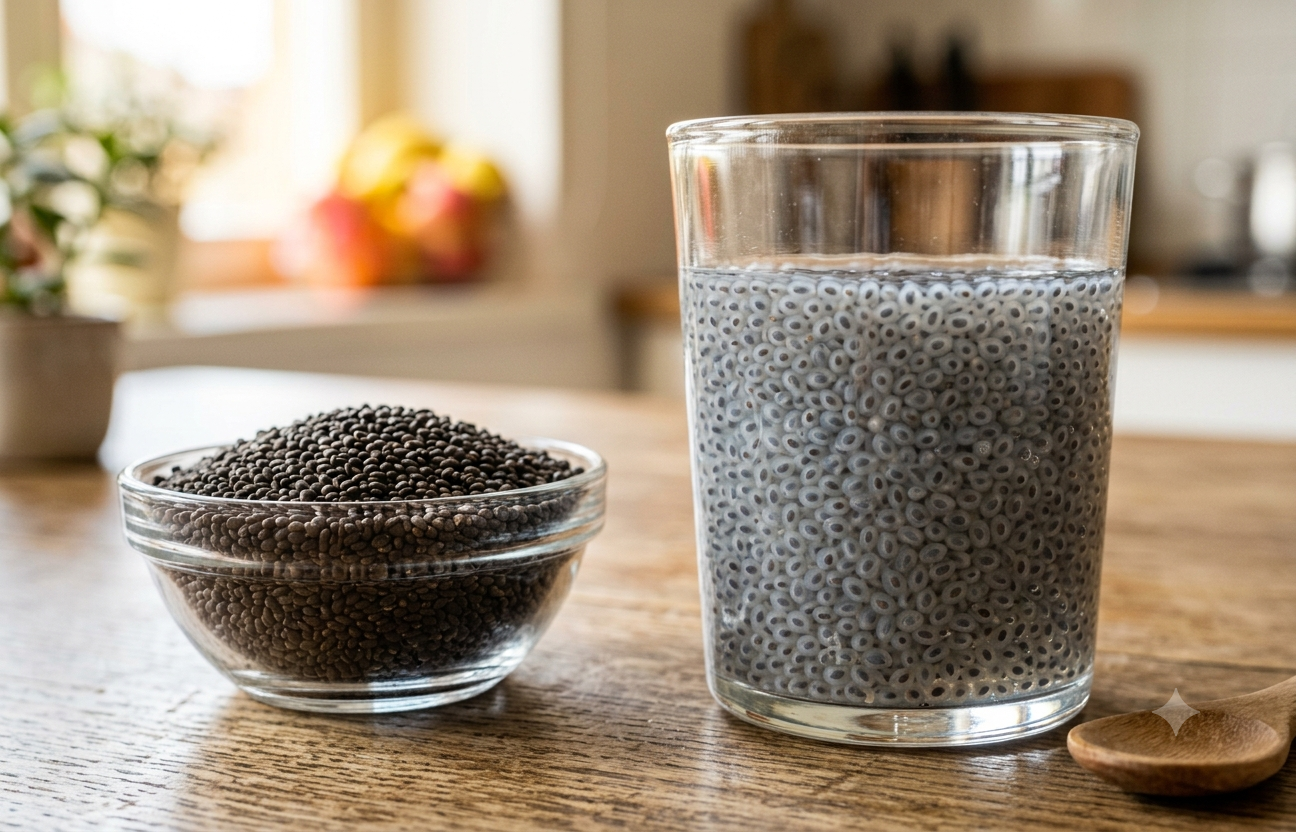
Basil seeds are tiny, black seeds that tend to expand when they are soaked in water. Their nutritional profile is what has made them popular, as they can provide hydration and nourish your digestive function. To look at their exact nutritional profile, the Indian Nutrition Tables, as established by the Indian Council of Medical Research (ICMR) and National Institute of Nutrition (NIN), have documented the following values:
- Energy: 442 calories
- Protein: 14-15 g
- Fat: 13-14 g
- Total Carbohydrate: 44-45 g
- Dietary Fibre: 22-26 g
- Calcium: 350-400 mg
- Magnesium: 250-300 mg
- Iron: 9-12 mg
- Potassium: 600-700 mg
- Omega-3 fatty acids: It is present in significant amounts.
How Basil Seeds Can Lower Cholesterol And Triglycerides
The presence of bad cholesterol and triglycerides can increase your chance of developing serious heart health issues. To reduce your risk, you need to focus on choosing natural dietary choices that can work on the internal repair of the heart. This is also important, as those with higher chances of obesity, diabetes, and fatty liver disease need to consume natural remedies that are safe but effective. The exact mechanisms behind basil seeds' water absorption rate and their potent health properties.
How Basil Seeds May Help Lower Cholesterol
The Pakistan Journal of Biotechnology has detailed that consuming basil seeds for 90 days can effectively lower your cholesterol and triglycerides that increase your risk of metabolic disorders. But their exact dose varies based on how much your body can metabolise and safely process daily. The exact quantity is as follows:
5 g-10 g for daily consumption, and it should be soaked for maximum impact.
Rich In Soluble Fibre
Soaked basil seeds form a gel in the digestive tract, which acts as a buffer that can reduce your cholesterol levels. It can also support how much bile acid excretion happens in the body, and the quantity of basil seeds needs to be balanced accordingly.
Promotes Satiety
Basil seeds tend to expand multiple times after they are soaked in water, which makes them better for people who are looking to reduce their overeating. This factor can help people maintain their weight and make sure they are on track to keep their weight stable.
Improves Gut Health
Basil seeds act as a prebiotic, which means that the relationship between your gut microbiome and lipid metabolism is improved. When basil seeds are eaten in their desired dose, then your body can strengthen its gut health and improve lipid markers.
Can Basil Seeds Help Lower Triglycerides?
The high fibre content in basil seeds can lower triglycerides by 16.94% when 5g of daily consumption is present. Just 5 g of basil seeds can lower an important risk factor that is related to metabolic disorders, coronary heart disease, heart attack, stroke, acute pancreatitis, fatty liver disease, type 2 diabetes, and chronic kidney disease.
The high fibre content of basil seeds can lower post-meal blood sugar spikes that can affect your cholesterol and triglyceride levels. Furthermore, it contains plant compounds and antioxidants that can lower oxidative stress and help your internal organs function better.
What Changes Could Occur In 90 Days?
The month-wise positive changes in your body can be subject to variation, as basil seeds tend not to suit people who are unable to metabolise them due to pre-existing digestive issues. Those who are otherwise healthy can consume basil seeds in moderation, starting from a small dose such as 1 g and slowly scaling their intake to 10 g.
Month 1
Within a month of consuming basil seeds, you can notice improved digestion and better fullness. Due to the gel-like substance that acts as a buffer in your intestines, people can benefit from consuming basil seeds. This aspect also helps lower cholesterol, and it can be a mild weight-loss support. Most importantly, when it comes to cholesterol and triglycerides, they can begin to trend downwards if you cut off sugary foods and refined carbohydrates.
Month 2
When your consistent fibre support is provided by daily basil seeds, then you can manage your weight in a better manner. Even your dietary quality can improve as your snacking and cravings can reduce significantly. During the second month, you can begin seeing early reductions in total cholesterol and improvement in your triglyceride levels.
Month 3
When the study looked at the month 3 improvements, the sustained fibre intake of basil seeds resulted in reductions in cholesterol absorption. But overall lifestyle changes also played a role in the exact positive impacts on cholesterol and triglycerides.
Note: If you are on medications, then you need to consult your doctor for taking a safe approach to consuming basil seeds.
Nutrients In Basil Seeds That Support Heart Health
Basil seeds are nutrient-dense, as they contain multiple components that can support heart health. These nutrients are the following:
- Soluble fibre
- Polyphenols
- Antioxidants
- Plant omega-3 fats
- Minerals such as magnesium and calcium
How To Consume Basil Seeds Daily
To make basil seeds a part of your daily routine, you need to take these aspects into account:
- Soaked basil seed water is the best method for maximum absorption.
- Added to curd but soaked only as whole basil seeds, which aren't metabolised by the body.
- You can add a small tablespoon of soaked basil seeds to smoothies.
- Overnight oats with basil seeds can be a way to include them in your diet.
- Fruit bowls are a clever way to include basil seeds in your diet.
Note: 1-2 teaspoons soaked in water before consumption.
Who Should Be Careful With Basil Seeds?
Basil seeds should be carefully consumed, as if you eat them in the wrong form, then potential side effects can be triggered. You need to be aware of these potential precautions:
- Digestive discomfort is possible if consumed dry.
- The risk of choking if not soaked is a major concern.
- Medication interactions are possible.
- People with swallowing difficulties should avoid basil seeds.
- Pregnant and breastfeeding women should seek medical guidance for safety.
Lifestyle Habits That Enhance Cholesterol Reduction
To reduce your cholesterol levels effectively, you need to focus on adopting lifestyle habits that are proven to help. Implementing them is key to reducing your cholesterol levels. Here is how you can do so:
- A Mediterranean-style eating pattern is beneficial for your good cholesterol levels.
- Regular exercise is necessary for a metabolism boost.
- Weight management is necessary to adjust your cholesterol absorption rate.
- Adequate sleep forms the foundation of cholesterol management.
- Smoking should be avoided, as research suggests that it could increase bad cholesterol levels and make your heart weaker.
- Reduce ultra-processed foods, as they can increase your sodium intake.
Basil seeds could lower your cholesterol and triglyceride levels after 90 days, but more clinical investigation is needed for it to become a medically prescribed practice.
Also Read: Chia Seeds vs Sabja Seeds: Which One Is Better For Weight Loss? Experts Explain
Disclaimer: This content including advice provides generic information only. It is in no way a substitute for a qualified medical opinion. Always consult a specialist or your own doctor for more information. NDTV does not claim responsibility for this information.