

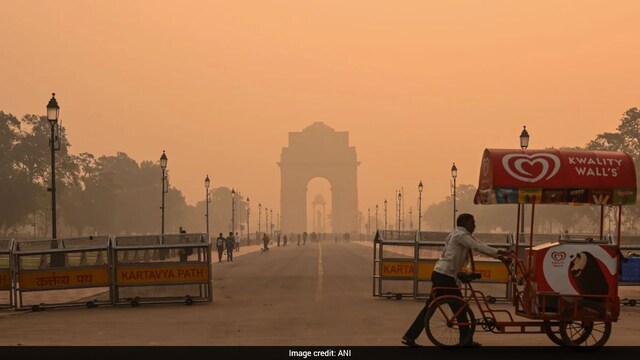
Delhi-NCR is choking under a blanket of toxic air, and the health consequences are already becoming visible. With the Air Quality Index (AQI) crossing the 400 mark and falling into the severe category even before Diwali, doctors are reporting a rise in respiratory complaints, with even otherwise healthy individuals experiencing breathing difficulties, persistent cough and throat irritation.
In an exclusive conversation with NDTV, renowned pulmonologist and former AIIMS Director Dr Randeep Guleria warned that the pollution crisis is no longer restricted to people with pre-existing respiratory conditions. Even those without any underlying illness are beginning to experience the effects of toxic air.
20% Increase In OPD Patients
"We are seeing an increase in the number of cases, almost by 20%, in terms of patients who are coming with worsening of the underlying respiratory problem," Dr Guleria said.
He pointed out that patients with asthma, chronic obstructive pulmonary disease (COPD) and existing heart conditions are experiencing worsening symptoms, including breathing difficulties and chest tightness.
But what is particularly worrying, he said, is that healthy individuals are also reporting symptoms.
"What is worrying is that we're also seeing normal individuals who have no basic respiratory problem, are healthy, but now are complaining of irritation in the throat, breathing difficulty, wheezing, a little persisting cough," he said.
Explaining the reason, Dr Guleria said pollution irritates the airways and causes bronchial hyperactivity, triggering symptoms even in people who do not have a history of respiratory disease.
Why The Next Few Days Could Be Particularly Dangerous
With Diwali approaching, concerns are mounting that an already deteriorating air quality situation could worsen further. Dr Guleria stressed that air pollution is not merely a winter problem, although meteorological conditions during the colder months make the situation considerably worse.
"We talk about it being during the winter months. It's there throughout the year. It gets worse and really bad during the winter months," he said.
He called for a sustained action plan rather than temporary interventions that address pollution only when the AQI reaches alarming levels.
According to Dr Guleria, policymakers need to identify emission sources and put practical, sustainable solutions in place to reduce pollution. Vehicle emissions, construction activity, crop burning and other sources need to be addressed.
He also cautioned against relying on interventions such as cloud seeding as a long-term solution.
"These will not really help in the long run. We need to find a sustainable long-term solution," he said.
Can Delhi's Toxic Air Trigger Heart Attacks?
One of the most serious health consequences of prolonged exposure to polluted air is its impact on cardiovascular health.
Explaining how particulate matter affects the heart, Dr Guleria said that fine particulate matter, particularly PM2.5, can enter the bloodstream through the lungs and trigger inflammation in blood vessels.
"When we have air quality, when the PM2.5 is very high, it crosses the blood-lung barrier. It goes into the bloodstream," he explained.
Once these particles enter the bloodstream, they can cause inflammation in blood vessels. In people who already have an underlying predisposition to heart disease, this can increase the possibility of coronary arteries becoming inflamed and blocked.
"Those who have an underlying tendency for having a heart problem, the coronary arteries, which are present in the heart, they get swollen. There's a higher chance that they could get blocked. And this can lead to acute heart problems." he warned.
Dr Guleria highlighted that air pollution adds another layer of cardiovascular risk alongside established factors such as high cholesterol, age, family history and smoking.
He said that living in an area with poor air quality has been associated with a heart disease risk comparable to that associated with high cholesterol or regular smoking.
Lung Cancer In Non-Smokers: Is Air Pollution To Blame?
Perhaps one of the most alarming aspects of the pollution crisis is the growing concern over lung cancer among people who have never smoked.
Responding to questions about reports of young people and women who have developed lung cancer despite having no history of smoking, Dr Guleria said that scientific evidence increasingly points towards environmental pollution as an important risk factor.
"The risk of lung cancer goes up if you are constantly living in an environment and breathing air which has got a high level of pollution," he said.
He explained that exposure to polluted air can cause mutation-related changes in lung cells, with laboratory research and clinical evidence pointing towards an increased cancer risk even among non-smokers.
"We were initially saying that lung cancer occurs predominantly in smokers. We are now seeing lung cancer in majority of non-smokers, and environmental pollution, both indoor and outdoor pollution, is actually contributing to the high risk of lung cancer in non-smoking individuals," he said.
Dr Guleria also shared his experience of seeing younger patients, including women, diagnosed with lung cancer.
Recalling a patient who was a journalist and had never smoked, he said she had questioned why she had developed the disease despite having no conventional risk factors.
"Air pollution is another risk factor," he emphasised.
What Should You Do To Protect Yourself Ahead Of Diwali?
With the AQI already in the severe and very poor categories, Dr Guleria advised residents to take precautions rather than underestimate the health risks of exposure.
- Monitor the AQI: Keep track of air quality levels and avoid stepping outdoors when pollution is in the severe or very poor category, wherever possible.
- Wear a mask: If you have to venture outside, use an N95 mask or a three-layer surgical mask.
- Avoid outdoor exercise: Do not go walking or jogging early in the morning or late in the evening when pollution levels can be particularly high.
- Keep outdoor air out: Keep doors and windows closed to minimise the entry of polluted air into your home.
- Do not skip medication: People with chronic respiratory or heart conditions should take their prescribed medicines regularly and consult their doctors if symptoms worsen.
He also urged citizens to take responsibility for reducing their own contribution to pollution.
"We all should also try and see that we try and use more environmentally friendly means of transport. Walk to the market if we can, rather than taking the car. For children going to school, they could do carpooling or go in the school bus rather than everyone going in their own car, "he said.
Why Does The Air Smell So Bad?
Addressing complaints about the unusual stench in the air, particularly during mornings and evenings, Dr Guleria explained that the irritation is not caused by particulate matter alone.
Pollutants such as sulphur dioxide, nitrogen oxides and ground-level ozone can irritate the eyes, nose and throat. When inhaled, these pollutants can also inflame the airways, triggering persistent cough and wheezing.
"All of this is related to not only PM2.5 but ozone, nitrogen oxides, sulphur dioxide, which are also part of air pollution,"he said.
Even healthy people are falling sick, patients with existing conditions are facing worsening symptoms, and the risks extend to the heart and lungs. While individual precautions can help reduce exposure, the larger battle against air pollution requires sustained action to address its sources rather than another temporary response to an annual crisis.
Disclaimer: This content including advice provides generic information only. It is in no way a substitute for a qualified medical opinion. Always consult a specialist or your own doctor for more information. NDTV does not claim responsibility for this information.