

)
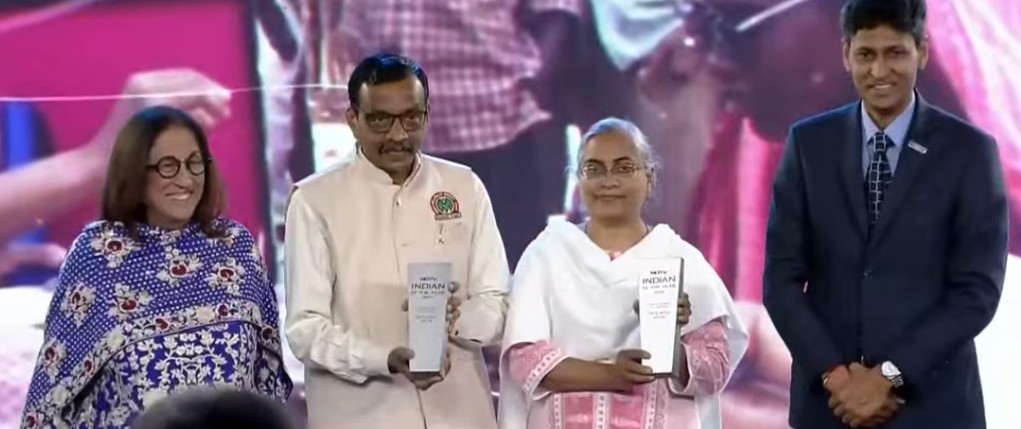
Dr. Ashish Satav and Dr. Kavita Satav win Health Leader Of The Year at NDTV Indian Of The Year 2025. Kiran Nadar, Founder of the Kiran Nadar Museum of Art and Anurag Chauhan, Director, General Counsel & Company Secretary, Axis Max Life Insurance present the award to the Doctor couple.
"In 1997-1998, when we reached Melghat region, there were no doctors. Pregnant women, women with children had to walk 19 kms to seek medical help. The doctor to population ratio was 1:20,000," says Dr. Ashish.
"Poverty, illiteracy, superstitions and difficult access made healthcare services difficult and the scenario has completely changed now," Dr. Ashish adds.
“I want to dedicate this award to all the helping hands, more than 75 surgeons and doctors are giving free services. I came here to thank them, they have helped us achieve everything. This one is for the MAHAN team,” says Dr. Kavita
About Dr. Ashish Satav and Dr. Kavita Satav and their selfless medical service
Dr. Ashish Satav and Dr. Kavita Satav are a well-known doctor couple who have dedicated their lives and careers to serving more than a million tribal people in the forests of the Melghat region of Maharashtra. They are the founders of the MAHAN Trust (Meditation, AIDS, Health, Addiction, Nutrition), an NGO established in 1997 dedicated to providing healthcare to the tribal population in one of the most remote and underserved areas of the country.
Dr. Ashish, influenced by his grandfather (a Sarvodaya leader) and the teachings of Mahatma Gandhi, was committed to serving rural India from a young age. He left a secure job as a lecturer to move to Melghat. Dr. Kavita joined her husband in this mission, often balancing her duties as a doctor and a mother by bringing their infant son to remote clinics while she treated patients.
The Beginning: A Hospital in a Hut
Their journey began in 1997 when the Satavs moved to the Melghat forest, a region then notorious for having infant mortality rates nearly double the national average. They started their work in a small makeshift medical centre often described as a "hospital in a hut" in Dharni and eventually developed the Mahatma Gandhi Tribal Hospital, a 30-bed multispecialty facility in Dharni.
Over nearly 30 years, they transitioned from treating individuals to building a systemic healthcare model through their NGO, MAHAN Trust. Their initiatives have significantly impacted the region, leading to a reported 68% reduction in child mortality and a 75% reduction in malnutrition in their operating areas.
The Arogyadoot Model
Realising they couldn't be in every village, Dr. Ashish developed a revolutionary model. * They trained semi-literate tribal women to act as "health messengers" (Arogyadoots). These women were taught to diagnose and treat the big killers: pneumonia, malaria, and diarrhea using simple protocols. This home-based child care model reduced child mortality by 68% in their operational areas.
Dr. Kavita's blindness control program
Dr. Kavita, an ophthalmologist, personally screened thousands of people in hundreds of villages, providing free eye check-ups and surgeries to restore vision for over 30,000 patients. In the early years, she would tie a saree to a tree branch as a cradle for her infant son while she performed eye surgeries in remote villages.
Combating malnutrition (SAMMAN Program)
Melghat was often called the "Malnutrition Capital" of Maharashtra. The Satavs encouraged the development of thousands of kitchen gardens and organic nutrition farms to combat malnutrition. They also developed a locally-made 'Therapeutic Food' (fortified snacks) that was culturally acceptable to the Korku people.
Research and policy influence
Unlike many grassroots NGOs, the Satavs backed their work with rigorous data. Dr. Ashish has published over 40 research papers in international journals. His research on under-reporting of deaths forced the government to acknowledge the true scale of the crisis in Melghat, eventually influencing 38 state health policies.
The "Milk Brother" story
One of the most touching examples of their dedication occurred when Dr. Kavita treated a newborn whose mother could not produce milk. Dr. Kavita, who was nursing her own son at the time, shared her own breast milk with the tribal baby for months. Today, that child is known as the "Milk Brother" of her son, Athang, symbolising the literal bond the Satavs have built with the community.
Current impact
Today, their Mahatma Gandhi Tribal Hospital is a full-fledged multispecialty centre. They have expanded their work to include de-addiction programs (addressing alcoholism in the region) and even counselling for the "economically productive" age group to reduce adult mortality.
The couple's work has earned international and national acclaim. They were honoured with the Public Health Champion Award from the World Health Organisation (WHO) in 2016.
Disclaimer: This content, including advice, provides generic information only. It is in no way a substitute for a qualified medical opinion. Always consult a specialist or your own doctor for more information. NDTV does not claim responsibility for this information.