

)
Quitting smoking is widely regarded as one of the most difficult lifestyle changes, largely because nicotine is highly addictive. Yet stories of people stopping suddenly, often described as quitting "cold turkey", continue to inspire smokers trying to break the habit. Recently, actor Arshad Warsi revealed that he managed to quit smoking within a week after struggling with the habit for about 35 years. His experience has sparked renewed interest in whether abruptly stopping cigarettes can truly work for long-term cessation.
According to the World Health Organization, tobacco use remains one of the leading causes of preventable death worldwide, responsible for more than 8 million deaths every year. The addictive nature of nicotine makes quitting difficult, and many smokers attempt several times before successfully stopping. However, research shows that multiple strategies, including behavioural therapy, medications and nicotine replacement therapy, can help improve quit rates. While some people prefer gradually reducing cigarette use, others attempt to stop abruptly.
So how effective is the "cold turkey" approach? Experts say it can work for some people, but it requires strong motivation, support and a clear understanding of nicotine withdrawal.
The Arshad Warsi Example
Actor Arshad Warsi recently shared that he quit smoking in just one week after smoking for roughly 35 years. He said a behavioural approach helped him "rewire" how he perceived cigarettes and break the psychological link with smoking. His story highlights an important point:
Nicotine addiction is not only physical but also psychological.
Many smokers associate cigarettes with stress relief, social situations or daily routines. Changing these behavioural triggers can sometimes play a key role in quitting. However, experts emphasise that individual experiences vary widely.
Also Read: Smoking Can Mess Up Your Heart Health: 7 Early Signs To Look Out For
What Does "Cold Turkey" Mean?
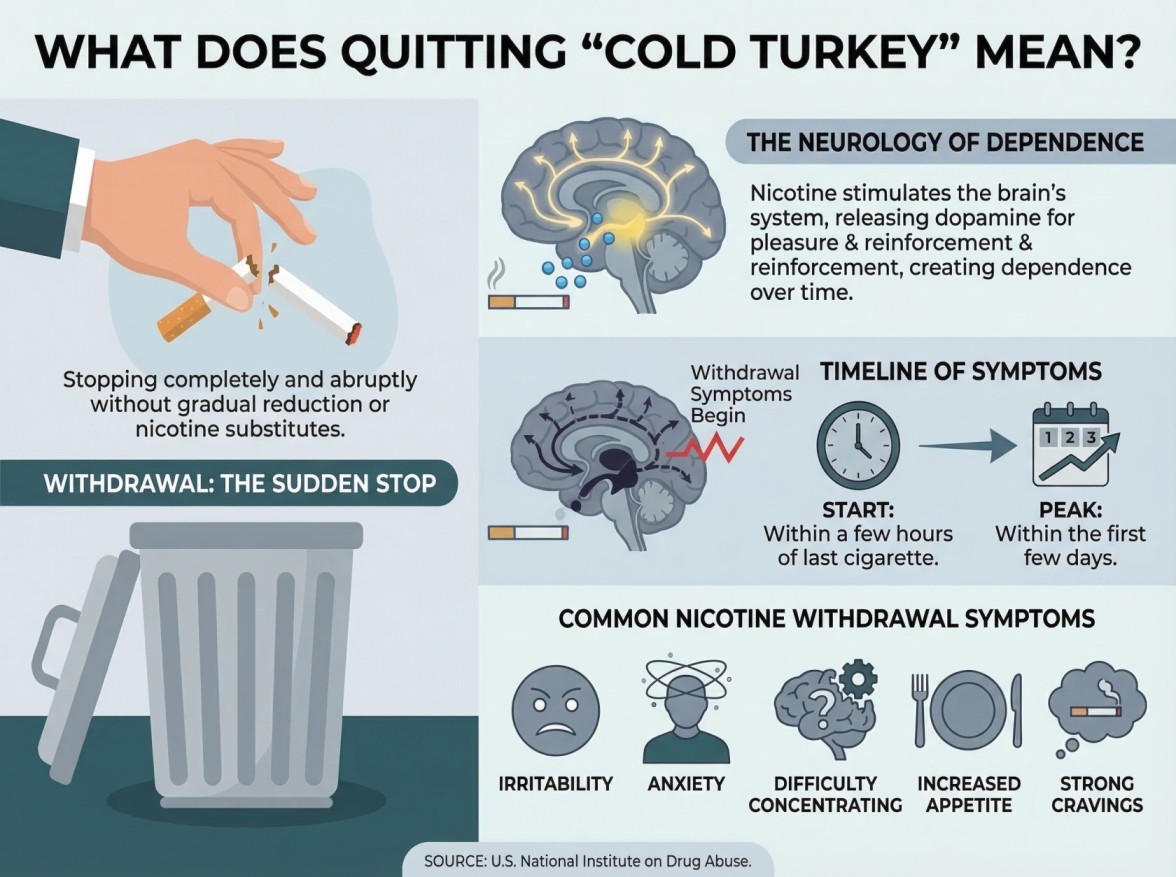
Quitting "cold turkey" means stopping smoking completely and abruptly without gradually reducing cigarette consumption or relying on nicotine substitutes. Nicotine stimulates the brain's reward system by releasing dopamine, the neurotransmitter associated with pleasure and reinforcement. Over time, repeated exposure creates dependence. When nicotine intake suddenly stops, the body experiences withdrawal symptoms.
According to the U.S. National Institute on Drug Abuse, common nicotine withdrawal symptoms include:
- Irritability
- Anxiety
- Difficulty concentrating
- Increased appetite
- Strong cravings for cigarettes
These symptoms typically begin within a few hours after the last cigarette and peak within the first few days.
Does Quitting Cold Turkey Actually Work?
Surprisingly, some research suggests abrupt quitting can be effective. A study published in the journal Annals of Internal Medicine and supported by researchers at the University of Oxford found that smokers who quit abruptly were more likely to remain smoke-free compared with those who attempted gradual reduction.
However, the success of this approach depends heavily on motivation and preparation. According to the Centers for Disease Control and Prevention, most smokers make several quit attempts before achieving long-term success.
Another report from the National Institutes of Health suggests that combining behavioural strategies with support systems significantly increases the chances of quitting successfully.
Why Smoking Is Hard To Quit
Nicotine dependence involves both physical addiction and psychological conditioning. The World Health Organization explains that nicotine reaches the brain within seconds of inhalation, reinforcing repeated use through reward pathways. Over time, the brain begins to rely on nicotine to maintain normal dopamine levels.
In addition, smoking becomes tied to everyday habits, such as drinking coffee, taking work breaks or coping with stress. These behavioural triggers can make quitting particularly challenging.
Strategies That Improve Quit Success
While some smokers succeed with the cold turkey approach, experts recommend combining motivation with evidence-based strategies.
- Nicotine Replacement Therapy (NRT): Products such as nicotine patches, gums or lozenges provide controlled nicotine doses without harmful tobacco smoke. According to the U.S. Food and Drug Administration, NRT can help reduce withdrawal symptoms and double the chances of quitting successfully.
- Behavioural Counselling: Counselling helps identify triggers and develop healthier coping mechanisms. The American Psychological Association notes that behavioural interventions improve long-term cessation rates when combined with medical support.
- Digital Tools And Quit Programs: Mobile apps, digital tracking tools and support groups can help monitor cravings and maintain motivation. Behavioural exercises that reshape habits may also reduce psychological dependence.
- Social Support: Support from family, friends or healthcare professionals can significantly increase success rates. According to the Centers for Disease Control and Prevention, people who receive counselling and social support are more likely to stay smoke-free.
Health Benefits Begin Quickly
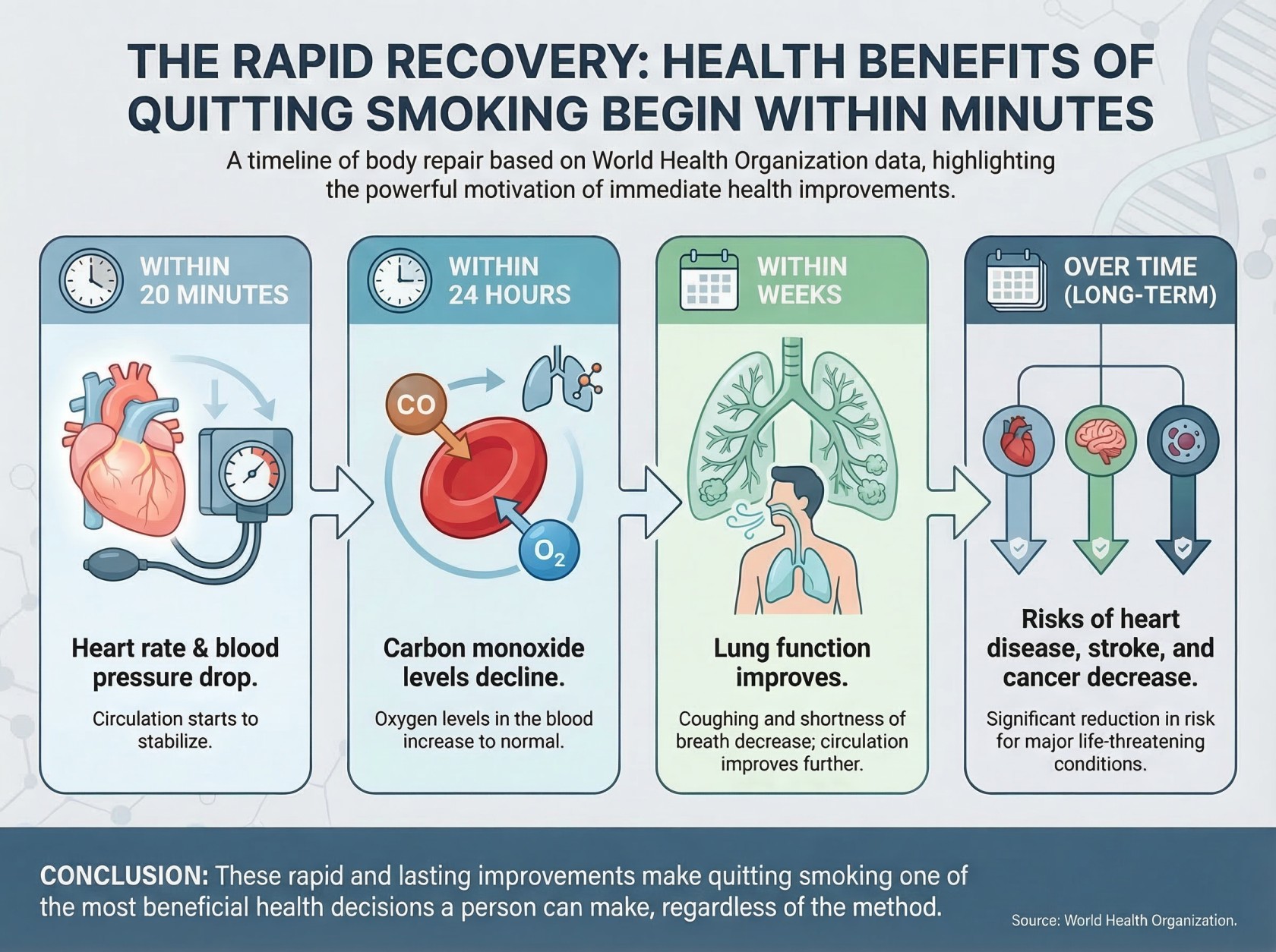
One powerful motivator for quitting smoking is how quickly the body begins to recover. The World Health Organization states that:
- Within 20 minutes, heart rate and blood pressure drop
- Within 24 hours, carbon monoxide levels decline
- Within weeks, lung function improves
- Over time, risks of heart disease, stroke and cancer decrease
These rapid health improvements highlight why quitting smoking, regardless of the method, is one of the most beneficial health decisions a person can make.
Also Read: Why "Just Quit Smoking" Doesn't Work: Ex-Smokers Share The Real Struggles
Stories like that of Arshad Warsi show that quitting smoking abruptly is possible, even after decades of tobacco use. For some individuals, going "cold turkey" can be an effective strategy, particularly when paired with strong motivation and behavioural changes. However, quitting is rarely a one-size-fits-all journey. Many smokers benefit from medical guidance, nicotine replacement therapy or counselling to manage withdrawal symptoms and prevent relapse.
Ultimately, the best quitting strategy is the one that helps a person stop smoking permanently. Whether through gradual reduction, behavioural therapy or sudden cessation, the most important step is deciding to quit, and seeking support when needed.
Disclaimer: This content, including advice, provides generic information only. It is in no way a substitute for a qualified medical opinion. Always consult a specialist or your own doctor for more information. NDTV does not claim responsibility for this information.