

)
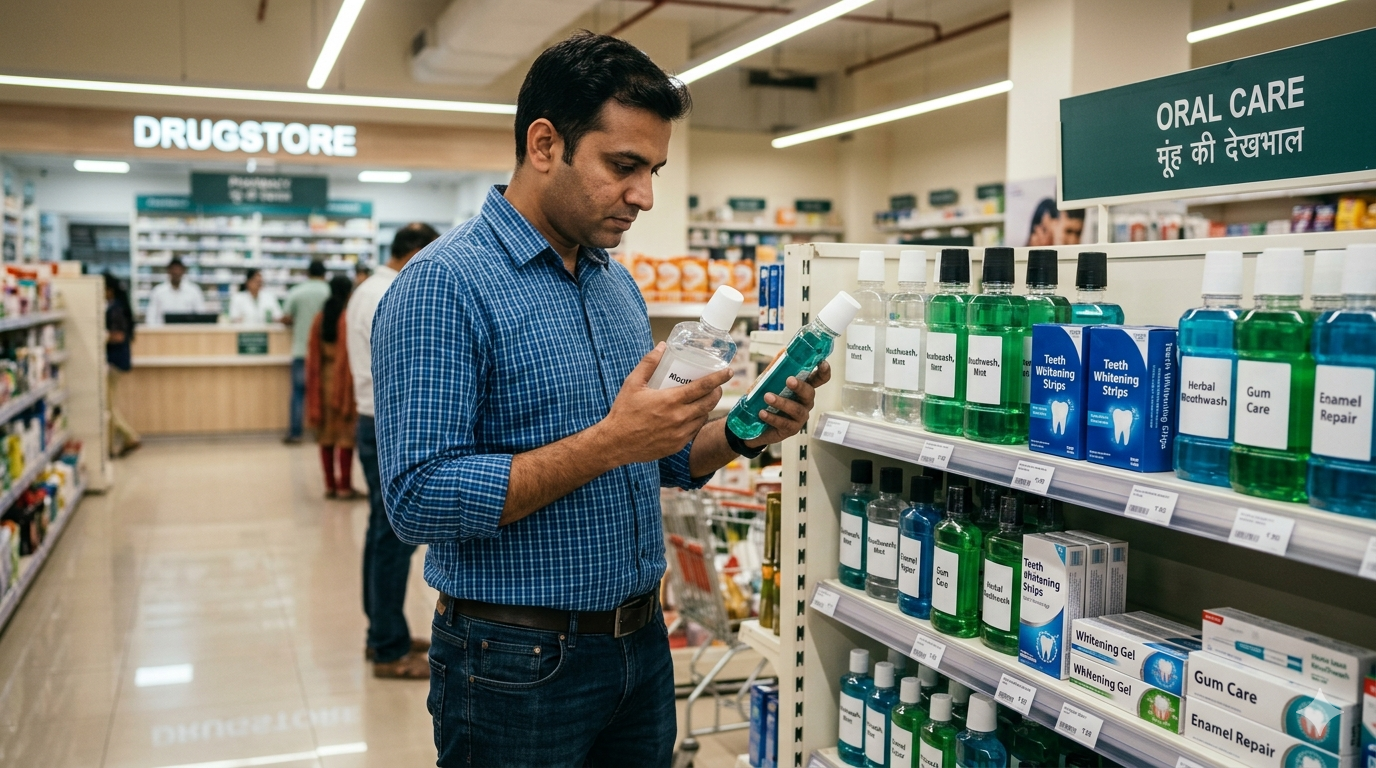
In the pursuit of fresh breath and a brighter smile, many people turn to mouthwashes and whitening products as part of their daily routine. But are these products safe for use? Dentists provide a detailed answer that is not a simple "yes" or "no." To understand this, we can draw a parallel between our mouth and a garden. A garden flourishes in a balanced environment, not in a laboratory setting that requires disinfecting. We have a complex community of bacteria in our mouths, and there are billions of these bacteria. However, some bacteria cause tooth decay and gum diseases, a large number of them are beneficial for our health.
The Problem With Broad-Spectrum Mouthwashes
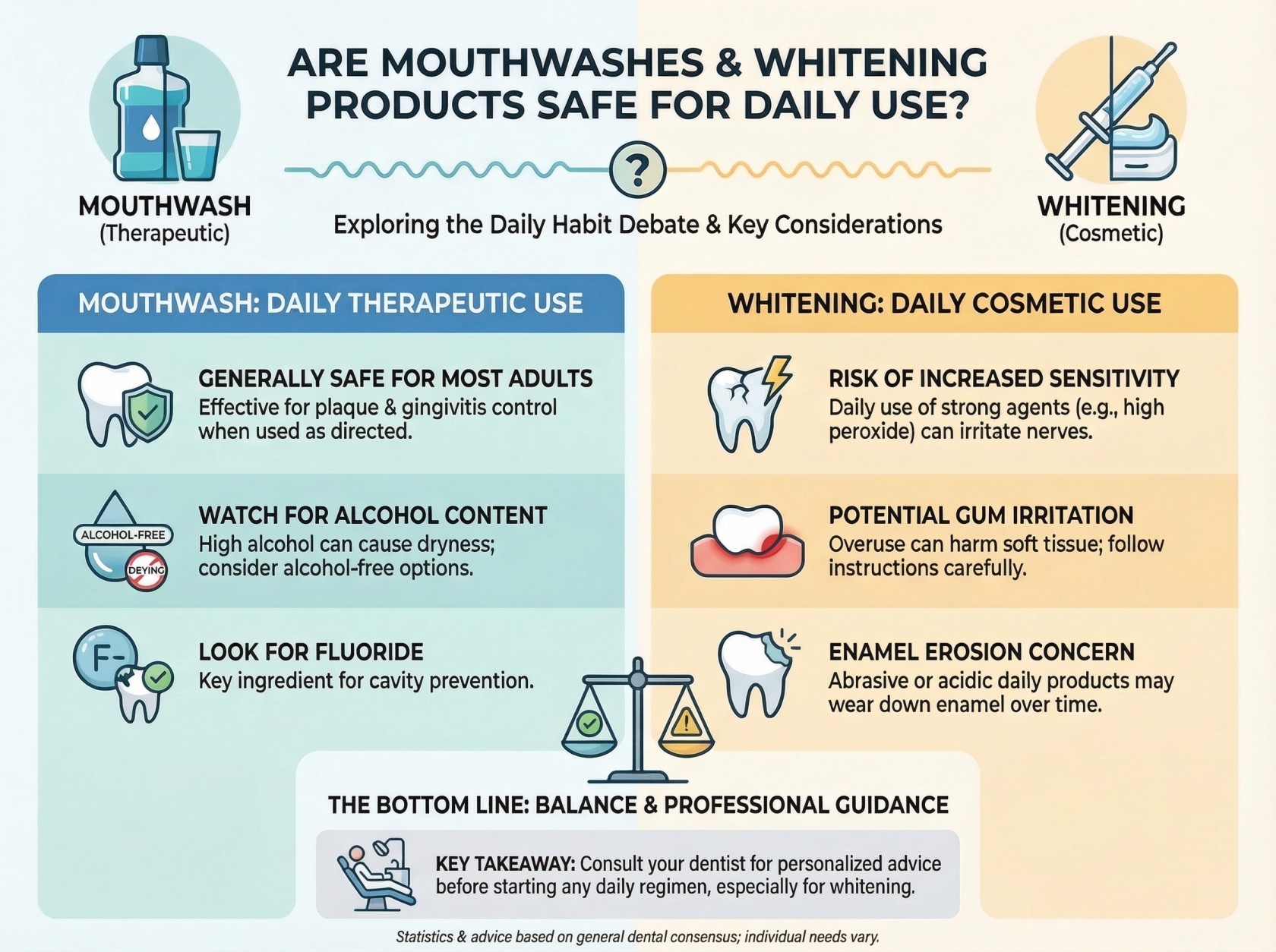
Most over-the-counter mouthwashes are "broad-spectrum," meaning they do not distinguish between the bacteria that cause problems and the bacteria that are beneficial. Killing off these beneficial bacteria in our mouths can create problems such as thrush and halitosis. Isn't it ironic that the mouthwash we use to cure halitosis is actually causing it in the long term?
Alcohol and the Dry Mouth Cycle
Another factor is alcohol-based mouthwash. Although alcohol is effective in its antibacterial properties, it can significantly impair saliva production. Saliva is important in maintaining oral health as it helps neutralize acids, facilitates the digestive process of food particles, and is a natural cleaner for the mouth. If saliva production is lessened, it can cause dryness in the mouth, which is an ideal breeding ground for odour-causing bacteria. It can become a cycle wherein more mouthwash is used to combat dryness-induced halitosis, further exacerbating the problem.
The Surprising Link to Blood Pressure
Recent studies have also revealed that certain bacteria in the mouth contribute to overall health. These beneficial bacteria found on the back of the tongue help in the conversion of nitrates found in vegetables like spinach and beetroot into nitric oxide. Nitric oxide is important in relaxing blood vessels and regulating blood pressure. Although this does not directly mean that using mouthwash causes high blood pressure, it is possible if it is used excessively in large quantities.
Whitening Products: Effective but Not Harmless
Whitening mouthwash poses another set of problems. These contain peroxide-based ingredients that effectively whiten teeth by removing stains. However, it can cause sensitivity and irritate gums if used too frequently. Overuse might weaken enamel, making teeth more vulnerable in the long run. Dentists often recommend using these products in moderation and under professional guidance, rather than making them a daily habit.
Not Harmful, But Not for Mindless Daily Use
This does not mean that mouthwash and tooth whiteners are bad for you. They can be quite useful. They can help in controlling gum diseases, reduce plaque buildup, and provide temporary cure for halitosis.
Use Them Like Medicine, Not Routine
The thing is to use them in a responsible manner. We should look at mouthwash as a medicine, not a necessity. We should use it only when we need it. We should use it after a dental procedure, for a particular condition such as gingivitis, or when a dentist recommends it.
The Real Foundations of Oral Health
To maintain healthy oral health, we should still rely on the necessities. These are brushing our teeth twice a day with toothpaste containing fluoride, flossing our teeth, staying hydrated, and eating a healthy and balanced diet. These do not disrupt our oral health but actually support it.
Consult Before You Commit
Before we incorporate mouthwash and tooth whiteners in our daily lives, it is best to consult a dentist. What is good for one person may not be good for another. There are conditions such as dry mouth, sensitivity, and gum diseases. In the end, a healthy mouth is not about sterilization; it is about balance.
(By Dr. Shobhit Raizada, Consultant - Maxillofacial Prosthodontist & Oral Implantologist, Manipal Hospital, Goa)
Disclaimer: The opinions expressed within this article are the personal opinions of the author. NDTV is not responsible for the accuracy, completeness, suitability, or validity of any information on this article. All information is provided on an as-is basis. The information, facts or opinions appearing in the article do not reflect the views of NDTV and NDTV does not assume any responsibility or liability for the same.