

)
Blood pressure is not static; it fluctuates with lifestyle, environment, and physiological stressors. Cold weather triggers several biological responses that can push blood pressure upwards. Cold-induced vasoconstriction is one of the primary mechanisms. When the body is exposed to low temperatures, blood vessels narrow to conserve heat. This narrowing increases resistance to blood flow, forcing the heart to pump harder and raising blood pressure. Another contributor is reduced sunlight exposure. Shorter daylight hours can also disrupt circadian rhythms, indirectly affecting cardiovascular regulation.
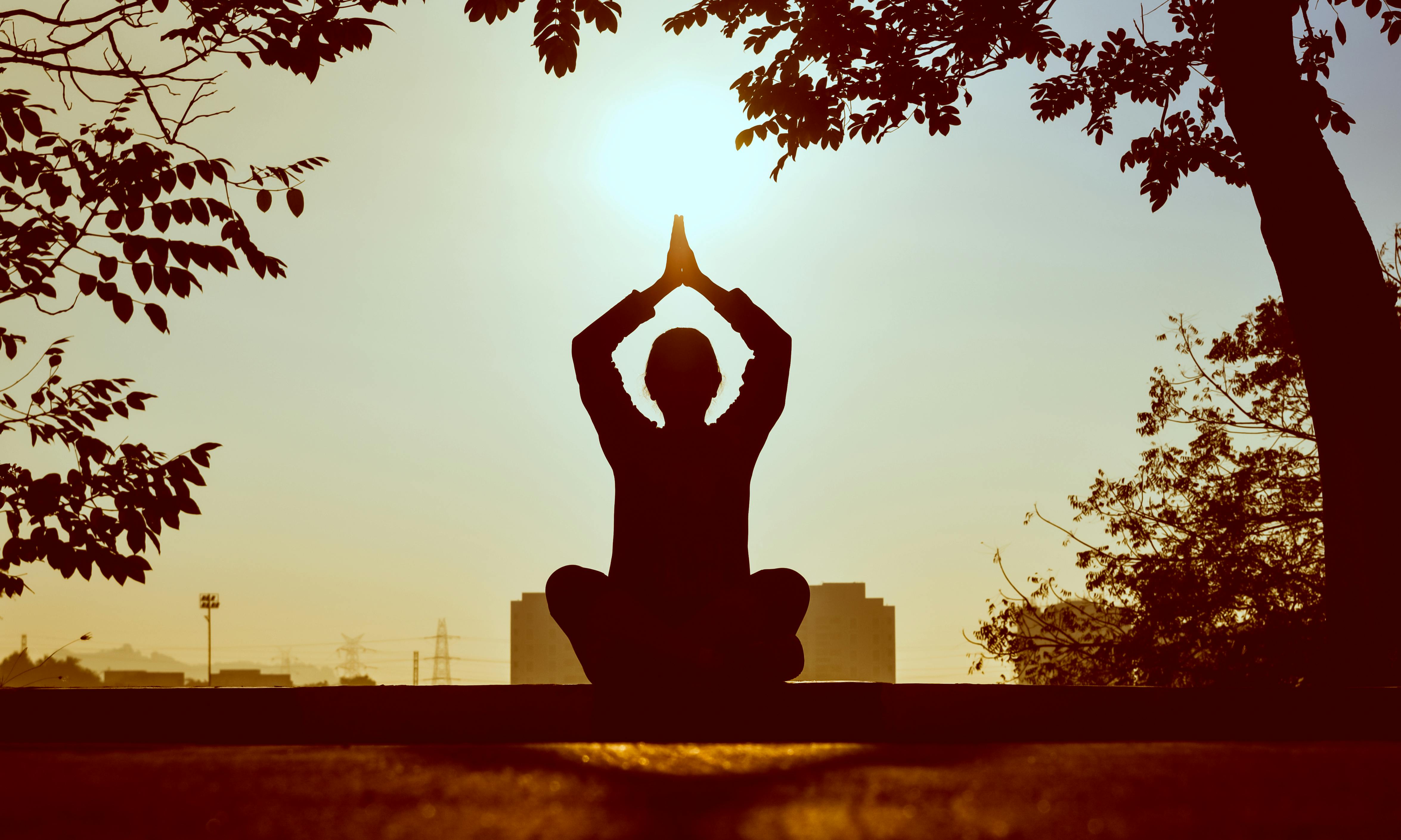
Lifestyle changes in winter play a role as well. Physical activity often drops, while calorie-dense and salty comfort foods become more common. Weight gain, even if modest, can influence blood pressure. Although, lifestyle interventions remain the first line of defence against seasonal blood pressure spikes, alongside medication when prescribed. Among non-pharmacological approaches, yoga has gained attention for its dual impact on the body and mind. Below we yoga asanas you can perform for regulate your blood pressure levels in winter.
Yoga asanas to regulate blood pressure in winter
1. Tadasana
- Stand straight with your legs at the same distance as your shoulders
- Lift your hands toward the ceiling
- Open your palms and stretch as far up as possible
- At this point, join your hands and entangle them forcing your palms to face the ceiling
- You are encouraged to look upwards
- Hold this stretch for 10 seconds and repeat 3-5 times
2. Vrikshasana
- Stand straight
- Raise your arms the hold them straight toward the ceiling
- Now lift either one of your legs and place your feet on the other thigh
- You can rest your right foot on the left knee on the side or anywhere from that to the thigh
- Ideally, your foot should be as far up on your thigh as it can get
- Hold this position for 30 seconds and repeat 4-5 times minimum
3. Balasana
- Sit straight with your legs folded
- At this point, your feet are supposed to be facing upwards
- Now, slowly bend your torso forward on the floor
- At this point, your arms should be extending forward as well, as far as possible
- Your face should also be facing the floor as well as your palms
- Your calves, forehead, and palms should all be touching the ground in this position
- As it only stretches your body and is a resting pose, it provides comfort and relaxation
- Hold this position for 10-15 seconds and perform 4-5 sets daily.
4. Viparita karani
- In this pose, you require to hold your legs above your head
- To do so, traditionally, you lay on your back and lift your legs above the ground at a 90-degree angle
- You further, use your arms to push your legs to lift further
- At this point, the only body parts touching the ground are your head, arms (from shoulder to elbows), and upper back
- Your toes are supposed to be facing the sky
- However, being able to do this asana comfortably takes time and practice. Hence, you can try using the support of a wall to rest your legs at a 90 degrees angle
- To better perform this asana as a beginner, you can place 1-2 pillows under your lower back to further elevate the body with exterior support
5. Paschimottanasana
- Sit straight in your legs straight in front of you
- In this position, your feet's soles should be facing front
- Slowly bring your torso closer to your legs and as far as possible
- You can use your hands to hold your feet, this may increase how far you can reach
- In this position, your stomach and chest are supposed to be touching your thighs
- Your face can be facing the front or towards the legs, whichever may be comfortable
- Hold this position for 10-20 seconds and sit back up
- You can repeat it a few times based on your convenience
6. Adho Mukha Svanasana
- Lay flat on the ground facing the floor
- Slowly lift your torso and form a mountain-like structure with your body
- Your palms need to be farther apart and reaching outwards (in comparison to your shoulders)
- On the other hand, your feet need to be placed next to each other
- At this point, the only body parts touching the ground should be your palms and feet
- Your face needs to be facing inwards and downwards, at the same angle as the arms
- Your body must form a triangle (your hands, hips, and feet being the corners)
- Hold this position for a few seconds and repeat 10 times at least
Yoga is not a replacement for prescribed medication. Medical clearance and guidance from a trained yoga instructor are strongly recommended, particularly during winter when blood pressure fluctuations are more pronounced.
Disclaimer: This content including advice provides generic information only. It is in no way a substitute for a qualified medical opinion. Always consult a specialist or your doctor for more information. NDTV does not claim responsibility for this information.
References
Seasonal Variation in Blood Pressure – British Medical Journal (BMJ), 2012
Cold Exposure and Cardiovascular Responses – Journal of Hypertension, Published by NIH, 2010
Vitamin D and Blood Pressure Regulation – American Journal of Hypertension, Published by NIH, 2013
Sympathetic Nervous System Activity and Cold Stress – Hypertension, Published by American Heart Association, 2011
Effect of Yoga on Blood Pressure: Systematic Review and Meta-analysis – Journal of Hypertension, Published by NCBI, 2014
Yoga-Based Lifestyle Intervention for Hypertension – Indian Journal of Medical Research, Published by ICMR, 2016