

)
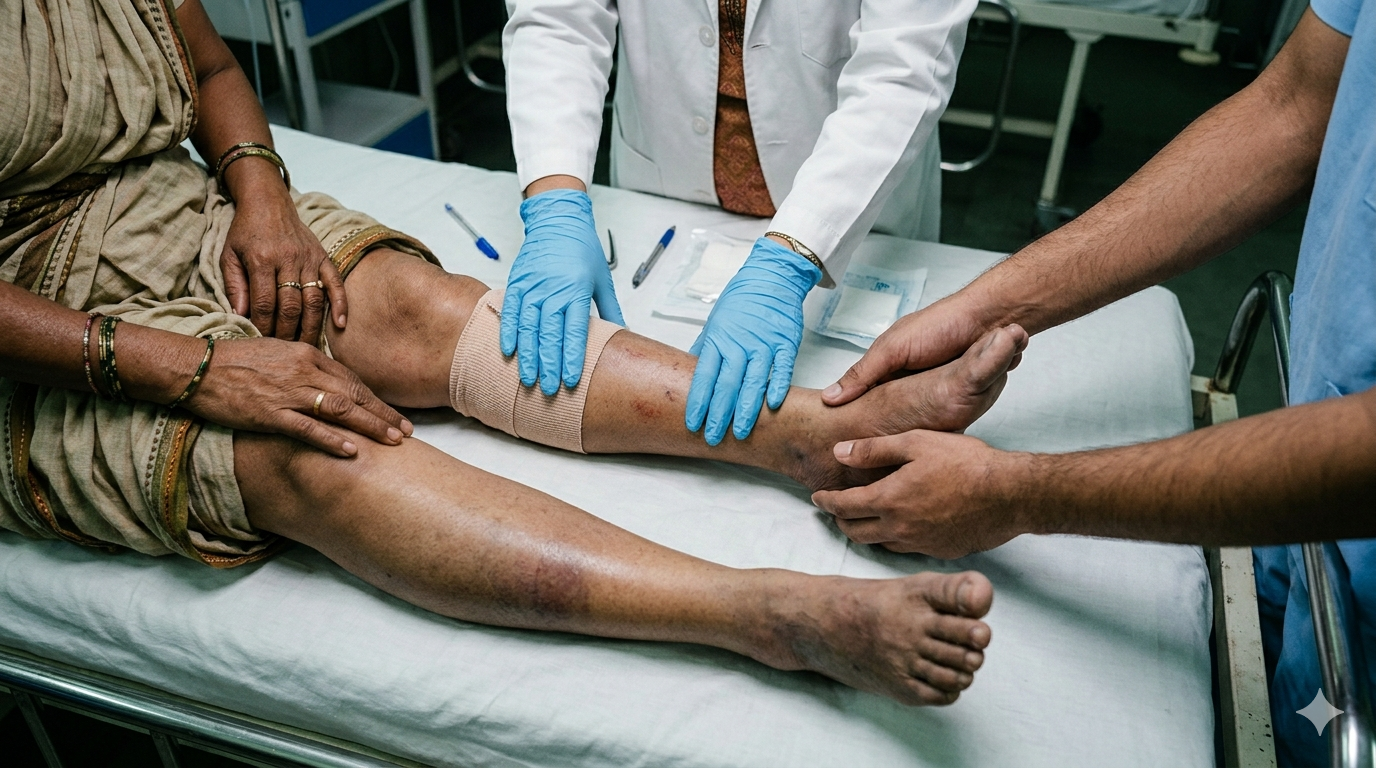
What began as sudden, unbearable pain in her left leg quickly turned into a life-threatening emergency for 57-year-old Mrs. Prayagbai Shankarrao Shinde from Hingoli, Maharashtra. Within hours, her foot had turned bluish, swollen, and cold, ominous signs that blood supply was cut off and her limb was at risk of being lost forever. When she arrived at Yashoda Hospitals, Hitec City, Hyderabad, doctors diagnosed her with acute limb ischemia, a severe vascular emergency where delayed treatment can lead to amputation or even death. Advanced imaging revealed a complete blockage in the major arteries of her leg.
A Race Against Time
Dr. Bhavin L. Ram, Senior Vascular Surgeon, explained that Mrs. Shinde's foot had already started showing pre-gangrenous changes. "In such cases, if surgery is not performed urgently, the leg may need to be removed. It was a very critical situation at the time of arrival," he said.
The warning signs were clear: sudden severe pain unrelieved by painkillers, coldness of the limb, and bluish or reddish discoloration. These are classic indicators of vascular compromise.
How Acute Limb Ischemia Mimics a Heart Attack
Dr. Ram compared the condition to a heart attack. "Just like in a heart attack where blood supply to the heart muscle is blocked, acute limb ischemia is a sudden stoppage of blood circulation to the leg or hand. This leads to severe pain and tissue damage. We often call it an 'acute limb attack.'"
The golden period for saving a limb is 6-12 hours. Beyond 24-48 hours, permanent damage sets in, often requiring amputation.
The Surgery That Saved Her Leg
Mrs. Shinde was rushed into surgery for a left femoral embolectomy. "It is similar to plumbing. Wherever the artery is blocked, we open it and remove the clot," explained Dr. Ram. The procedure restored blood flow, saving her leg from complete loss.
However, because she arrived late, some toes had already turned gangrenous and required amputation later.
Why This Case Was High Risk
The patient's uncontrolled diabetes and age-related atherosclerosis made the case particularly challenging. These comorbidities increase the risk of acute limb ischemia and complicate recovery.
Understanding Acute Limb Ischemia
Every organ requires blood circulation for nutrition. If the artery is blocked, the organ dies, just like a plant without water. Acute limb ischemia means sudden stoppage of blood supply to the limb. Without urgent treatment, the limb becomes non-viable.
Early symptoms often ignored include severe pain, numbness, and coldness in the limb. Many mistake these for nerve compression and consult neurologists, losing precious time.
Who Is at Risk?
Elderly patients, those with uncontrolled diabetes, hypertension, heart disease, and smokers are at higher risk. Smoking, in particular, is a major but often overlooked cause of limb ischemia.
Treatment Options and Recovery
The universal treatment is embolectomy, but advanced options like percutaneous mechanical thrombectomy are also available, where a catheter is used to suck out the clot under local anaesthesia.
If surgery is successful and damage is minimal, patients can start walking within 2-3 days. In complex cases, recovery takes longer. Today, Mrs. Shinde is walking well, eight to nine months after her surgery, despite losing a few toes.
Precautions After Surgery
Patients must care for the wound, start rehabilitation slowly, continue prescribed medications, and maintain a healthy lifestyle. "Stopping medicines or returning to smoking and alcohol can undo recovery. This is like repairing a puncture in your car tire, it doesn't mean you're immune to future problems," cautioned Dr. Ram.
A Word of Caution for the Public
Dr. Ram emphasized: "If you experience severe pain and coldness in a limb, go to the nearest hospital immediately. Do not waste time or self-diagnose. Timely intervention can make the difference between saving and losing a limb." Mrs. Shinde's story is a powerful reminder that acute limb ischemia is a true emergency. With timely medical expertise and swift decision-making, lives and limbs can be saved.
Disclaimer: This content including advice provides generic information only. It is in no way a substitute for a qualified medical opinion. Always consult a specialist or your own doctor for more information. NDTV does not claim responsibility for this information.