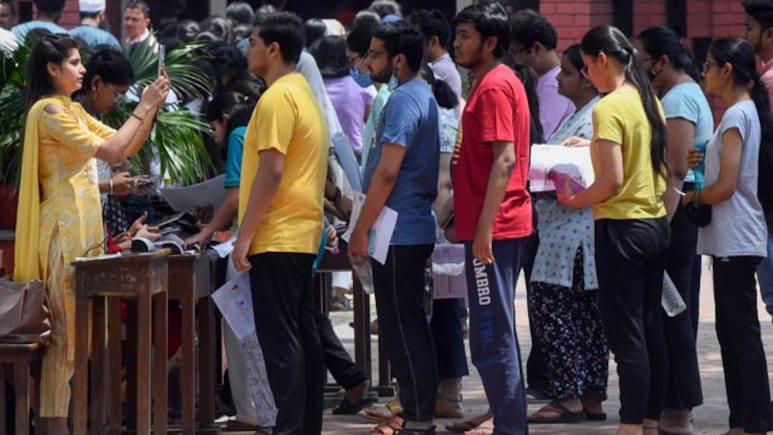
CUET UG 2026: The Common University Entrance Test - Undergraduate (CUET UG) has begun for 15,68,866 registered candidates. Scheduled to be held from May 11 to 31, 2026, the exam is being conducted for a total of 37 subjects. About 43 per cent of the total registrations have come from Uttar Pradesh, Bihar, and Delhi. Students are advised to follow the exam day instructions as announced by the National Testing Agency (NTA) to avoid disqualification at any stage.
Documents To Carry
Candidates are advised to report at the centre at least two hours before the commencement of the exam. Carry these mandatory documents for entry into the examination hall:
- A printout of the CUET UG 2026 admit card
- Two passport-sized photographs (same as uploaded on the application form)
- A government-issued valid identity proof
Candidates must carry the same ID proof as uploaded on the CUET UG application form.
Banned Items
Check the list of barred items, which students must avoid carrying to the examination centre.
- Any textual material (printed or written), bits of paper, geometry box, pencil box, plastic pouch, calculator, pen, scale, writing pad, pen drives, eraser, calculator, log table, electronic pen, scanner, etc.
- Any communication device like mobile phone, bluetooth, earphones, microphone, pager, health band, etc.
- Any watch, wristwatch, bracelet, or camera.
- Any ornaments or metallic items.
- Any food items opened or packed, covered water bottles, etc.
- Any other item that could be used for unfair means.
Permissible Items
The NTA has allowed following items as per students' needs:
- Transparent water bottle
- Transparent ball point pen
- Diabetic-related eatables with prior approval
However, the NTA ensures the examination centres provide pen and drinking water to candidates giving the CUET UG exam, as per reports.
Dress Code And Items Of Faith
While light clothing is preferable, woollen clothes are allowed if the candidate reaches the exam centre well in advance to enable frisking. Candidates are advised to wear normal shoes, slippers, and footwear with low heels.
Articles of faith such as 'kalava' are permitted. However, applicants wearing any religious or customary attire must report to the exam centre well in advance to enable mandatory frisking.
