





- Indian mangoes have become a major seasonal obsession in the US beyond the Indian diaspora
- Irradiation using gamma rays from India's atomic energy department enables safe export to the US
- Irradiation kills pests, extends shelf life, and preserves taste and ripening of mangoes
Every summer, Americans do something extraordinary for a fruit. They stalk flights, rush to warehouses at odd hours, flash IDs and walk away clutching crates like prized treasure. Boxes sell out within hours. Prices soar high. The frenzy is real, and it has now made the front pages of the Wall Street Journal. The king of fruits, Mango, juicy, yellow, sweet and flavourful, is being relished in USA like never before.
“Americans will do anything to get Indian mangoes,” the Wall Street Journal reported on May 5, describing a devoted and slightly unhinged community obsessed with Indian mangoes in the United States. From Alphonso and Kesar to Chausa and Langra, the fruit has become a seasonal obsession far beyond the Indian diaspora.
What most Americans biting into these mangoes do not see is where the journey begins.
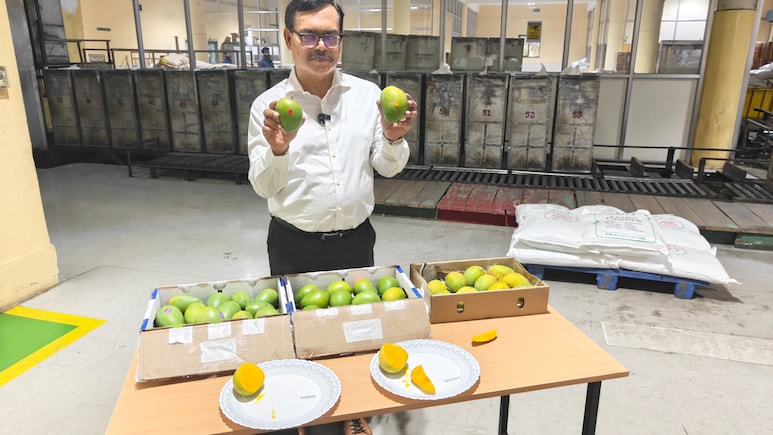
NDTV went inside the Department of Atomic Energy's oldest food irradiation facility in Mumbai, where nuclear science quietly powers one of India's most successful agricultural exports.
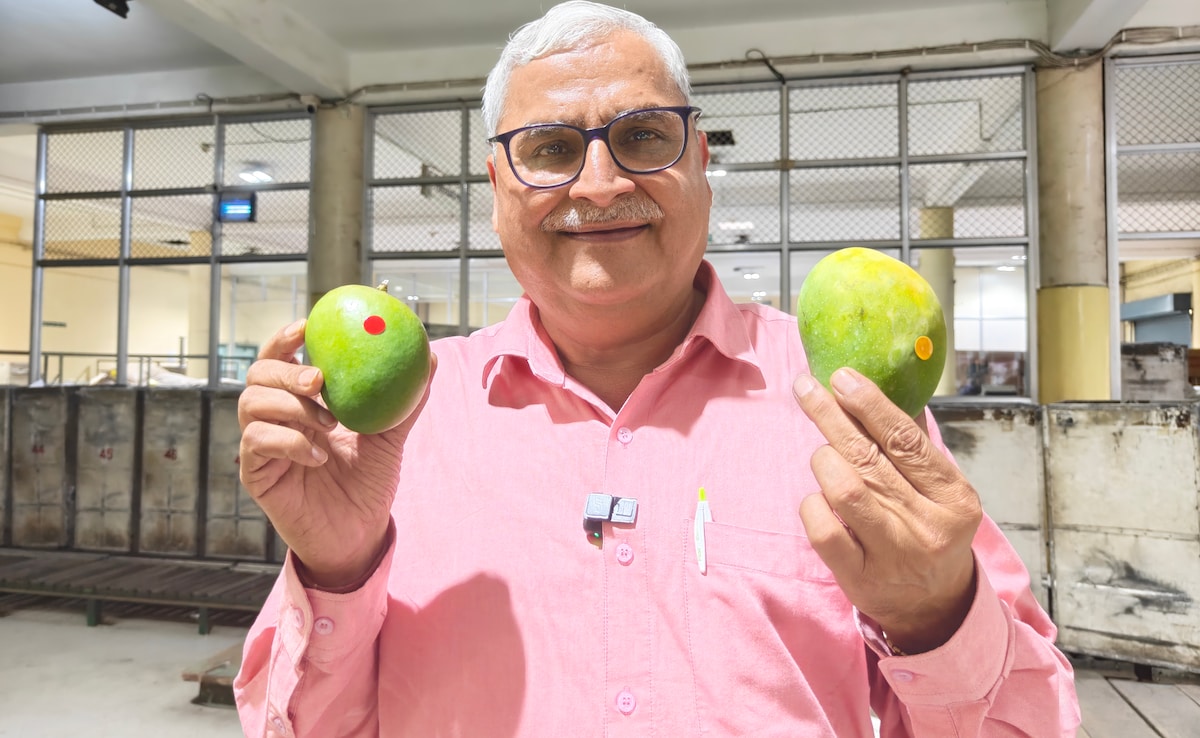
Photo Credit: Pallava Bagla
Standing inside the heavily shielded facility, mangoes lie stacked and ready. Some are bright yellow, ripe and ready for Indian markets. Others are green, firm and destined for the United States.
“This green one is the irradiated mango ready for export to the United States,” says Pradip Mukherjee, Chief Executive of the Board of Radiation and Isotope Technology under the Department of Atomic Energy, Mumbai. “This yellow one is the non-irradiated mango.”
For decades, Indian mangoes were locked out of the US market. The problem was not flavour. It was pests.
Hot water treatment used to clear South American mangoes destroyed the delicate Indian varieties, says the WSJ. The solution was food irradiation, using gamma radiation to kill pests while slowing ripening without affecting taste.
“The basic requirement is to increase shelf life,” Mukherjee explains. “When mangoes are required to be exported, phytosanitary treatment is mandatory. For Indian mangoes, irradiation is the only solution.”
The process was developed by the Bhabha Atomic Research Centre (BARC), Mumbai and tested under strict protocols. It was eventually certified by US authorities, clearing the way for Indian mangoes to enter American stores legally.
Inside the facility, Cobalt 60 sources emit controlled gamma radiation, treating mangoes after harvest. The fruit is picked at exactly the right stage and irradiated before ripening fully.
“Irradiation slows down the ripening process along with phytosanitary treatment,” Mukherjee says. “These mangoes ripen at their destination when they reach the United States.”
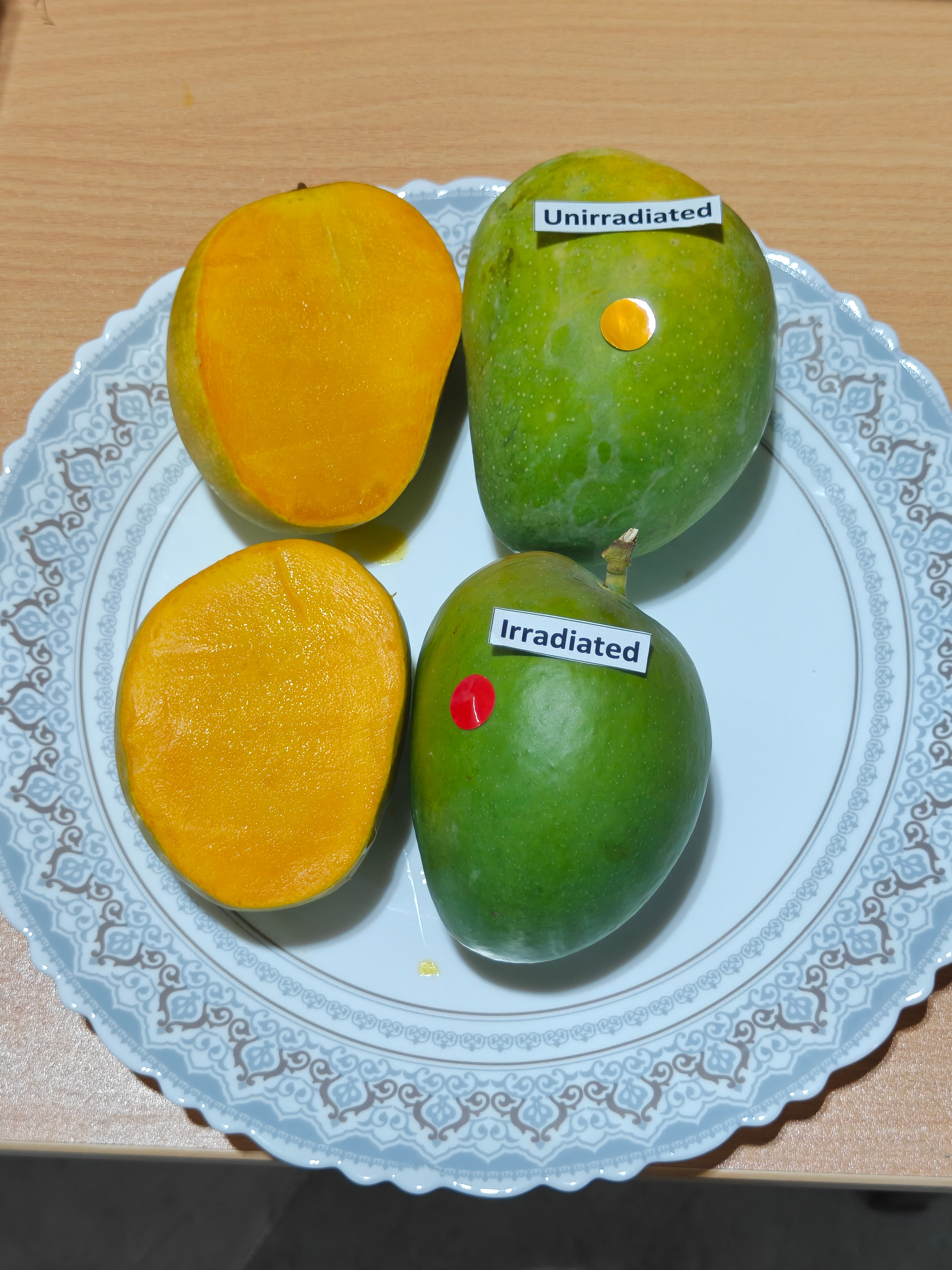
Photo Credit: Pallava Bagla
Does radiation change the taste? The answer is simple.
“There is absolutely no difference,” Mukherjee says. A taste test confirms it. An un-irradiated Alphonso tastes exactly as expected. The irradiated mango tastes almost the same. The colour is the same. The flavour is the same. Only the shelf life is longer.
Today, four irradiation plants in India are certified by US inspectors. Together, they export around 30,000 metric tonnes of irradiated mangoes every year. “India approximately 57 million dollars annually,” Mukherjee says.
Those mangoes now sit at the centre of an American obsession.
The Wall Street Journal describes importers fielding calls around the clock during the short but intense season. Boxes of mangoes sell for 50 to 60 dollars, up sharply from last year, driven by rising air freight costs and global uncertainty.
“Mango sells itself,” US importer Bhaskar Savani told the Wall Street Journal. He called Indian mangoes “the fruit of God,” dismissing other varieties as tasting like “a raw potato.” The WSJ notes that while Indian mangoes cost nearly five times more than Mexican mangoes, demand remains relentless. Pre-orders sell out before the first shipment even leaves India.
The enthusiasm now goes far beyond Indian Americans. “Our most loyal customers are Americans,” a US importer told the WSJ. Indian expatriates, surprisingly, sometimes complain about the price.
Getting the fruit to America, however, remains a logistical gamble.
Mangoes are harvested, irradiated at certified Indian facilities, loaded largely onto passenger aircraft and must reach American consumers within about a week. A missed flight, paperwork mismatch or inspection issue can destroy an entire shipment worth tens of thousands of dollars.
In south India, it seems there is only one irradiation centre, creating a seasonal bottleneck. Cargo space competes with pharmaceuticals and electronics. The Wall Street Journal reports that geopolitical tensions and rising oil prices have already delayed shipments this year.
Yet none of this has dampened demand.
Some companies are even offering mango season passes, delivering weekly boxes to American homes for close to 1,000 dollars for the season.
It is a remarkable journey for a fruit once banned from the US entirely.
Two decades ago, approval for irradiation required political backing at the highest level. In 2006, then US President George W Bush and Indian Prime Minister Manmohan Singh agreed to lift the ban. Bush reportedly tasted a mango during his visit to India and exclaimed, “This is a hell of a fruit.” Nearly twenty years later, mangoes have become a recurring cameo in US-India ties.
Back inside the Department of Atomic Energy facility, the process is quiet, methodical and invisible to the end consumer.
This is atomic energy in the service of society.
Nuclear science that extends shelf life. Protects crops. Earns foreign exchange. And feeds an unexpected American craving.
As the Wall Street Journal captured so vividly, Americans may be going a little crazy over Indian mangoes. What they are really tasting is a success story of Indian atomic science working silently, precisely and effectively.
Track Latest News Live on NDTV.com and get news updates from India and around the world

