





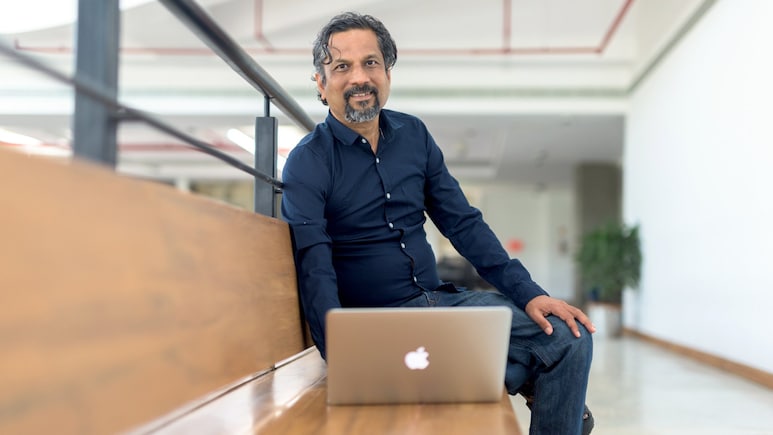
Zoho founder Sridhar Vembu has sparked a debate online by arguing that organisational loyalty, rather than just intense academic pressure, is the primary reason Indian-origin techies rise to leadership roles in the US. Notably, Vembu was reacting to entrepreneur Jasveer Singh's comment that Indians aren't inherently "naturally smart," but are instead driven to excel due to intense competition and a "perform or perish" culture in a densely populated country.
In his response, Vembu noted that a significantly higher proportion of Indian hires remain with the same organisation for over two decades compared to other groups. This tenure allows them to build deep institutional knowledge and cultural continuity that naturally positions them for senior promotions.
"Indian employees are some of the most loyal to their organizations and American corporations get to experience this over time. To state it differently, when you consider a cohort of people who joined a company in a given year (say 2000), a much higher proportion of Indians would still be there 20 years later, even adjusting for factors like IQ and education," he explained.
He further pointed out that the complex H-1B visa and green card processes often make job-switching risky. This systemic hurdle inadvertently creates a "reliable source of dedicated talent" for American firms. In his argument, he also rejected the idea that Indians are driven solely by "survival anxiety." Instead, he argued that India's extended family structures provide a psychological security that translates into viewing workplaces as stable, family-like networks.
See the tweet here:
His thesis is Indians must perform or perish due to our population and a few rise to the top in Western orgs under that pressure.
— Sridhar Vembu (@svembu) February 3, 2026
I will offer a different explanation: Indian employees are some of the most loyal to their organizations and American corporations get to experience… https://t.co/LROGd4wSSd
While some praised his focus on "unglamorous loyalty" over "exceptional pressure," others on social media questioned if this loyalty is voluntary or a byproduct of risk aversion and visa-related insecurity.
One user wrote, "Loyalty is there because there is generation fear that we won't get job anywhere else once we leave this seat, and also for immigrants the threat of visa removal if long period without job. Increasingly with job security you see people switching jobs in Tech."
Another commented, "This explanation is more uncomfortable because it shifts credit from "exceptional pressure" to unglamorous loyalty and time. It suggests Indians didn't outcompete the system; they outlasted it, while others kept optimizing for optionality."
A third said, "Indians succeed because of loyalty, family roots, and cultural belonging - not fear. They don't perform out of pressure. They perform out of purpose."
"Organisational loyalty is frequently driven less by conviction and more by insecurity, born out of the relentless pressure-cooker environment in India," added a fourth users.
Track Latest News Live on NDTV.com and get news updates from India and around the world

