





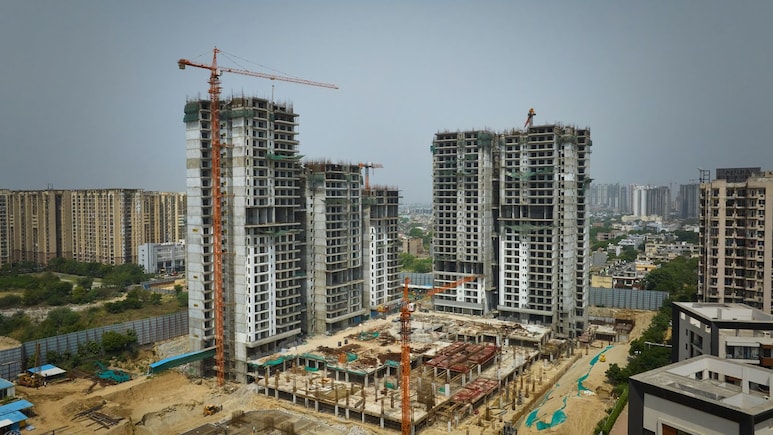
- Couples earning Rs 1.5 lakh monthly cannot afford 1-BHK homes in major Indian cities
- 1-BHK flats cost between Rs 1.5 crore and Rs 2.8 crore in cities like Noida, Gurugram, Bengaluru, Mumbai
- Urban India faces a shortage of nearly 10 million affordable homes, with the gap widening
A husband and wife both work, and together, they bring home Rs 1.5 lakh a month. That puts them well above India's median income, and by most yardsticks, they are middle class.
Now they want a home. Not a mansion. Just a 1-BHK, in a city where they can actually get to work without losing half their day to traffic.
They cannot afford one.
Not in Noida, where a 1-BHK in Sector 19 now sells for Rs 2 crore. Not in Gurugram, where the same size flat in Shanti Nagar costs the same. Not in Bengaluru's Whitefield, at Rs 1.55 crore, or in Mumbai's Bandra West, where prices touch Rs 2.84 crore, according to data from MagicBricks.
And that's before anyone mentions the two kids. Or the fact that a 1-BHK is not really built for a family of four in the first place. The house that fits doesn't exist. The house that doesn't fit is also unaffordable.
This is the trap urban India finds itself in. A 1-BHK is already too small for a family of four. A 2-BHK, which would actually work, costs even more. So the "affordable" option isn't affordable, and the appropriate option was never on the table.
Real estate consultancy Knight Frank estimates urban India is short of nearly 10 million affordable homes. The gap, experts say, is not shrinking. It's growing.
"Owning a home has traditionally been both an aspiration and an emotional milestone for Indian households," says Chetan Chichra, Partner, Grant Thornton Bharat. "However, at current property prices, this aspiration is increasingly becoming unattainable for many middle-class families, particularly in markets of NCR."
Chichra lays out the problem in plain terms: for a household living off a single income of around Rs 1 lakh a month, buying a flat priced at Rs 2-3 crore isn't a stretch. "It's simply out of range... The gap between the prospective buyer's income and the loan required is simply too wide," he says. Banks won't sanction that kind of loan unless the buyer already has a large down payment saved up, a second earning member, or other assets to fall back on.
Salaries Walk. House Prices Run
The Reserve Bank of India's house price tracker, updated in May 2026, shows residential prices climbing across major cities. The National Housing Bank's city-level RESIDEX index for June 2026 tells the same story. Meanwhile, salary growth, tracked through the government's Periodic Labour Force Survey, has moved at a far gentler pace.
Put simply: house prices are sprinting. Incomes are jogging. The distance between them keeps widening. Keshav Mangla, GM, Business Development, Forteasia Realty, puts a number to what it now takes to buy an average home. Take a 1,000 sq ft apartment priced at Rs 1 crore -- roughly Rs 10,000 per sq ft, which is no longer unusual in a big city. With a 20 per cent down payment, the buyer needs an Rs 80 lakh loan. At today's interest rates of 7.5-8 per cent over 20 years, the EMI works out to Rs 64,500-66,900 a month.
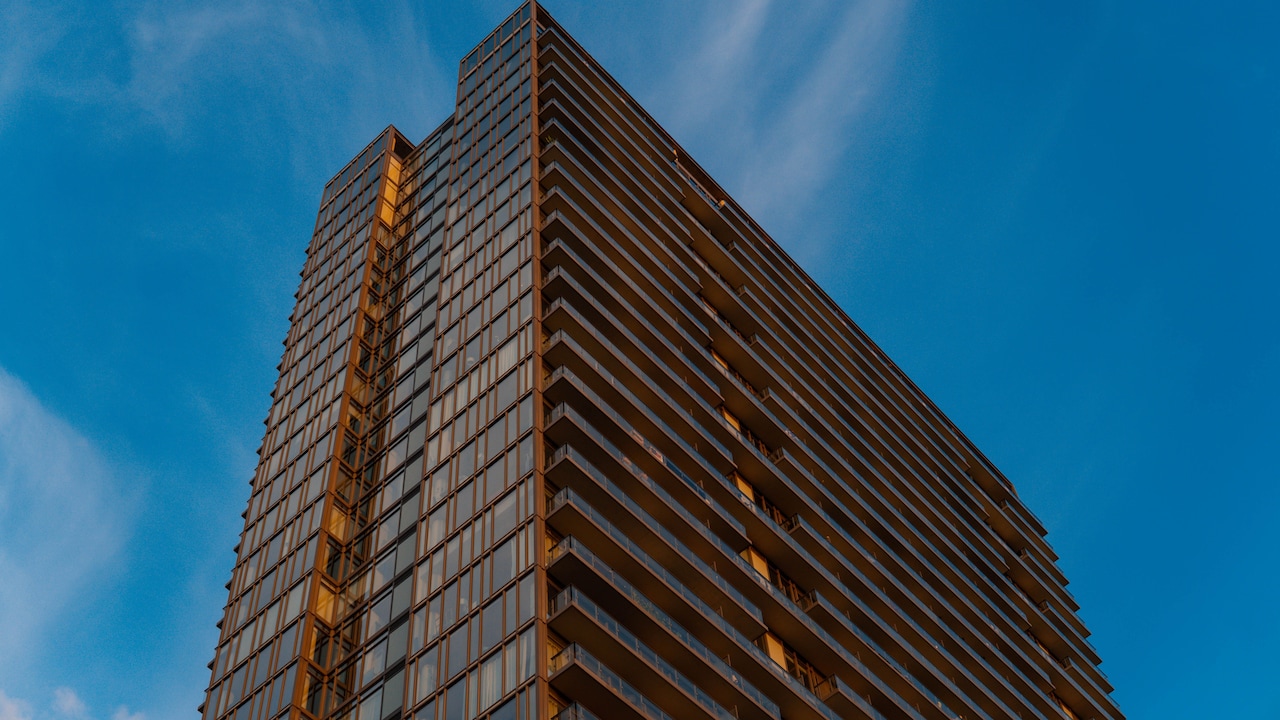
To keep that EMI at a sensible 35 per cent of monthly income -- the standard lenders use -- the household needs to be earning Rs 1.85-1.91 lakh a month, after accounting for maintenance, taxes and insurance. That's for a Rs 1 crore home. In Noida, Gurugram, Bengaluru or Mumbai, a 1-BHK now costs anywhere from 1.5 to nearly 3 times that.
"The better question isn't whether Rs 1 crore is too expensive," Mangla says. "It's how many urban middle-class families can afford a Rs 1 crore house while not sacrificing their savings, their children's education and their retirement."
For most families earning Rs 1.5 lakh a month combined -- after rent or an existing EMI, school fees, groceries, healthcare and the everyday cost of raising two children -- there simply isn't Rs 60,000-plus left over every month to put toward a home loan. The arithmetic doesn't work. It was never designed to.
Builders Have Stopped Building What Buyers Can Afford
If the demand side looks bleak, the supply side is worse.
According to Anarock data, homes priced at Rs 40 lakh and below made up 30 per cent of all new launches in 2020. By 2025, that share had fallen to just 14 per cent. In the Rs 40-80 lakh bracket, the drop was just as steep -- from 40 per cent of launches in 2020 to 20 per cent in 2025.
Where did that supply go? Upmarket. Launches priced above Rs 2.5 crore jumped from 3 per cent of the market in 2020 to 20 per cent in 2025, Mangla notes.
Vijay Raundal, Director, Teerth Realties, calls this a "barbell" market -- heavy at the top, heavy at the very bottom, and increasingly hollow in the middle where most families actually live. In 2025, half of all homes sold across India's top eight cities were priced above Rs 1 crore, up from 44 per cent the year before. Sales of homes priced around Rs 50 lakh, meanwhile, fell 17 per cent to just 73,694 units.
Developers aren't hiding their reasons. Land, construction, financing and compliance costs have all risen, Chichra points out, making it "increasingly challenging for developers to deliver projects within the existing affordable-housing framework." Building cheap homes has simply stopped making commercial sense in India's biggest cities.
What Even Counts As "Affordable" Anymore?
Officially, India defines affordable housing as a home priced at Rs 45 lakh or less, with a carpet area capped at 645 sq ft in metros and 969 sq ft in smaller cities.
By that definition, not a single 1-BHK in Noida, Gurugram, Bengaluru or Mumbai qualifies as affordable. Not even close. The industry is now pushing to raise that Rs 45 lakh ceiling, possibly to Rs 1 crore, to reflect where the market actually is. But Chichra is blunt about what that would and wouldn't fix: "Increasing the definition of 'affordable' does not automatically make the home affordable to the intended buyer." Renaming the problem isn't the same as solving it.
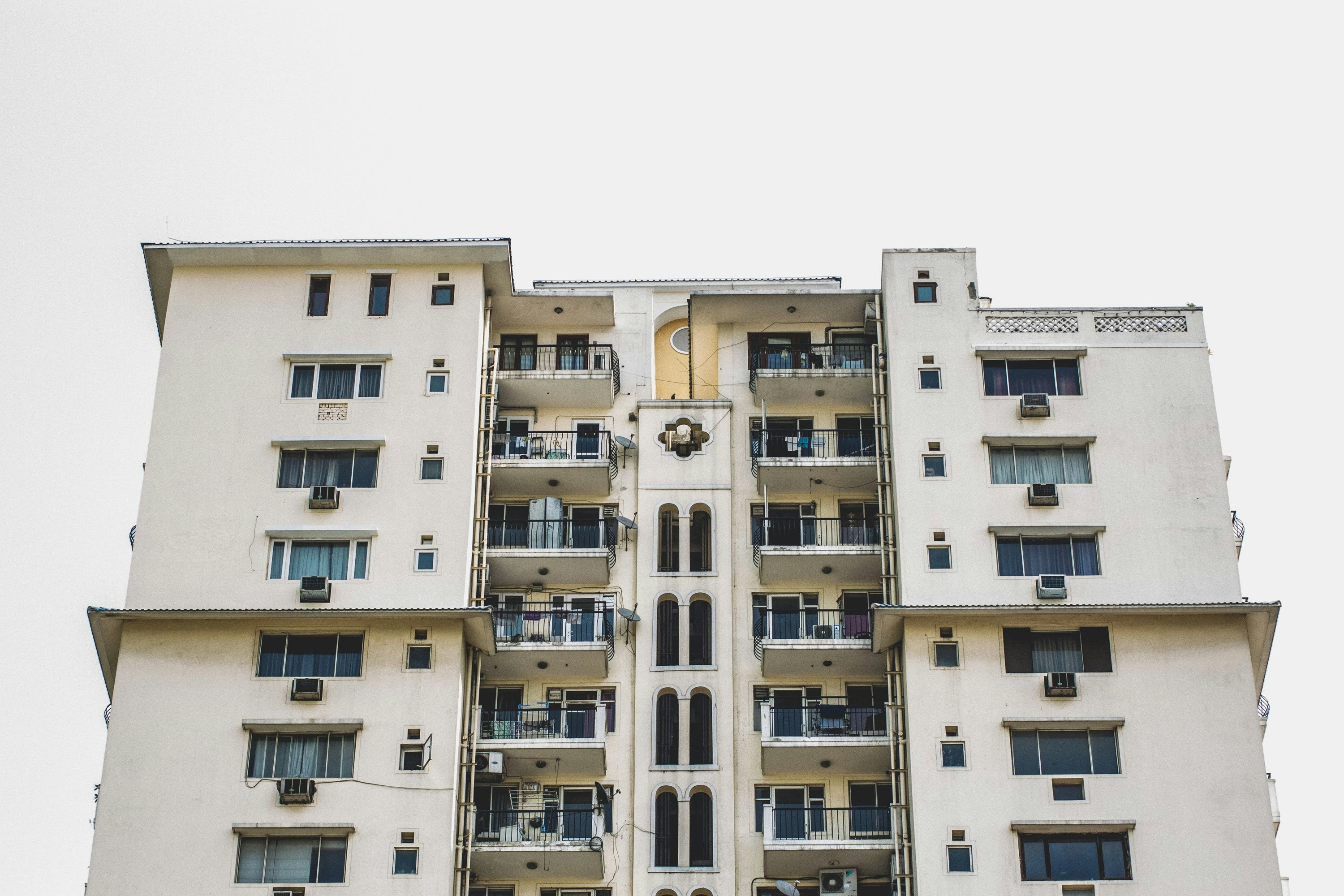
So what happens now?
Push the city's edges, mostly. Raundal points to new residential corridors opening up far beyond Gurugram and Noida's established sectors, and similar sprawl in Bengaluru, Pune and Hyderabad, chasing cheaper land. Chichra sees a parallel shift toward smaller, more efficiently designed homes -- the kind of compact, well-planned living already common in Mumbai, Tokyo and Singapore.
But both experts agree that moving to the periphery only helps if the periphery is actually livable -- connected to jobs by real transport, not just cheaper on paper. Without metro lines, roads and last-mile connectivity, a cheaper home an hour and a half from work just swaps a housing cost for a fuel and time cost. Raundal notes this trade-off can end up costing families more, not less, once daily commuting is factored in.
Left unaddressed, the shortfall Knight Frank and NAREDCO currently estimate at 9.4 million homes could balloon to 30 million by 2030, driven by high land costs, weak infrastructure, thin private investment and slow-moving approvals.
"Without intervention, India's cities risk a future where employment keeps growing, migration keeps rising, but the very workers powering that growth can't find anywhere to live near their jobs... The success of the next phase of the Indian real estate market must be judged not by value of homes sold, but by the number of urban households that can buy homes within a commutable distance of their work," says Raundal.
For now, that number is shrinking. And for the couple earning Rs 1.5 lakh a month, with two kids and a dream of a home that's actually big enough -- the flat they can afford and the flat they need remain two very different addresses. And for those earning less than a lakh per month, the dream of owning a home remains a mathematical impossibility in urban India.
Track Latest News Live on NDTV.com and get news updates from India and around the world

