





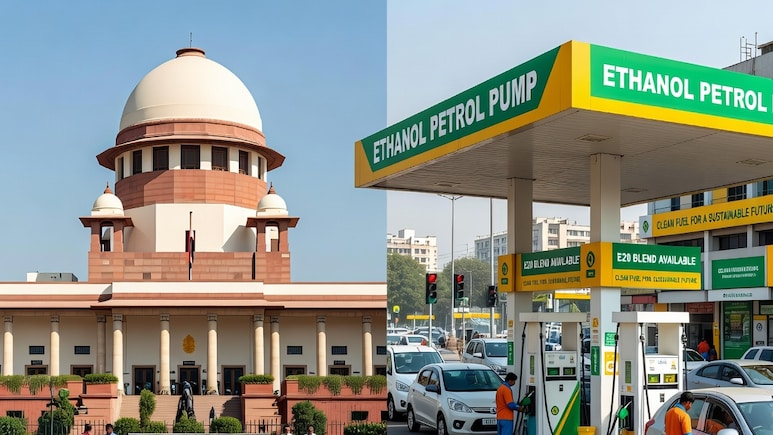
If you buy a litre of petrol, how much ethanol is actually in it?
For now, the Supreme Court has not ordered petrol pumps to answer that question.
The top court has refused to entertain a public interest litigation (PIL) seeking mandatory disclosure of the exact ethanol content in petrol at fuel stations. The petitioner has been allowed to approach the competent authority with his grievance.
Also Read | Layoffs Are Rising In Tech, But These Skills Are Helping People Unlock Better Pay
A bench of Justices MM Sundresh and PB Varale was hearing a plea filed by advocate Narendra Kumar Goswami.
The plea sought uniform labelling on petrol pump dispensing nozzles. It also wanted the ethanol percentage to be printed on fuel bills and receipts. The petitioner also sought a vehicle-wise database showing whether different petrol-ethanol blends are suitable for specific makes, models, engine types and years of manufacture.
-

-
 NDTV World Summit 2026: AI, Chips, Warfare And The Future Of The World | Key Conversations
 -
 Kriti Sanon On Situationships, Open Relationships And Being Old-School
 -
 'AI Scares Me': Kriti Sanon On Personality Rights And Need For Laws
 -
 'This Time I Wanted Gold': Savita Punia Reflects On Historic Asiad Success
 -
 Favourite Bollywood Actor To 5-Year Plan, Kriti Sanon Interviews AI Actor Tilly Norwood
 -
 Neeru Dhanda Carried Homemade Churma To Asiad, Returned With Two Gold Medals
 -
 Inside The Mind Of Archer Kumkum Mohod, Who Dared To Challenge South Korea
 -
 India's Golden Girls: Asian Games Champions On Sacrifice, Success And LA 2028
 -
 RBI Governor Was Asked About Tata Sons' Listing. He Read The Rulebook
 -
 "High Inflation Is Like Tax On Everyone": RBI Governor At NDTV World Summit
Importantly, the plea was not challenging the government's E20 policy itself. Goswami told the court that he only wanted consumers to know what they were buying. He argued that petrol sold at fuel stations did not clearly state whether it was E20.
The court, however, declined to entertain the PIL under Article 32. It said the petitioner could approach the competent authority and the concerned high court.
Why The Ethanol Question Matters
E20 petrol contains 20 per cent ethanol and 80 per cent petrol.
The government's ethanol-blending programme is aimed at cutting India's dependence on imported crude oil, reducing emissions and increasing the use of domestically produced biofuels.
But the rollout has also triggered questions from vehicle owners.
One concern is compatibility. Older vehicles that were not designed for higher ethanol blends may not perform in the same way as newer E20-compatible models. Questions have also been raised about mileage, fuel-system corrosion and long-term maintenance.
The government has previously said mileage depends on several factors, including driving habits, traffic, vehicle maintenance, tyre pressure and air-conditioner use.
Earlier this month, India's auto industry body SIAM withdrew an earlier warning relating to possible vehicle damage from contaminated ethanol-blended fuel and said it would revise its data. The development came amid a wider public debate over E20 fuel. State-run oil companies have, meanwhile, said their testing found E20 petrol within prescribed quality standards.
Food vs Fuel Debate
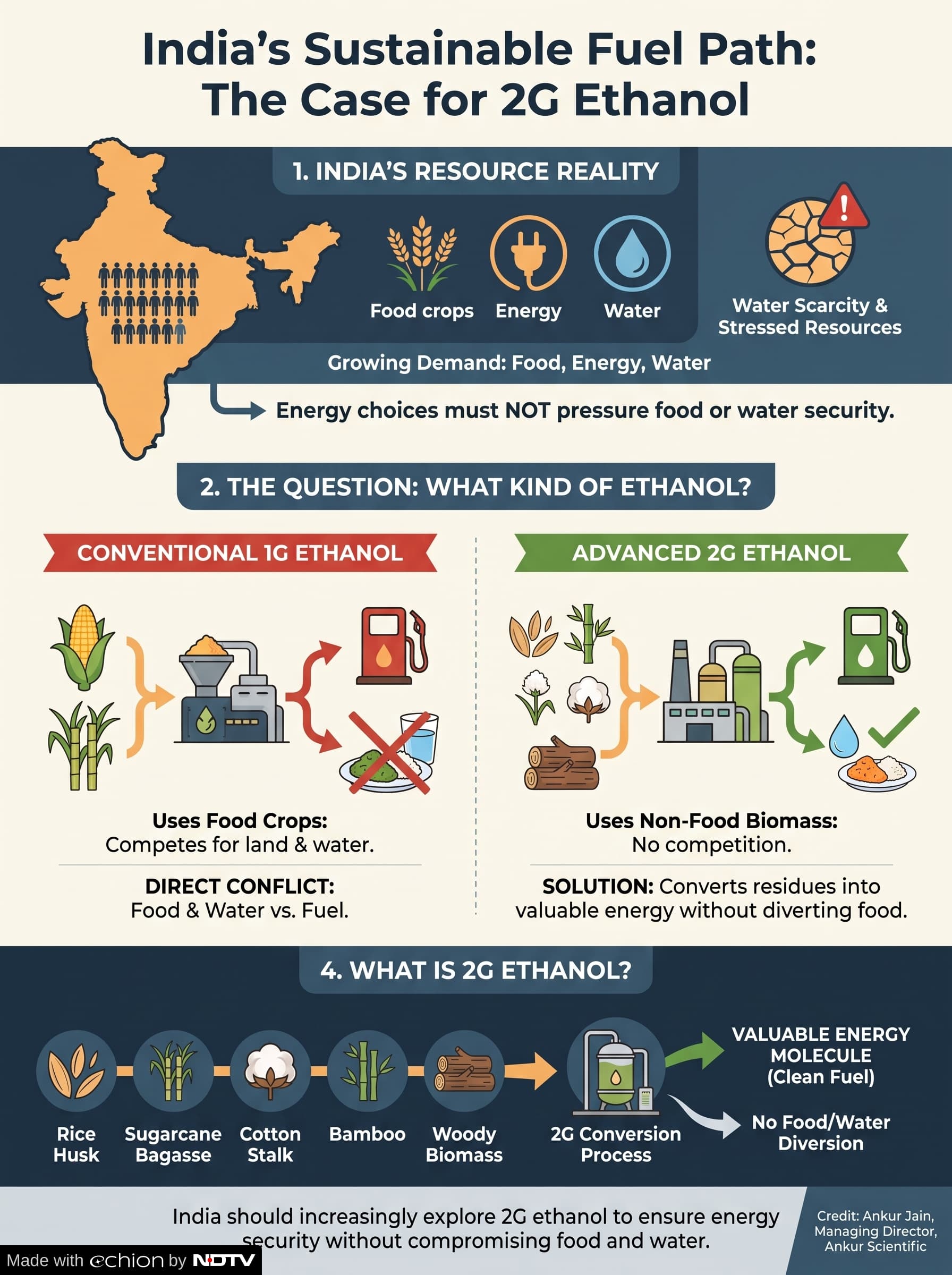
Following the recent hike in sugar prices, questions were also raised on the use of crops for producing ethanol. Taking to NDTV, Ankur Jain, Managing Director, Ankur Scientific, said, "India does not have to choose between food and fuel. With 2G ethanol, we can begin turning agricultural and biomass residues into fuel, giving India an alternative without putting additional pressure on food and water."
He added, "Several countries are already differentiating between food-crop ethanol and advanced/residue-based ethanol. The European Union and UK place limits or restrictions on the contribution of food/feed-crop biofuels while encouraging advanced fuels made from residues and non-food biomass. The United States, while continuing to use corn ethanol, gives a distinct policy category and incentives to cellulosic ethanol, including ethanol made from agricultural residues."
Globally, nations are increasingly moving towards fuels that do not compete with food, but make better use of waste and biomass residues.
Track Latest News Live on NDTV.com and get news updates from India and around the world

