





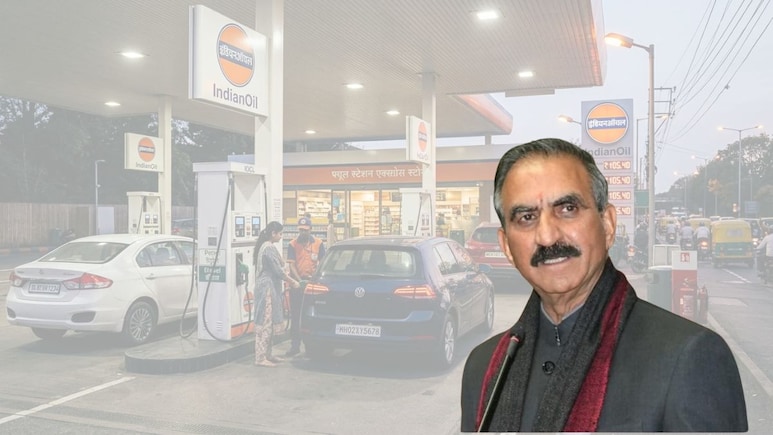
Starting today (August 12), every litre of petrol and diesel sold in Himachal Pradesh costs 60 paise more. The reason isn't inflation. It isn't crude oil prices. It's a new cess called the "Widow and Orphan Cess".
The Himachal Pradesh government issued a notification this week. It comes from the State Taxes and Excise Department, under a section of the state's Value Added Tax (VAT) law. The cess applies at the very first sale of fuel -- the moment an oil company sells to a dealer.
Sixty paise sounds tiny. But there's a catch. The law allows the government to charge up to Rs 5 per litre. Sixty paise may just be the opening move.
Also Read | Layoffs Are Rising In Tech, But These Skills Are Helping People Unlock Better Pay
So how did Himachal Pradesh get here?
Himachal's Financial Mess
Back in March 2026, Chief Minister Sukhvinder Singh Sukhu tabled a bill in the Assembly. It proposed a new cess -- one entirely dedicated to widows and orphans.
The logic was simple, at least on paper. Himachal already runs welfare schemes for these groups. But schemes need money. And government budgets shift every year. So the state wanted something steadier -- a fund that keeps filling up, no matter what else happens to the budget.
The bill was passed by a voice vote. The opposition walked out.
Here's the uncomfortable irony -- the cess is meant to help widows and orphans. But it's collected from every single person who fills a tank -- including widows, including families raising orphaned children, taxi drivers barely making ends meet, and farmers who need diesel for pumps and tractors.
The association of petroleum dealers has called the move "unjustified". They fear that a rise in prices will prompt people to drive across the border to buy fuel in neighbouring states instead. If that happens, Himachal will probably lose more revenue than it earns from the cess.
The association also raised a sharper question. Where are the numbers? How many widows? How many orphans? What's the actual plan for spending this money? The association says the government hasn't answered clearly.
The Bigger Tax Pile-Up
This cess didn't arrive alone. It landed on top of an already steep climb.
BJP MP Anurag Thakur broke down the math. VAT on diesel in Himachal has been hiked twice already -- first by Rs 3, then by Rs 3 again. Add the new cess, and diesel has effectively gone up by Rs 15.40 through taxes and VAT combined.
Thakur's estimate: the state will pull in more than Rs 1,000 crore a year from this combination of VAT hikes and cess. He calls it a direct hit on the pockets of ordinary people -- traders, drivers, farmers, commuters.
Why Himachal Needs The Money So Badly
To understand why Himachal reached for this lever, you have to look at its books. And the picture isn't pretty.
The state owes Rs 13,000 crore in repayments for 2026-27. But it only plans to borrow Rs 10,000 crore this year. That's a Rs 3,000 crore hole -- money the state doesn't have, for obligations it still has to meet.
Add to that a looming central government decision. The 16th Finance Commission has recommended stopping Revenue Deficit Grants entirely from 2026 to 2031. These grants have long been a lifeline, helping states like Himachal cover the gap between what they earn and what they spend. Losing them is expected to cost the state more than Rs 35,000 crore over five years.
Government employees have also faced delayed salaries. There was even talk of a "toilet tax" at one point, and a proposal to cut official salaries by 30 per cent. The state's debt has crossed Rs 1,04,000 crore.
Put simply: Himachal is squeezed from every direction. The widow and orphan cess is one of the few taxes still available to it because central cesses like the Road and Infrastructure Cess never get shared with states. States only get a slice of the base excise duty, not the add-on cesses and surcharges the centre collects. So when a state needs fresh money, creating its own cess is often the only door left open.
Himachal Isn't Alone, Other States Do This Too
Fuel cesses for welfare and development aren't new. Several states already run their own versions.
- Kerala -- Rs 2 per litre Social Security Cess, in place since April 2023, funding pensions for low-income residents.
- Andhra Pradesh -- Rs 1 per litre Road Development Cess.
- Goa -- 0.5% Green Cess, aimed at environmental projects.
- Jammu & Kashmir -- Rs 1.50 per litre Employment Cess, meant to fund job schemes.
- Jharkhand -- Rs 1 per litre cess, originally for road infrastructure.
- Madhya Pradesh -- 1% cess, feeding welfare schemes and infrastructure.
- Nagaland -- Rs 2 per litre Road Maintenance Cess.
- Tripura -- 3% Road Development Cess.
Now, Himachal has joined this list, but with a twist. Most other state cesses fund roads, jobs, or the environment. Himachal's is the first framed explicitly around widows and orphans. Money spent on infrastructure or environment has direct or indirect returns, but money earned from taxpayers spent exclusively on freebies is considered "bad economics".
(With agency inputs)
Track Latest News Live on NDTV.com and get news updates from India and around the world

