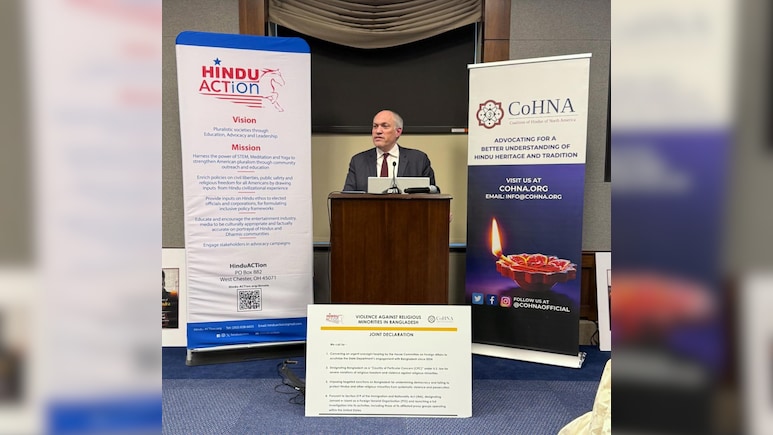
With Bangladesh heading into national elections in less than 24 hours, a rare and urgent congressional briefing on Capitol Hill has thrown a harsh spotlight on what speakers described as the accelerating persecution of Hindu and other religious minorities under the current Muhammad Yunus-led regime, raising questions about the legitimacy of the February 12 vote and the US government's response.
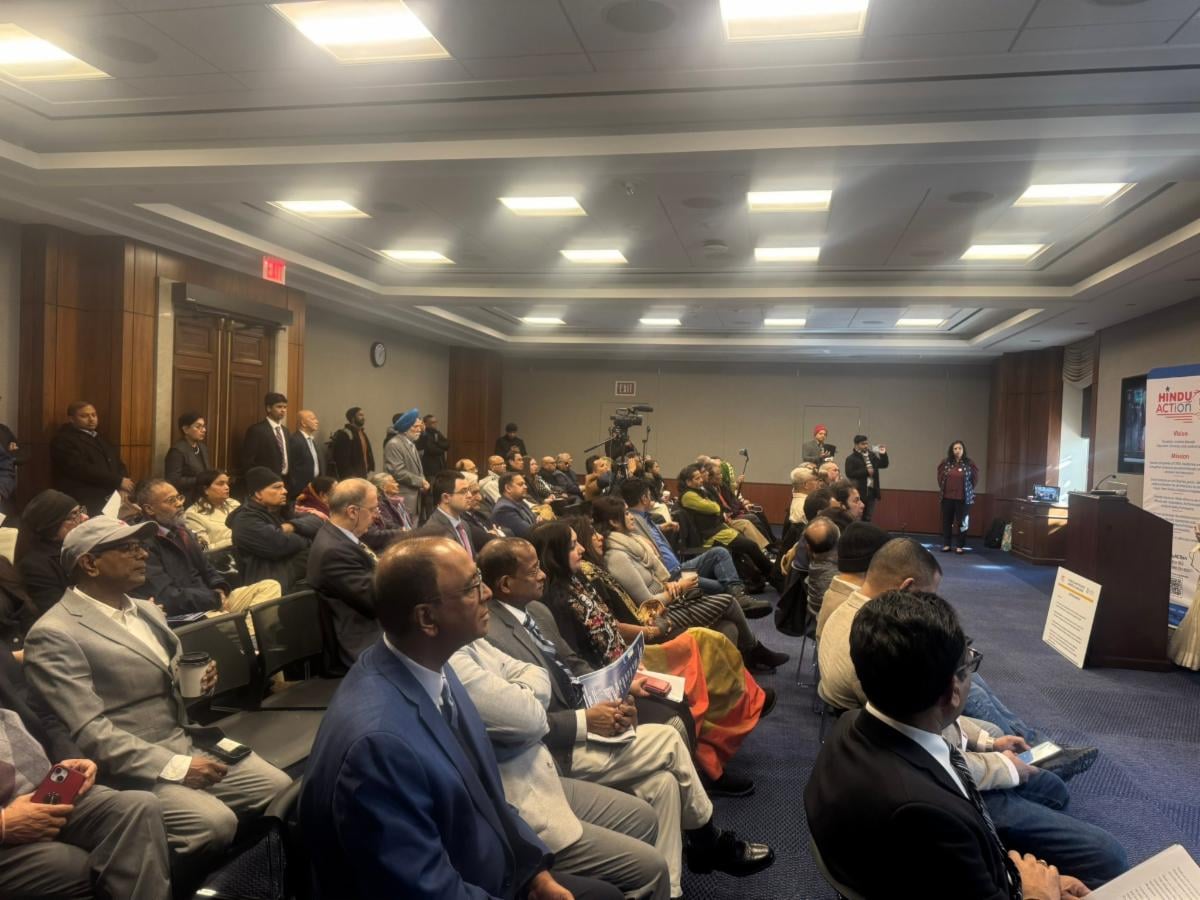
The briefing, hosted on Monday at the Rayburn House Office Building by HinduACTion and the Coalition of Hindus of North America (CoHNA), drew more than 100 participants, including congressional staff, diplomats, journalists, academics, and members of the Bangladeshi Hindu community living abroad. The timing, just days before Bangladesh's elections, underscored growing concern in Washington that democratic backsliding and Islamist resurgence are converging into a major regional and human rights crisis.
Delivering the keynote address, foreign policy analyst Michael Rubin warned that religious freedom is often the earliest indicator of a state's democratic collapse.
"Religious freedom is always the canary in the coal mine," Rubin said, cautioning that once tolerance erodes, it is exceedingly difficult to restore. Drawing parallels with Pakistan, he reminded attendees that Bangladesh's former adversary once had a visible Hindu and Christian population before descending into entrenched intolerance.
Rubin also referenced the 1971 genocide carried out by the Pakistan Army and Jamaat-e-Islami militants, noting that Bangladesh risks repeating history by failing to confront the ideology behind that violence. "If you defeat genocide but don't defeat the ideology that backed it, it will re-emerge," he said, calling the current moment a "wake-up call".
Bipartisan concern was evident as three members of Congress addressed the gathering. Representative Tom Barrett (R-MI), a war veteran, condemned religiously motivated violence and emphasised the need for moral clarity. Representative Suhas Subramanyam (D-VA) pointed to rising attacks on Hindus and criticised the upcoming elections as fundamentally flawed, noting that the Awami League - the party of former Prime Minister Sheikh Hasina - has been barred from participation. "Actions speak louder than words," Subramanyam said, arguing the vote cannot be considered free or fair.
In a recorded message, former Ambassador-at-Large for International Religious Freedom Samuel Brownback warned that communal persecution carries long-term demographic and economic costs. He predicted that continued violence would drive religious minorities out of Bangladesh, weakening the country's economy and social fabric.
The briefing drew staffers from the offices of Senator Cory Booker and several House members from both parties, signalling broad congressional interest. Participants issued a joint declaration urging the House Foreign Affairs Committee to convene an emergency oversight hearing on US engagement with Bangladesh, designate Bangladesh a "country of particular concern" for religious freedom violations, and impose targeted sanctions. The declaration also called for Jamaat-e-Islami to be designated a foreign terrorist organisation.
Independent journalist Shuvo Roy criticised what he described as muted international media coverage. "You cannot call an election free and fair when the country's major political force has been barred," he said, warning that impunity thrives when scrutiny fades.
Testimony from academics, rights advocates, and journalists painted a grim picture of post-August 2024 Bangladesh, following the Islamist-backed rise of Yunus. Speakers detailed collapsing press freedoms, violent reprisals against critics, and mob attacks disproportionately targeting Hindus. Members of CoHNA's youth team shared personal accounts of relatives living in fear of lynching and forced displacement.
Closing the briefing, HinduACTion communications director Adelle Nazarian framed the issue as both moral and strategic. "Peace is not the absence of conflict," she said. "Peace is the presence of dignity, equal protection, and an election that is more than theatre."
As Bangladesh approaches election day, the message from Capitol Hill is unmistakable: the cost of silence, lawmakers warn, may be paid by the country's minorities and by regional stability itself.
Track Latest News Live on NDTV.com and get news updates from India and around the world


