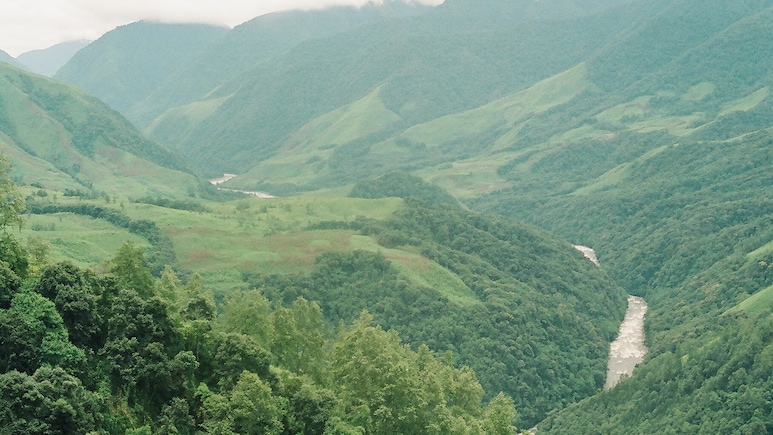
Deep inside Arunachal Pradesh, tucked against the Tibetan border and shielded by the formidable Mishmi Hills, lies a place that feels like it was deliberately hidden from the rest of the world. Dibang Valley is India's deepest river valley, a staggering natural corridor where the hills rise from about 400 metres in the river valleys to over 5,000 metres, creating some of the most dramatic vertical terrain on the subcontinent. And yet, very few Indian travellers have ever been here. If your idea of a great trip involves places that aren't overrun with selfie sticks, this one might just change your life.
Also Read: Which Is The Highest Waterfall In India?
Why Is It Called The Deepest River Valley In India?
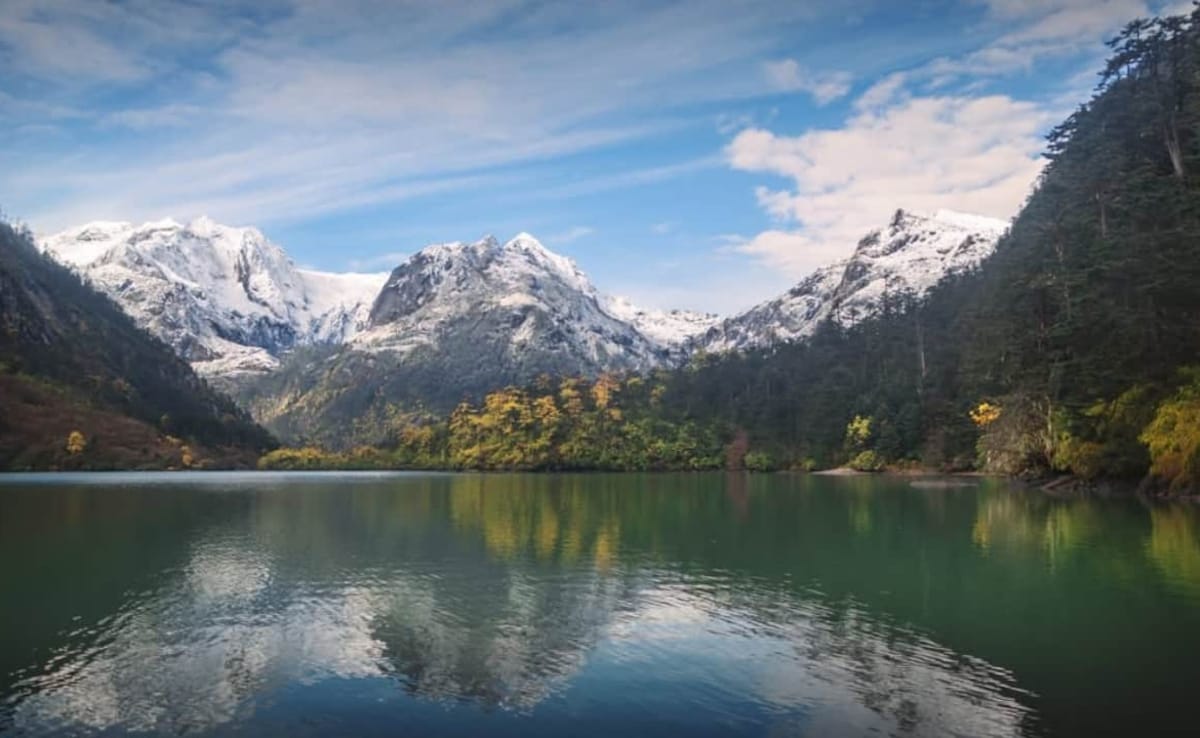
The title isn't just poetic. It's geological. The Dibang Valley sits within the eastern Great Himalayan Range, and the numbers alone tell quite a story. The Mishmi Hills, a southward extension of the Himalayas, constitute most of the northern part of the region and have an average elevation of 15,000 feet (4,500 metres), dotted with passes such as Yonggyap at 13,000 feet (3,950 metres) and Kaya at 15,600 feet (4,750 metres). The river that carves through this terrain drops dramatically from those snow-capped heights down to the plains, creating a valley so deep and so sheer that the landscape feels almost theatrical.
The Dibang River starts its journey near Keya Pass, close to the India-China border in the Upper Dibang Valley district, flowing down from the misty mountains of the Mishmi Hills range. As it tears southward through the gorges, it is fed by glacial tributaries, the Dri, Mathun, Tangon, Emra, and Ithun among others, before eventually joining the Lohit River and giving rise to the great Brahmaputra. The sheer plunge from highland to plain, combined with the towering canyon walls on either side, is what earns Dibang its extraordinary geographic status.
The Dihang-Dibang Biosphere Reserve, which encompasses this region, features dramatic elevations from 500 metres to over 6,000 metres, including deep river gorges formed by the Dibang and Lohit rivers, alpine meadows, and unbroken gradients of vegetation from tropical wet evergreen forests to sub-alpine and tundra zones. Nowhere else in India does a river valley compress this many ecosystems, altitudes, and terrains into one continuous landscape.
Where Exactly Is Dibang Valley?
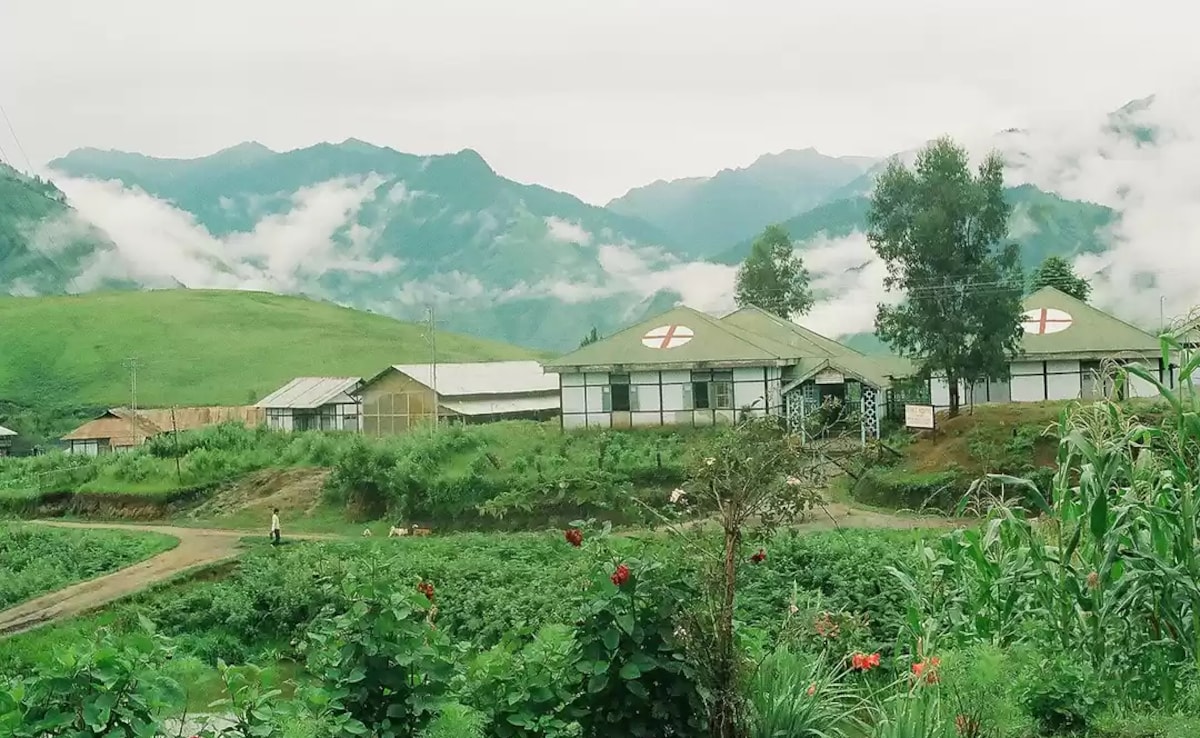
Dibang Valley district is a district of Arunachal Pradesh named after the Dibang River, or the Talon as the Mishmis call it. It has an area of 9,129 square kilometres and is the least populated district in India. To put that in perspective, it is roughly the size of Kerala's Wayanad, Idukki, and Malappuram districts combined, yet has barely a few thousand people living in it. The district headquarters, Anini, lies on a plateau at an elevation of 1,968 metres, situated between the Dri and Mathun rivers.
The capital of the district, Anini, is the northernmost district capital in Northeast India. That alone should tell you something about how far off the beaten track this place truly is. The district borders Tibet to the north and east, which gives it a frontier quality that is genuinely hard to find anywhere else in the country.
The Idu Mishmi: Guardians of the Deep Valley
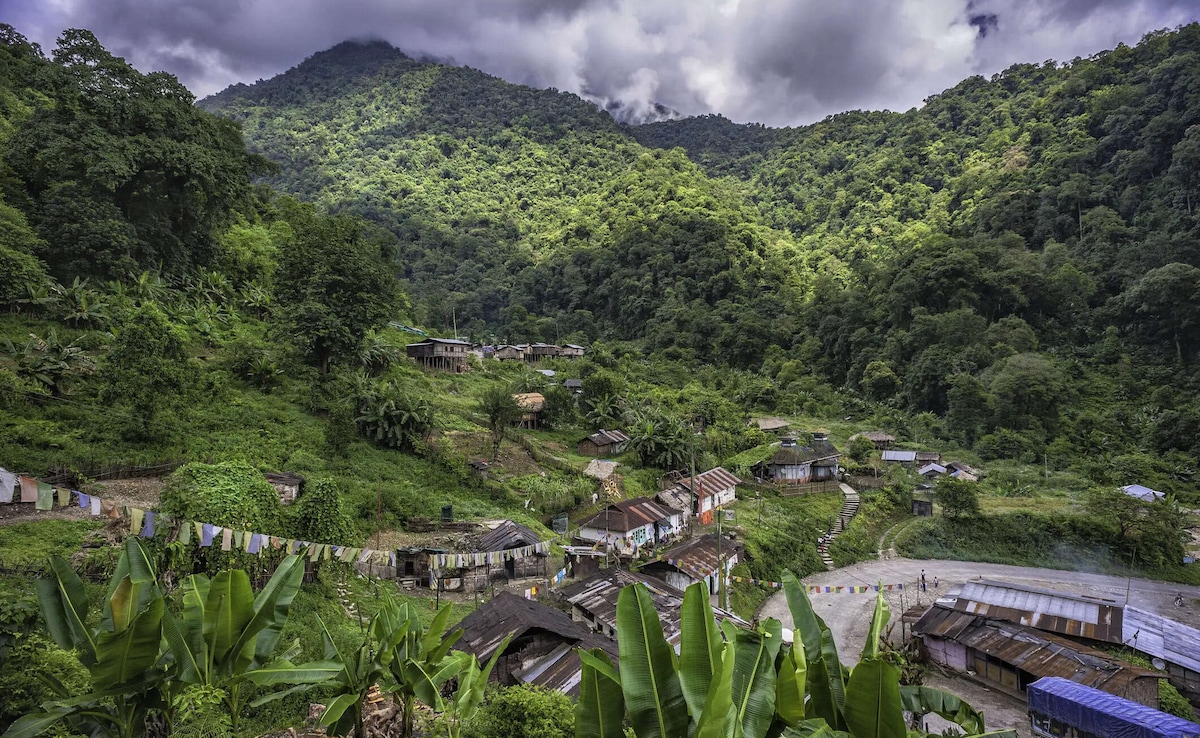
You cannot talk about Dibang Valley without talking about its people. The remarkable Idu Mishmis carry forward a living heritage marked by vibrant oral traditions and shamanic rituals, and are well-known for their skilled bamboo craft, hunting traditions, knowledge of medicinal plants, and a profound spiritual kinship with nature and wildlife.
The Idu Mishmi are one of four sub-groups of the broader Mishmi tribe. They are a small animist community, and their isolation and the challenging terrain of the valley have helped preserve both its natural ecosystems and the traditions of the indigenous communities. The valley's remoteness has been, in a strange way, the best thing that ever happened to their culture.
Bamboo is integral to Idu Mishmi life; it forms the framework of their raised, stilted huts and is the primary material for crafting most everyday tools, from baskets to mats. The Idu women are master weavers, producing intricate back-strap woven textiles in bold geometric patterns, while the men excel in bamboo-cane basketry.
One of the most fascinating aspects of the Idu culture is its relationship with wildlife. They believe tigers are their brothers, and ancestral mythology forbids them from ever hunting one. The Idu mythology has shaped many traditions and restrictions around the hunting of wildlife, including tigers and hoolock gibbons, thereby promoting an indirect mode of conservation of specific animal species. This community has been practising conservation long before the word entered the mainstream vocabulary.
They celebrate two key festivals: Reh in February, which involves ritual dances, feasting, ancestral worship and sacrificial offerings, and Keh-Meh-Ha around September-October, which is a jubilant harvest celebration. If you time your visit right, attending either of these is an extraordinary cultural experience.
Also Read: Why Visit Dawki, A Picturesque Town In Meghalaya, Where Boats Appear To Float In The Air
What Will You Actually See Here?
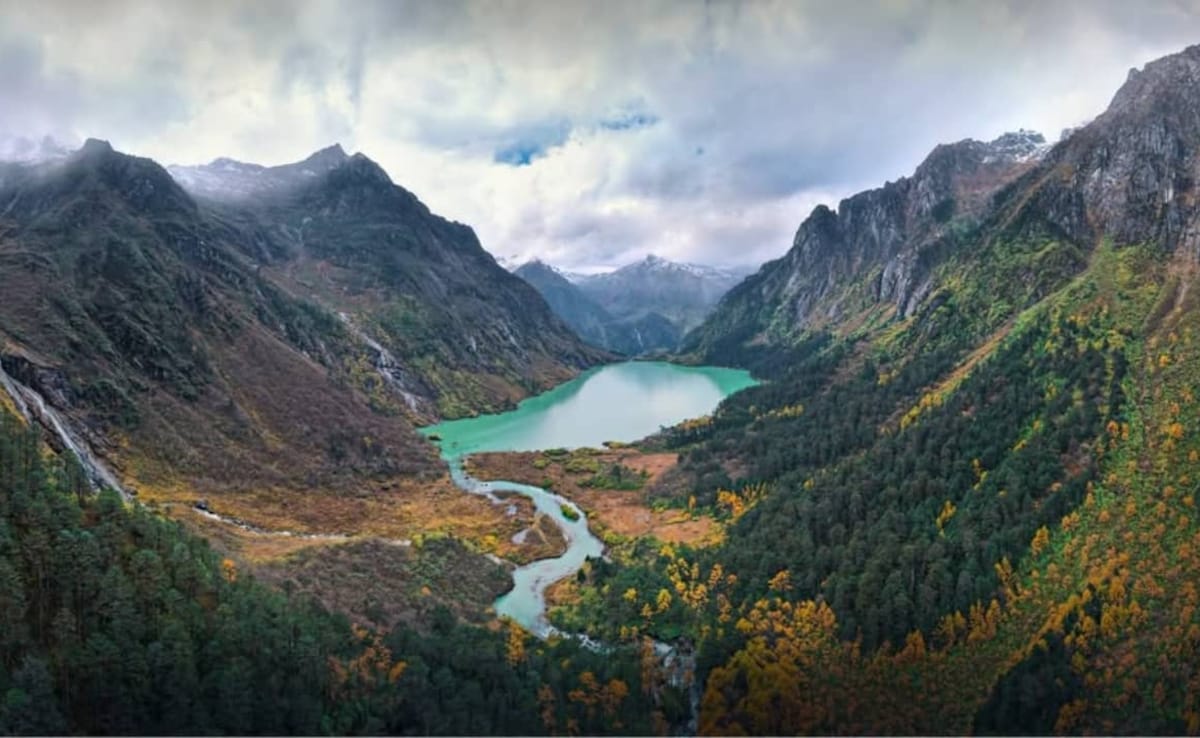
Dibang Valley is not for the traveller who needs a curated itinerary and a five-star resort at the end of it. It is for people who want something real.
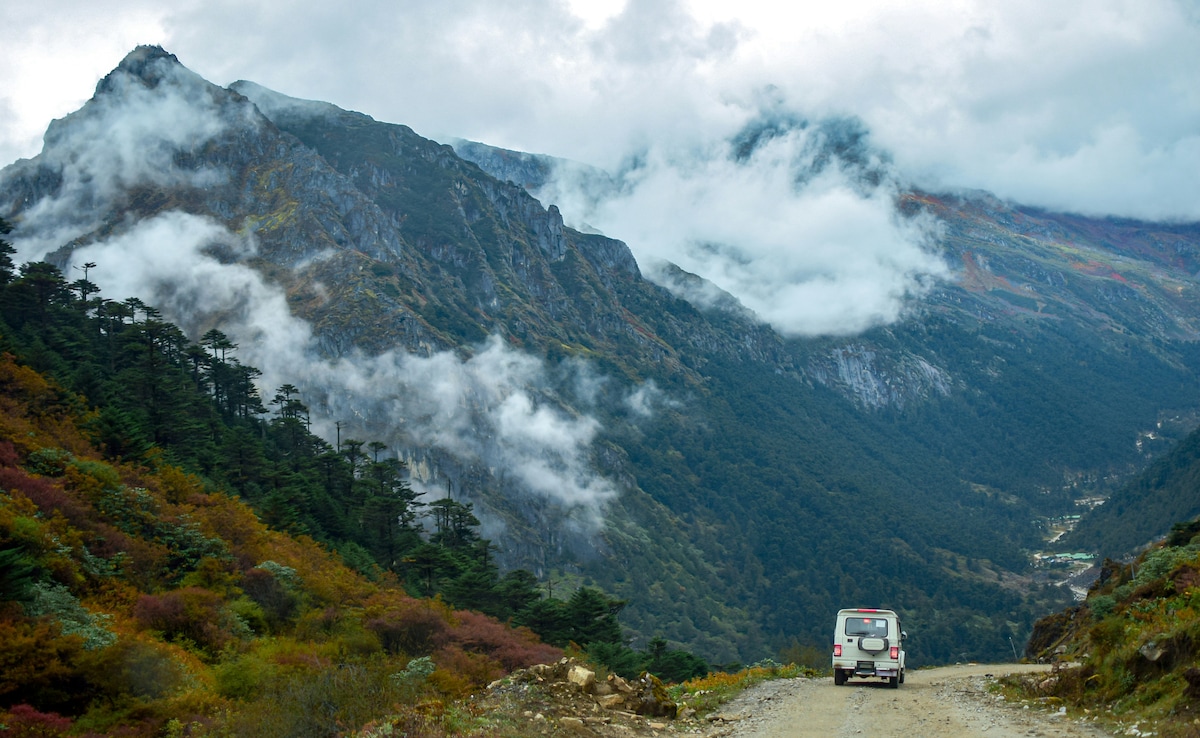
The journey itself is a highlight. From Dibrugarh in Assam, the route ascends into the pristine wilderness of this remote Himalayan frontier, crossing over the famous Mayudia Pass, located at an altitude of 8,700 feet, then following the course of the Dibang river through small villages like Hunli and Etalin. Along the way, you pass through some of the most dramatically forested mountain roads in all of India, mist hanging over dense canopies, rivers rushing below, and the occasional hoolock gibbon swinging through the trees if you're lucky.
The main town of Anini sits just above the confluence of the Dri and Mathun rivers, hemmed by the Mishmi Hills and dense alpine-subtropical forests, and serves as the cultural heartland of the Idu Mishmi tribe. From Anini, you can explore the Dri Valley (also called Angrim Valley), where a sparkling river keeps company, mostly skipping and rushing over boulders, at places resting calmly in crystal-clear emerald pools cradling sunken logs and fish.
The Dibang Wildlife Sanctuary, spread across 4,149 square kilometres, stands as one of India's largest and most biodiverse protected areas, harbouring rare and endangered species including the Mishmi Takin, Musk Deer, Red Panda, Red Goral, Asiatic Golden Cat, Marbled Cat, Clouded Leopard, and Snow Leopard. For birdwatchers, this is essentially paradise. There are about 680 bird species in the Mishmi Hills region, including Sclater's monal, Blyth's tragopan, rufous-necked hornbill, Ward's trogon, and fire-tailed myzornis, among many others.
Then there are the waterfalls. The Dri Valley and the areas deeper inside the sanctuary are studded with cascading falls, Chigu Falls, Mawu Aando Falls, and Matu Falls, among them. The walk to Mawu Aando Falls, over fallen mossy logs and root steps, leads to a waterfall where the mountain looks like it has been chiselled precisely at perfect angles, a thoughtfully made wooden platform and a low bench face the water flying off the rock face, making it a place to meditate.
For the truly adventurous, there are multi-day trekking routes deeper into the wilderness. The Seven Lakes Trek of Arunachal, the Aeyo Valley trek, and the Athu Popu trek are some of the most spectacular offbeat hiking routes available. The Athu Popu site is revered as the mythical gateway of souls to the afterlife, holding deep spiritual meaning for the local Idu Mishmi community.
Your Complete Travel Guide to Dibang Valley
Getting There
The nearest airport is Dibrugarh in Assam, which has direct flights from Delhi, Kolkata, and Guwahati. From Dibrugarh, Anini is approximately 376 km away and is reached by taxi. The nearest railhead is Tinsukia, about 326 km from Anini. The road journey from Dibrugarh to Anini typically takes two days, with an overnight halt in Roing (the gateway town to the upper valley), as the mountain roads demand careful driving and are not to be rushed.
Permits
This is non-negotiable: Dibang Valley is a restricted area and all visitors, including Indian nationals, require an Inner Line Permit (ILP) to enter Arunachal Pradesh. You can apply online at the Arunachal Pradesh government's ILP portal or obtain one in person at offices in Guwahati, Dibrugarh, or Delhi. Keep multiple copies handy, as there are checkpoints along the way.
Best Time to Visit
October to April is the best season for visiting Dibang Valley. The post-monsoon months of October and November offer clear skies and lush greenery. December and January bring a chance of snow at Mayudia Pass and the higher elevations. Avoid June through September, the monsoon brings landslides, washed-out roads, and conditions that can make the journey genuinely dangerous.
Where to Stay
Accommodation in Dibang Valley is basic but characterful. Locally-hosted homestays are the recommended option; these provide a comfortable base to explore and offer vivid insights into Idu Mishmi culture, traditions, and way of life, unlike any other. Anini has a few government guesthouses and simple hotels as well. The Dree Afra Campsite offers tented accommodation for those who want to sleep closer to the river. Book well in advance, particularly for the October-to-February high season, as options are limited.
Things to Know Before You Go
Mobile connectivity is extremely patchy; BSNL works in parts of the region, but do not count on consistent data or calls. Carry enough cash, as ATMs are unreliable. The roads are in a state of constant improvement, but still require a sturdy 4x4 and experienced local driver; do not attempt this in a regular hatchback. Altitude sickness is possible in the higher reaches, so acclimatise properly in Roing before pushing on to Anini. And most importantly, be a respectful visitor; this is someone's homeland, not a theme park.
Also Read: Which Is The Oldest City In India?
Why You Should Go
Most Indian travellers who think "Northeast" instinctively land on Meghalaya or Sikkim. And fair enough, those are brilliant. But there is something different happening in Dibang Valley. This is a place where India's deepest river valley meets one of its most extraordinary indigenous cultures, inside one of its least-visited ecosystems. Dibang Valley stands as one of Northeast India's most pristine wilderness zones, and its remoteness has kept it largely unexplored by the outside world. That will not last forever. The roads are improving, the infrastructure is slowly growing, and the word is beginning to spread.
Right now, though, Dibang Valley still belongs mostly to the Idu Mishmi, to the roaring river that carved it out of the earth, and to the few travellers brave enough to make the journey. There is an argument that some places are better left to the bold, and Dibang Valley is one of them. Get there while it still feels like a secret.
Track Latest News Live on NDTV.com and get news updates from India and around the world


