





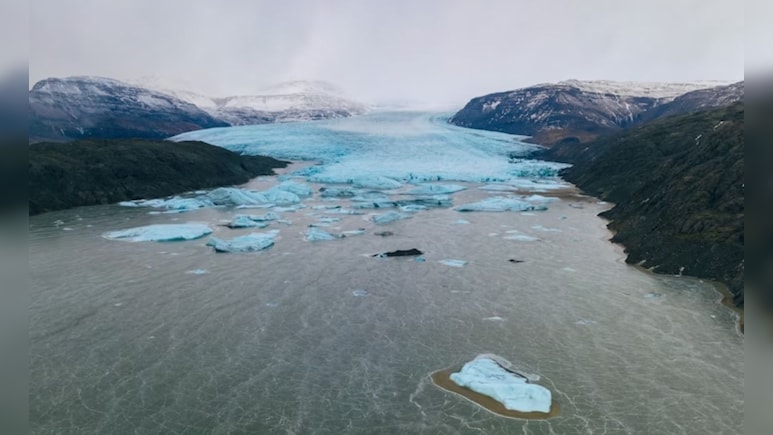
The Arunachal Pradesh government has issued an alert across areas bordering Tibet in the higher altitudes of the Himalayas amid a risk of flash floods and landslides due to a possible glacial collapse.
Tawang Deputy Commissioner and Chairman of the District Disaster Management Authority (DDMA) Namgyal Angmo has issued a public advisory urging residents and visitors in vulnerable areas of the Mago Chu and Tawang Chu basins to remain alert.
The advisory comes after the Centre for Earth Sciences and Himalayan Studies (CESHS) raised concerns over a possible collapse of glacier snouts and unstable terrain near the Khangri Glacier in the Mago Chu basin, which could trigger Glacial Lake Outburst Floods (GLOF).
People living in downstream and landslide-prone areas have been advised to avoid unnecessary movement near riverbanks and vulnerable slopes, especially during heavy rainfall and bad weather conditions.
Tourists and travellers have been asked to check weather updates and road conditions before undertaking any journey. Authorities have also warned against attempting to cross swollen rivers, streams, or damaged roads and bridges.
The district administration has directed local leaders, emergency response teams, and concerned departments to stay prepared for possible evacuation and rescue operations if the situation worsens.
Residents have been urged to remain calm, avoid spreading rumours, and immediately inform authorities in case of rising water levels, landslides, or any other emergency situation.
A glacial lake outburst flood (GLOF) is the sudden release of water that has collected in former glacier beds.
These lakes are formed by the retreat of glaciers, a naturally occurring phenomenon that has been turbocharged by the warmer temperatures of human-caused climate change.
Glacier melt is often channelled into rivers, but ice or the build-up of debris can form what is effectively a natural dam, behind which a glacial lake builds.
A similar incident happened in 2023 when the South Lhonak Lake in Sikkim burst its boundaries, killing 14 and destroying a hydroelectric project.
Track Latest News Live on NDTV.com and get news updates from India and around the world

