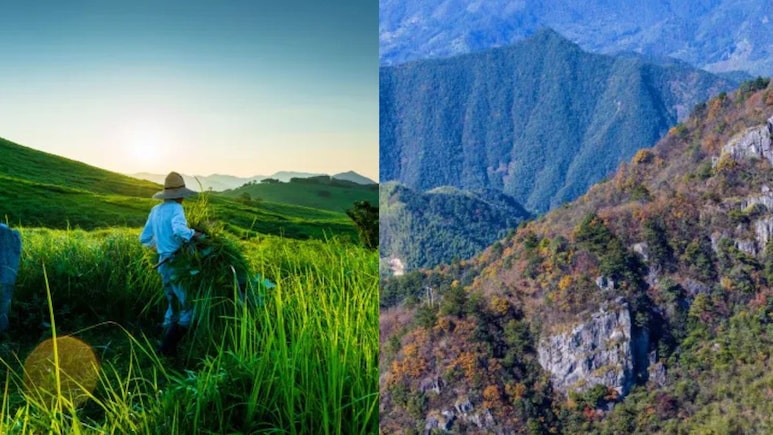
UNESCO has added 12 new sites to its Global Geoparks network. The expansion marks another significant milestone in the agency's global effort to preserve Earth's geological heritage while promoting sustainable development. The designated geoparks are located in China, France, Greece, Ireland, Japan, Malaysia, Portugal, Russia, Tunisia and Uruguay. The total number of UNESCO Global Geopark sites is now 241, spanning across 51 countries, covering an area of over 882,000 sq km.
Here Are 12 New UNESCO Global Geoparks
Changshan UNESCO Global Geopark - China
Located in Quzhou, Zhejiang Province, in eastern China, the park spans approximately 1,043.1 square kilometres. It is celebrated for preserving nearly a billion years of geological evolution and for its mountainous landscape and subtropical monsoon climate.
Also Read: Where Can You Spot Nilgiri Tahr In The Wild? This Kerala National Park Just Reopened
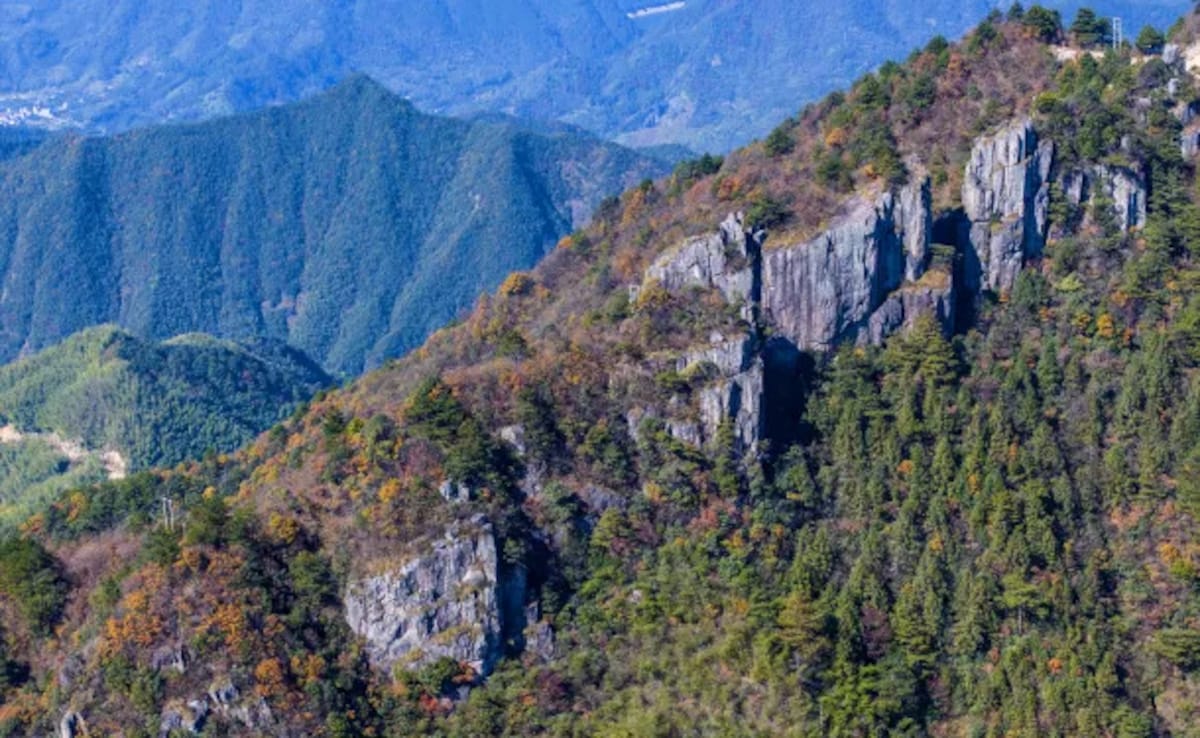
Mt. Siguniang UNESCO Global Geopark - China
The park sits at the transition between the Qinghai-Tibet Plateau and the Sichuan Basin, offering a rare look at the Earth's tectonic history. It is famous for its Oriental Alps scenery and its position as a global biodiversity hotspot.
Terres d'Hérault UNESCO Global Geopark - France
The name reflects its deep connection to the Earth and the Herault River. Spanning 112 municipalities and home to over 100,000 residents, the place is often termed as an "open-air laboratory" that showcases a geological history spanning 540 million years.
Nisyros UNESCO Global Geopark - Greece
The green space encompasses the entire volcanic island of Nisyros and its surrounding islets. It is renowned for being home to the youngest and most active volcanic system in Greece and one of the best-preserved calderas in the world.
Joyce Country and Western Lakes Global Geopark - Ireland
The diverse terrain features rare formations and dramatic landscapes. It is the first Global Geopark to include a Gaeltacht or Irish-speaking region.
Mine-Akiyoshidai Karst Plateau UNESCO Global Geopark - Japan
Covering the entire Mine City in Yamaguchi Prefecture, it is the 11th site in Japan to receive this status. The place is defined by the themes of White (limestone), Black (coal), and Red (copper).
Lenggong UNESCO Global Geopark - Malaysia
The green space is a unique open-air museum that preserves nearly 2 million years of human history. The star attraction is the 11,000-year-old skeleton of "Perak Man," the oldest and most complete prehistoric human skeleton found in Southeast Asia.
Also Read: 6 Of The Best National Parks In India To Add To Your 2026 Travel List
Sarawak Delta UNESCO Global Geopark - Malaysia
Known for its "land-sea-river" ecosystem, this park comes with sandstone landscapes, including the iconic sea stacks at Bako National Park, which represent the "Oldest Land of Sarawak."
Algarvensis UNESCO Global Geopark - Portugal
The region's high geodiversity showcases a broad range of rock types and landforms. Two especially distinct geological sites are the tsunami deposits at Lagoa dos Salgados from the 1755 Lisbon Earthquake and the Loule Salt Mine, Portugal's deepest publicly accessible point.
Toratau UNESCO Global Geopark - Russian Federation
It is a testament to nearly 300 million years of Earth's history. The main landmarks are the three iconic Shikhans - Toratau, Yuraktau, and Kushtau. These are remnants of a massive barrier reef that thrived in the tropical Paleo-Ural ocean during the Permian period.
Dahar UNESCO Global Geopark - Tunisia
The region is world-famous for its fossil remains, including bones of giant dinosaurs, crocodiles and turtles. It is particularly known for the discovery of the Tataouinea hannibalis, a unique long-necked dinosaur.
Manantiales Serranos UNESCO Global Geopark - Uruguay
This one is covered with ancient mountain ranges and diverse ecosystems. True to its name, which translates to "Springs of the Sierras, the area is rich in natural springs, wetlands, and aquifers.
Track Latest News Live on NDTV.com and get news updates from India and around the world


