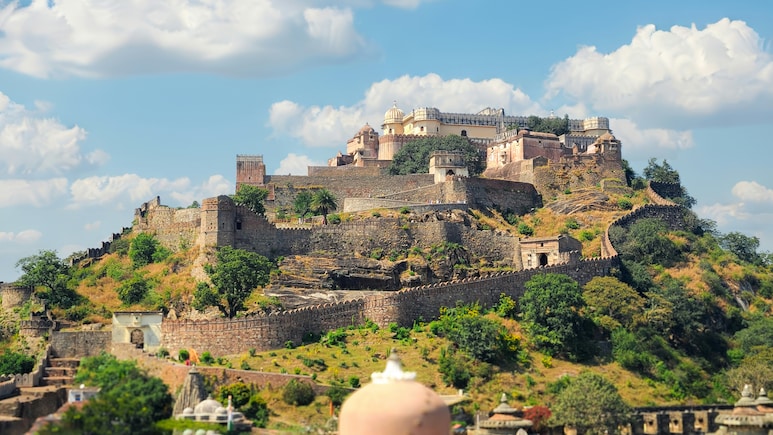
Historically speaking, some forts are remembered for battles. Some for its kings and some are just impossible to forget. One fort situated in Rajasthan's rugged terrains falls somewhere in between. Situated high in the Aravalli hills, the fort based here can look over the hills. Moreover, its stone walls follows the shape of the landscape for kilometres.
If you look at it from a distance, it will immediately catch your eye. But up close, you will see that the entire fort seems to have been built around the hill that makes the place interesting.
Also Read: This Floating Hotel In Kolkata Has A Railway Crossing Near Its Entrance Where Trains Pass By
Why Kumbhalgarh Fort Is Called The Great Wall Of India
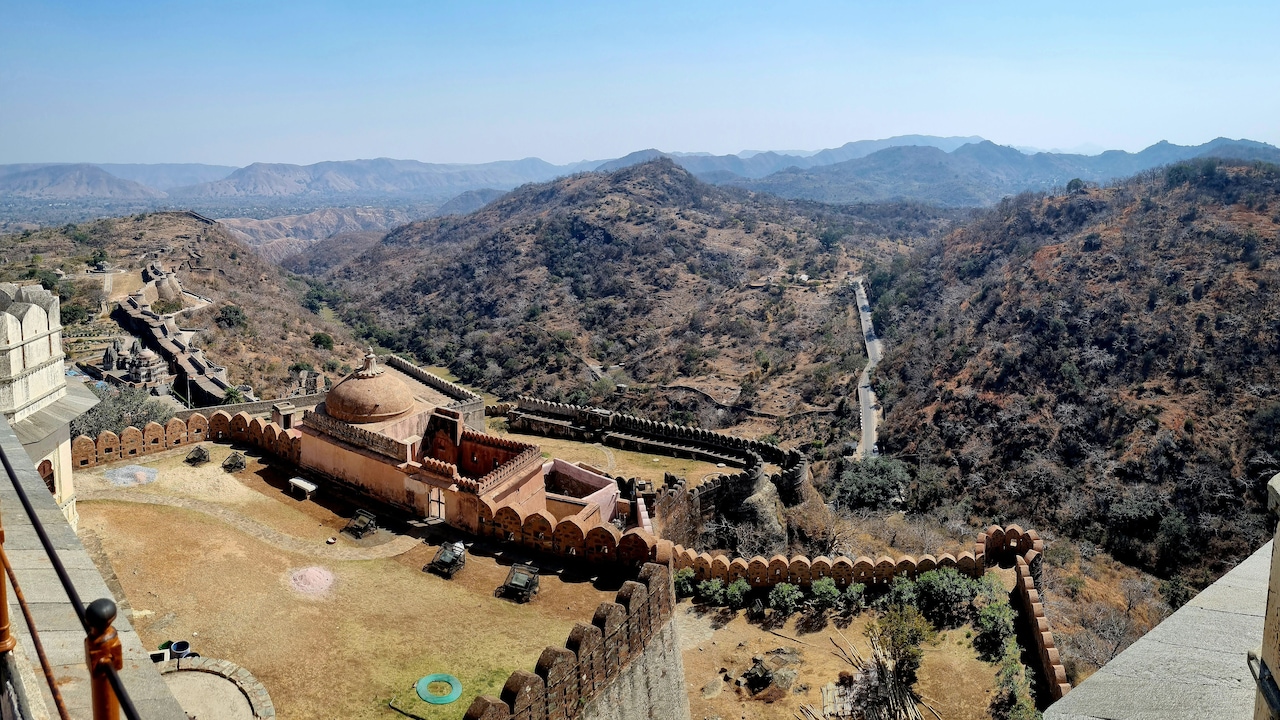
Photo: Unsplash
Best known for its massive defensive wall, the wall of Kumbhalgarh fort stretches for around 36 kilometres across the Aravalli hills. As per the Rajasthan Tourism, the wall is wide enough for 8 horses to ride side by side. UNESCO also notes that the fort actually follows natural contours of the surrounding landscape.
In fact, the massive dimensions and the design has got it a nickname "The Great Wall of India." The comparison with China's Great Wall us due to its scale and security function, and not because of there's any direct connection between the two structures.
The fort of Kumbhalgarh was built between 1443 and 1458 under Rana Kumbha. It stands about 1,100 meters above the sea level.
Reaching Kumbhalgarh was never meant to be easy. Long before anyone got close to the fort, they had to make their way through the rocky Aravalli hills and then navigate its walls, gates and defensive structures.
Much of Kumbhalgarh's fame comes from its enormous wall, which stretches for around 36 kilometres. Rajasthan Tourism says it is wide enough for eight horses to ride abreast. UNESCO notes that the wall was built along the contours of the Aravalli hills, allowing the fort to blend with the landscape around it.
A Fort Designed With The Hills
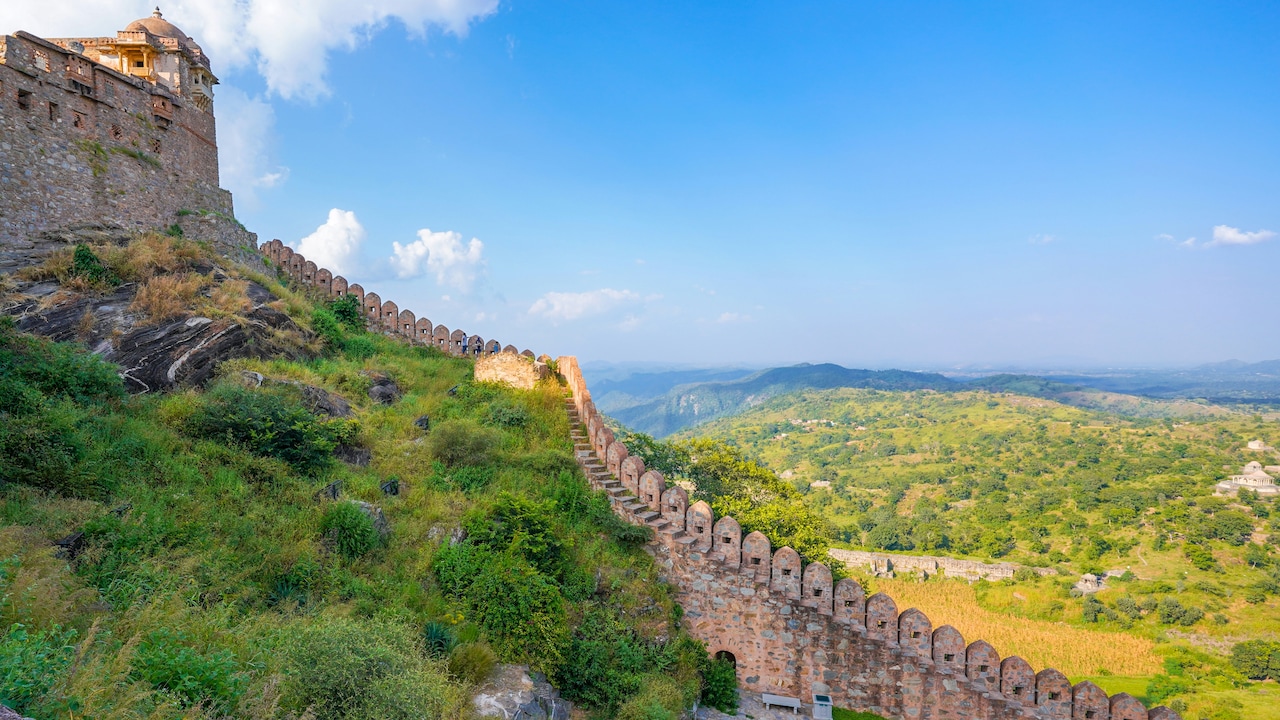
Photo: Unsplash
Kumbhalgarh was not protected by its wall alone. The entire fort was built in a way that made it difficult to enter. Seven large gates stood between visitors and the main settlement, while additional walls and defensive structures helped keep the fort secure.
Also Read: Direct Delhi-Guangzhou Flights Return: 5 Places First-Time Visitors Shouldn't Miss
Inside, there was everything people needed. The fort had palaces, temples, stables and several other buildings, allowing people to stay there for long periods if needed. Kumbhalgarh was designed by Mandan, who served in Rana Kumbha's court. UNESCO notes that this is unusual among Rajasthan's hill forts, as the architect behind many of them is not known.
The Fort Was Not Quite Unconquerable
Kumbhalgarh was one of the hardest forts to capture, but not impossible. Historical records mention just one successful attack, when a general of Akbar briefly took control of the fort in 1578. According to Rajasthan Tourism, the defenders had run short of drinking water by then.
Today, Kumbhalgarh is part of UNESCO's Hill Forts of Rajasthan. Walk around the fort and you'll notice how closely it follows the shape of the Aravalli hills. Its walls rise and bend with the landscape, which is one reason the fort remains so impressive even centuries later.
Track Latest News Live on NDTV.com and get news updates from India and around the world


