





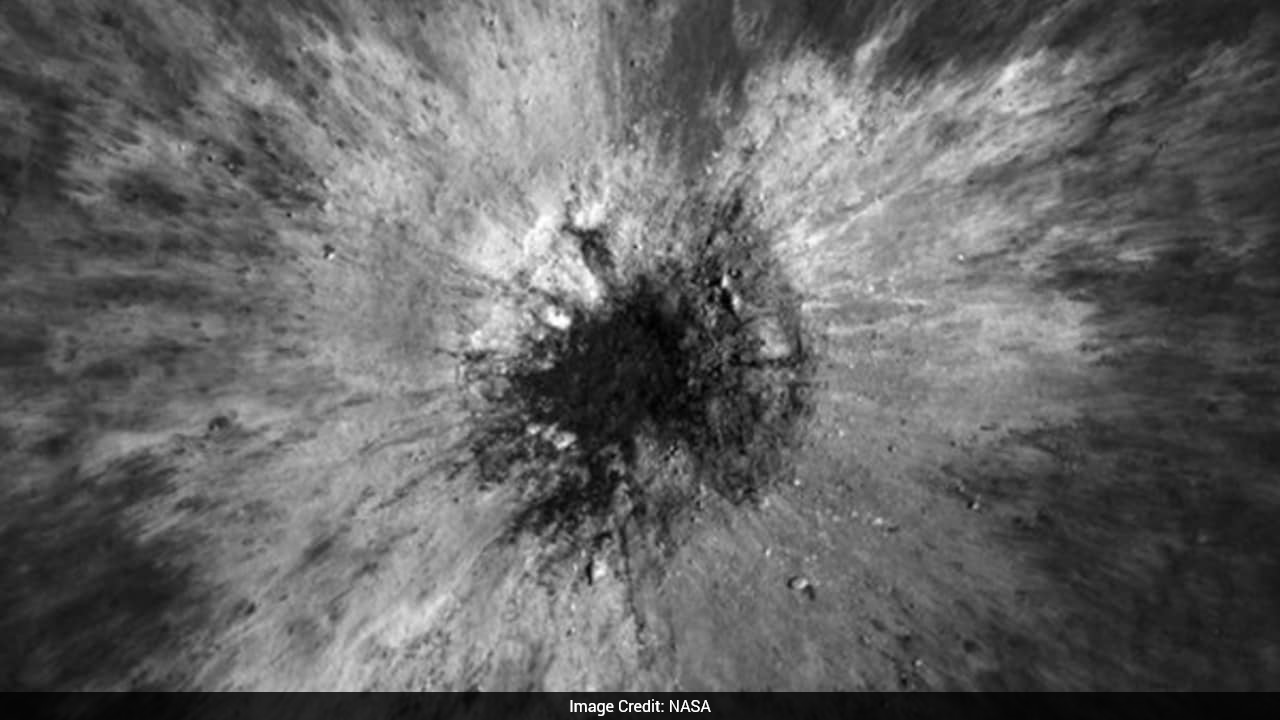
A routine check of a giant Moon map led NASA scientist Robert Wagner to a discovery that had gone unnoticed. While studying data on his computer screen, Wagner spotted an unusually large bright spot surrounded by a dark halo, suggesting that the lunar surface in that area had been disturbed, according to NASA.
Wagner, an image-processing specialist from Intuitive Machines who works with data from NASA's Lunar Reconnaissance Orbiter Camera (LROC) system, said that he stopped everything and began investigating the spot.
By comparing images of the Moon taken before and after the change, Wagner realised that he had found the largest newly formed crater ever discovered in the solar system. Scientists reported the discovery in Science Advances.
Officially named McGetchin after lunar scientist Tom McGetchin, the crater formed on the eastern edge of the Moon sometime between April 11 and May 22, 2024.
It was created after a comet or asteroid the size of a three- to six-story building hit the lunar surface.
The impact created a crater 728 feet wide, about the length of two football fields.
Scientists estimate that an impact of this size happens on the Moon about once in a century or even longer.
For more than 17 years, NASA's Lunar Reconnaissance Orbiter has been circling the Moon and using its seven instruments to study its topography, surface composition, temperature and radiation environment.
During the mission, the spacecraft's team has identified at least 1,000 new impact craters and flagged 100,000 more surface changes caused by objects hitting the Moon or debris thrown out after impacts.
Track Latest News Live on NDTV.com and get news updates from India and around the world

