






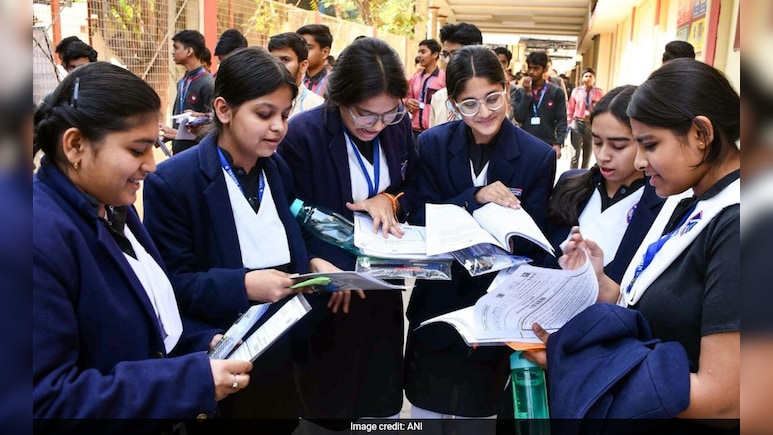
The ongoing CBSE (Central Board of Secondary Education) Class X board examinations for 2026 have become the centre of a heated debate among students, parents, and educators. The mathematics paper - particularly -conducted on February 17 was perceived in many regions of the country to be lengthy and challenging.
In states like Gujarat, Maharashtra, Uttar Pradesh, Jharkhand, Bihar etc. many students came out crying after writing their first board exam paper - considered to be the maiden milestone. Over 25 lakh students are appearing for CBSE class X board.
A volley of online petitions across the nation, signed by thousands, and anguished reactions from examinees suggest that the paper was tougher, more analytical, and unexpectedly lengthy in several regions compared to others. These criticisms raise a serious question: Is this year's paper fair to students who were advised to prepare primarily from NCERT (National Council of Educational Research and Training) textbooks and official sample papers? And was this heightened difficulty connected to the board's new policy of offering two board exam attempts in the same academic year?
Regional disparities
According to multiple reports and student testimonials, the mathematics - both Basic and Standard sets - were out of sync with the prescribed syllabus. The Basic paper - meant to be relatively simpler - was harder than expected to a significant number of students in the Delhi region, leading to calls for lenient evaluation and grace marks. Critics say that certain questions demanded more time,
While in cities like Ahmedabad, Ranchi, Patna, Hyderabad and Noida, students felt that Maths Standard required more time, deeper analysis, and procedural execution that went beyond what students had routinely encountered in class or in sample papers released by the board. Even top performers who're used to scoring 100% marks till pre-board struggled to complete the paper within the allotted three hours, especially in parabola, coordinate geometry, and multi-step reasoning questions, as they were never practised in schools.
Online petitions - one recently gaining over 10,000 signatures - argued that the paper's difficulty level was higher than what could reasonably be expected from NCERT textbooks, official sample papers, and question banks, on which students are strongly advised to base their preparation. These petitions called for lenient marking, moderation, or even re-evaluation to ensure fairness.
One of the most contentious points was that disparities existed not just in perceived difficulty but across different question paper sets and regions. Students posting on discussion forums and social media claimed that sets circulated in regions - outside Delhi - were significantly more challenging and procedurally demanding. Some repeatedly noted that while one student might get a paper, they could nearly finish on time with NCERT preparation alone, another student with a different set struggled to solve even half the answers despite rigorous study.
Many schools have sent their adverse feedback to the CBSE, but they are sceptical about the board's response. Academic debate around board exam fairness is not new. In other large-scale exams (e.g., NEET), claims of varying difficulty between regional language papers and English have been serious enough to attract judicial scrutiny at the Supreme Court, which remarked that a common question paper might be required to ensure uniformity of difficulty levels. While board exams differ in structure and scale, the same principle - that students across regions should face equal challenges - applies to the CBSE debate.
The divergence in exams has created disadvantageous conditions for students with limited access to advanced coaching or extensive practice sets. For many learners from rural or resource-constrained backgrounds - where instruction often focuses squarely on NCERT texts - such divergence results not just in stress but in an unequal playing field.
Did two-board exams influence paper difficulty?
This year also marked the introduction of a policy allowing two board exam attempts for Class X and XII students within the same academic year, aimed at reducing exam stress and giving students an additional chance to improve their scores.
A fringe but persistent narrative among students was that the perceived increase in difficulty could be intentional - that a more demanding first paper might encourage students to consider the second attempt advertised as an opportunity to perform better. Educators and board officials have categorically denied such motives, with the CBSE stating that there were no changes to the question pattern or framing in this year's curriculum, and the intent remains consistent with prior board exams.
However, even if unintended, the timing of the difficulty spike with the policy roll-out fuels scepticism. For students and parents, the theory that encouraging repeat attempts could generate additional school fees, coaching costs, or stress feels hard to ignore, especially when regional inconsistencies and paper lengths appear stark.
Students are also apprehensive about the Science (February 25) and Social Science (March 7) papers for untaught exam questions.
Balancing competency with fairness
Examiners argue that modern education should test conceptual clarity, analytical thinking, and real-world application - not just rote learning. This is a valid educational objective. But board exams also carry profound stakes: they influence school certificates, future academic streams, and often the confidence and mental health of 15- and 16-year-olds.
A fair board exam must balance rigorous assessment with predictability, equity, and accessibility. If students from different regions are essentially competing under different conditions - and if official preparation materials do not fully align with actual paper demands - then fairness is compromised.
The controversy over the CBSE Class X Mathematics paper in 2026 reveals deeper tensions in India's education system: between expected syllabus and actual application, between urban and regional access, and between modern competence-based testing and equitable assessment. While the board's objectives may be rooted in academic rigor, ensuring that every student, irrespective of geography or socio-economic background, gets a truly fair chance must be a priority.
Board exams should challenge students, but not at the cost of clarity and educational justice. A re-examination of paper setting processes, greater dialogue between educators and the board, and transparent standards across regions could help CBSE retain its credibility and truly serve the diverse student community it aims to evaluate.
(The author is Contributing Editor, NDTV)
Disclaimer: These are the personal opinions of the author

